
Episode 10 · Season 1
Avoiding the Entitlement Trap of Raising Children in Affluence
Key ideas from this conversation
Any institution that lasts has three things: rules the children help write, rituals, and an economy.
Saturday isn't allowance day, it's payday, with a family bank, jobs that are tracked and interest on savings.
In the study he describes, children who knew their grandparents' stories bounced back faster after a shock.
Read the full show notesBio, standout quotes and the episode timeline
Richard and Linda Eyre may be the most prominent and popular writers and speakers in the world on the topics of family and parenting. Among their incredible 50 books is Teaching your Children Values, the first parenting book in 50 years to hit #1 on the New York Times Bestseller list.
The Eyres’ work is based on the real-life experience of raising 9 children, founding and running 3 businesses, and trying to keep up with high-level involvement in politics, church, music, and sports.
Key Takeaways
- The importance of raising children who are happy and motivated
- Understand the benefits of implementing a family economy
- How a Family Traditions Calendar can have lasting and permanent affect
- Why documenting and sharing family history can empower your child
- Giving your children ownership to empower and avoid entitlement
- Why some failures can lead to major success
- The ways that giving children more can actually give them less
Episode Timeline
- [1:30] How Richard Eyre dedicated his life’s work to healthy families and parenting
- [5:12] Parenting to raise motivated and happy children amid wealth
- [7:53] Formal documentation and structure in the family environment
- [11:25] Teaching families how to have a family economy
- [14:40] Richard and Linda’s family traditions calendar
- [20:33] Empowering children through ancestor storybooks
- [23:08] Rescuing your child from the entitlement track
- [26:51] Giving kids ownership to empower and motivate
- [29:25] #1 New York Bestseller, Teaching Your Children Values
- [33:33] Books and publishing with insights on new book, Happiness Paradox
- [37:28] Richard’s public failure leads to bestselling success
- [40:48] Creating free online access to the Eyre books
- [44:41] Richard Eyre’s landing page
- [48:04] Richard’s belief that if we give our children more, we give them less
Standout Quotes
- “We just found that there was a tremendous resonance with the idea of raising healthy kids and looking at it as a management opportunity, a management challenge.” – Richard Eyre [04:33]
- "Our goal is to help parents raise responsible, motivated kids. That is a tricky thing to do in a household of affluence." – Richard Eyre [07:07]
- "It's the idea that you as a parent have one single focus each month you're going to do well. If you're trying to teach multiple values or multi-task on that you're never going to do it. Just focus one whole month on honesty, suddenly everything that happens is an object lesson.” – Richard Eyre [31:16]
- “It was on the heels of that defeat that we wrote this book, Teaching Your Children Values. One year after losing the governatorial race, the book went to number 1. The first family book in 50 years to get to number 1 on the New York Times Bestseller. One door closed but another one opened.” – Richard Eyre [39:34]
- "To those of us who have spent our lives in or around business, I think management by objective always resonates. People who are clear on what their goals are and where they're trying to get are the ones who succeed. It's quite remarkable that that very basic sort of practical thinking has rarely penetrated areas of relationships and families and it should." – Richard Eyre [46:36]
- "If you are clear on what the goals are that you have for your family and your children, for your family institution it doesn't guarantee success, but it certainly allows you to measure your success and how well you are doing." – Richard Eyre [47:09]
- "We need to find ways to pass on what we have without it being a gift that's not value. We have to find a way to share responsibility and to teach the concept of earned ownership rather than running the huge risk of entitlement, spoiling children, putting them on a path of low motivation by giving them too much." -- Richard Eyre [49:03]
Links:
- Book: Teaching Your Children Values - Eyre, Richard, Eyre, Linda : One of the greatest gifts you can give your children is a strong sense of personal values. Helping your children develop values such as honesty, self-reliance, and dependability is as important a part of their education as teaching them to read or how to cross the street safely.
- Book: The Entitlement Trap: How to Rescue Your Child with a New Family System of Choosing, Earning, and Ownership : Dump the allowance-and use a new "Family Economy" to raise responsible children in an age of instant gratification.
- TheEyres.com - Values Parenting : For nearly twenty years, Richard and Linda Eyre have been among the most prominent and popular speakers in the world on topics of parenting, life-balance, and family-strengthening.
Read the transcript
This transcript was generated automatically and may contain errors, including in names. Listen to the episode for the exact words.
MikeWelcome to The Business of Family. I'm your host, Mike Boyd. Multigenerational wealth creation involves so much more than capital accumulation. The most successful families cultivate values, stories, knowledge and resources to pass on to the next generation, and they do it very intentionally. On this show I sit down with members of some of the world's most interesting business families to hear how they do it. To see where your own family stands, take the Business Family Diagnostic at businessoffamily.net.
Richard and Linda Eyre may be the most prominent and popular writers and speakers in the world on the topics of family and parenting. Among their 50 incredible books is Teaching Your Children Values, the first parenting book in over 50 years to hit number one on the New York Times bestseller list. The Eyre's work is based on the real-life experience of raising nine children, founding and running three businesses, and trying to keep up with high level involvement in politics, church, music, and sports. It's an honor to have Richard with us today. Richard, thank you so much for making the time to join us.
RichardMy pleasure, Mike. I'm glad to be with you.
MikeI'd love to start with your backstory, experience, and how you came to dedicate a life's work to healthy families and parenting, please?
RichardWell, that's a tough question, but a good one. I started out as a kind of a typical Harvard MBA management consultant, and I was having a good time. I thought I was enjoying myself. And then we came to a juncture in our life where our church actually asked me to run the affairs of the church in England for three years, essentially as a volunteer.
I mean, they knew that I'd done well, and they needed someone to run their operation there. So we lived in London three years, and during that time, I just had more opportunity to think and ponder, and so did my wife, Linda. And when we were done with our service there, we just had very little interest in coming back and helping X company or Y company sell more widgets or whatever.
I mean, we just we felt like there needed to be some deeper meaning. And we at that point in time had five children and were struggling with some of them. And we're particularly annoyed, it's probably not too strong a word, with some of the parenting books we were reading because they were all behavioral scientists and the universe of experience was sort of other people's troubled kids.
And we're like, where's a book on just raising a cohesive, positive family? And I began to look at families as a management challenge. and we ended up writing a couple of books where we were using the term parenting by objective and it was almost like approaching the family as a management challenge which it is i mean everyone would agree that managing kids and a family is a challenge but turned out there weren't really any other books that took that approach and one thing led to another we hit a lucky streak in that And Oprah read the book and loved it and brought us back.
And we did a full hour with Oprah on her show. And it was back in the day when her live show reached 24 million Americans. And suddenly we had a New York Times number one bestseller. And so we were faced with a choice, which was to continue to write kind of as a sidelight or to sell our management consulting company and become full-time writers and authors.
And frankly, it was an easy choice because I was a little bored with the business world at the time. And so we did. And that's what led us to this. And then the two merged again because we began getting a lot of speaking invitations. And the ones we loved most, frankly, were the ones where we were speaking to corporate groups or associations or young entrepreneurs or YPO or whatever.
And we just found that there was tremendous resonance with the idea of, you know, raising healthy kids and looking at it as a management opportunity, a management challenge. So that's the short thumbnail version of how we ended up where we are. It wasn't planned. Like so many people I'm sure you talk to, I'd like to say, oh, I planned it all out.
It was all part of some great strategy, but one thing led to another.
MikeThat's a great story. I look forward to exploring it in a bit more detail because I know that there's so much more than just that first book that you wrote, which happened to lead to some great success. Before we do that, Richard, I'd love to explore the intersection of families and wealth. This podcast is the business of family, after all, and we spend a lot of time talking to multi-generational family businesses and the families that steward them.
So what are your thoughts for parents raising motivated and happy children amid wealth?
RichardThis may surprise you, but one of the things we always do when we know we're talking to wealthy families. And it happens often to us because the Young Presidents Organization, which is one of our main clients, about a third of them are family businesses with a lot of inherited wealth. And a lot of them make the assumption, Mike, that their goal is to see how much of their wealth they can pass on to their kids. They start out with that assumption, that premise. And therefore, they spend a lot of time with tax attorneys and with estate planners and with various experts. They're going to try to preserve as much of their wealth as they can
so that they can pass it on to their children. And the first thing we try to do is to get them to examine that premise, first of all, and decide if that is really their goal. Is their whole goal in life really to preserve and pass on their wealth. Because if they get caught up in that and forget the far more important objective, which is teaching kids to be responsible and motivated and to have the wherewithal to handle that wealth or other wealth that they may obtain in life, they're making a big mistake. And I don't have to remind you of how many families there are, we run into so many of them who have literally destroyed their kids by passing wealth
on to them without the proper preparation. I mean, there's nothing worse than the third and fourth generation, how that happens in families so frequently. So our goal is to help parents raise responsible, motivated kids. And that is a tricky thing to do in a household of affluence because you can't lie to the kids. The kids know that you're wealthy.
The kids know that they probably will not have to work very hard to get some of that wealth. And so the challenge to parents is to create an environment where there's no entitlement. And it's a very, very hard thing to do. And I hope we get into some of the techniques we've found that actually work in bringing that about.
MikeAbsolutely. What role do family meetings, family constitutions, mission and vision statements play in trying to shape strong family values and bonds? Are you a believer in this sort of formal documentation and structure in a family environment?
RichardYeah, absolutely. Let me pick up on that last question a little as I move into this current question. And sometimes for shock value, we share with really high net worth individuals our own approach, not necessarily that we want them to replicate it, but we want to shock them into thinking that there are some other alternatives. We have been very open with our children about our will.
Our children don't inherit anything. We have told them from the very day one that we're going to do everything we can to give them a great education, to give them a great start in life, and that we don't want to burden them with the potential entitlement of some golden egg that they're going to get at some future time.
And in fact, it's actually guided. We sometimes share this. We say, you know, we've all seen this horror nightmare of kids sitting around a table in the attorney's office. The parents have passed on and now there they are fighting over the assets, looking for loopholes in the will, trying to get their fair share and so on. And we say, we have a different vision.
We want our kids sitting around that same table, but as the board of a foundation, actually a public charity in our case, where their job is to give away that wealth to worthy causes around the world, to become the stewards of that family wealth and to give it away. Because we believe that each of our children are going to do fine on their own.
We're not passing on anything to them in a will. The caveat to that is we have a family compound at a beautiful lake in Idaho, which they've always owned. It's always been in the family trust. It's always been theirs. So they don't need to inherit anything, but that's their wealth. That's our ongoing gift to them. But as far as the business and the wealth connected with the business, we're not giving them any.
We're making them the directors of how to give away that wealth. Now, again, let me back up and say we're not talking to people advocating that they never give their kids anything. we're just suggesting that you really need to think this through and there is an extreme position where you don't leave them anything and in some families that would be the best thing to do and then if they say that as well thanks a lot for that idea but we want to give them all we can then we're back to the point that you're you're questioning me on now and that i'm anxious to comment on which is how do you and of course it applies in any case whether you've got a lot of
wealth or none, the goal is the same. It's to raise a child who's motivated and who's responsible and who has incentive. And we think, you say constitutions and family organizations and so on, we're so big on that. We try to teach people how to have a family mission statement, how to have a family constitution, how to have family rituals and traditions that are strongly value-oriented and that teach principles.
And even maybe more important, Mike, we try to teach families to have a family economy. This is particularly relevant with small children who, not really small, you know, we did a book long ago called Teaching Children Joy. The premise of which is when you've got preschoolers, forget the responsibility angle, have fun with them, teach them joy, teach them to love the world and love themselves and love other people.
But when they get to be elementary age, when they start in first and second grade, the emphasis needs to shift to teaching responsibility. And the first thing parents have to do is to get rid of the empowering sort of entitlement oriented notion of allowances where here's some money. We're going to give you this much money every week.
You're eight years old. Here's your money. and with the idea that that'll somehow they'll learn how to save and how to spend and how to budget. The problem being that when you're given money as a child, you don't perceive real ownership. So we have this whole thing called the family economy that we teach where essentially you set up a family bank and it's a big chest. If it's more impressive, the better. It's got a big lock on it. It's got money in it. And the kids have responsibilities each week that they do and that they keep track of themselves. Lots of methods for that. Some families use a pegboard or a slip they fill out. Some actually put it in a slot in the family bank. And when Saturday comes with
these little kids, it's not allowance day. That's an entitlement term. It's payday. And how much they get for that week is directly proportionate to how many of their responsibilities around the household and so on they remembered to do. And then the family bank pays interest and they have a checkbook to take money out of the bank and a deposit slip to put money in and they get their interest and it's a fairly high interest and so on. And the idea is that little kids, seven, eight, nine-year-olds can actually participate in a family economy, which is a genuine microcosm of the real world. It works like the real world does. It doesn't work like the bubble,
where a lot of us raise our kids where money is easy to get and all they have to do is ask for it and they never perceive ownership. And we've kept a file with some of our most treasured letters from parents, high net worth individuals who have set up this kind of an economy and who are sharing their experiences of a child who has to buy all his own clothes now, buy his own toys, has to buy his own phone and so on. He's doing it with money from this family bank and he perceives value. He perceives the importance of saving and budgeting. And it's quite remarkable how good young kids are at this once they understand what an economy really is.
MikeThat's a fantastic story. I love the whole concept of the family economy and the family bank. And in fact, it was one of my notes I wanted to ask you about in researching some of these parenting tips that you have. Let's explore a couple more, Richard, if you don't mind. You have another one called Family Traditions Calendar. Can you elaborate on that one for us, please?
RichardI think the way to look at that, Mike, is, and again, this is a wonderful topic for high net worth families because they're so anxious to create a sense of belonging and collective responsibility. And when you think about it, the real goal is an institution that lasts, that endures, that stays cohesive and keeps people within it bonded to each other.
And irrespective of what kind of an institution you're talking about, it could be a fraternity, it could be a school, it could be a country. Any institution that lasts will always have three things. It'll have some kind of a set of rules or laws or governing principles. It will always have some kind of traditions, some kind of rituals or things that people cling to.
And it will have an economy of some kind. In other words, a way of sharing responsibility. There's no institution that I can think of in the world that doesn't have those. Those are the three things that make it lasting and permanent. And so that's what we preach to parents to set up the kind of family economy we've talked about.
Have some simple rules and laws that are created with the children where they get involved in the discussion. Why do we want to have this law in our family? What is the penalty if it's broken? So they really feel like they've got skin in the game. They've got ownership in those laws. And then the third one, maybe the more important, the one you questioned me about is what are those rituals?
What are those things you do? They're the glue that holds the family together. And a lot of parents resonate to this. like if you have a Christmas tradition and it's a certain way of trimming the tree or it's a certain time in the morning that you open the presents or whatever, you see how kids love those because if you try to change them, it'll be that eight-year-old who'll say, no, no, no, we don't do it that way. We do it this way. They cling to that. There's a sort of a belonging and a security that comes with traditions. And the calendar, we just suggest, hey, have at least one, first of all, have dinnertime traditions, have certain things you do at the dinner table, have Sunday traditions,
have things you do on particular days. But then even beyond that, have a tradition calendar where every month there's at least one tradition that your family has. Now it might be a child's birthday and a certain thing that you do on that birthday, or it might be a holiday tradition, or it might be the first day of spring, whatever it is. But interestingly, sometimes the wackier or the stranger the tradition is, the more it sticks. I'll give you an example. We have a daughter who read a Tasha Tudor book at one time about floating a cake down a river. And on her birthday on August 12th, that's her tradition. We float a cake. We're usually at our lake place and we
floated on the lake, but we have floated her cake in a moat by a castle in England. We've floated her cake in the Caribbean when we were on a cruise one year on her birthday. And it's those silly little things that you do that gain meaning over the years and that bond people. Again, we love the idea, the glue that holds families together is those rituals and traditions.
MikeThat's fantastic. And we've certainly got some wacky ones in our family too.
RichardThe wackier, the better. Just a really quick one, I can't resist. My birthday's in October and the kids when they were young said, hey, let's jump in leaves. Let's pile up big leaves and jump in them and stuff them down each other's backs and so on. And I kept thinking that tradition would die as they got older. It just got bigger. You know, let us invite our friends. Let's have it in the park. There's bigger trees. We can jump out of the trees into the leaves on and on. But here's the poignant part. There came a year when our two oldest, my oldest son, our oldest daughter, were gone for the first time on my birthday. The boy was in his first year of college and our
daughter was in Bulgaria, of all things, working in an orphanage as a service thing. And this is where it really dawned on me how powerful traditions are. My birthday came, I went to the mailbox, there's two letters in there. I thought, wow, they've remembered my birthday. This is wonderful. Took them in my room and my den opened up the first one from Bulgaria. And inside of it is a leaf, no card, just a leaf with a little post-it note that I'll never forget, Mike. I choke up even remembering it the the note said dear dad this is a bulgarian leaf the orphans helped me celebrate your tradition and then the the postscript was don't forget dad even though
i'm far away i'm still part of our family and it was at that moment that i thought wow these are not silly little things these are these are glue these this is what hold us together end of the story is I opened the one for my son, hardly daring to hope, and a leaf falls out of it too.
No note, because this is a boy, right? Just a leaf. I could see Josh in his dorm room thinking, oh, I'll send dad a leaf. He'll know what it means. The difference between boys and girls, but it was a powerful lesson.
MikeIncredibly powerful. I love that. Thank you for sharing that story. And on that note, the other one that I wanted to ask about was the ancestor storybook. This is interesting because we've had a few discussions recently on the podcast about the power of documenting your family history, particularly in a multi-generational sense, and the power of storytelling. And so when I saw this one, it jumped off the page at me.
Can you tell us a little bit about the ancestry storybook?
RichardI'm glad you asked about that because, again, now we go even beyond the power of traditions and rituals. Emory University did a study that directly connects knowledge of ancestors with resilience. I won't get into the detail, but in essence, it was a group of kids in New York City, all of whom had been affected by 9-11 as children.
and they were trying to measure resilience and how fast the kids came back from that terrible experience. And the single most, the most correlation of any factor they measured was how much did those kids know about their grandparents and their great-grandparents? Isn't that fascinating? The ones who knew the stories of their grandparents and great-grandparents were more resilient, bounced back faster from that experience than those who didn't.
And at first I thought, well, that's so counterintuitive. What is that? How is that connected? But the more you think about it in this rootless sort of world where things are so transitory, the more you know about where you came from. And we have a big family tree on our wall and the roots are the ancestors and the limbs are the kids.
You've all seen things like that. But I've seen little kids go to that painting. It's actually a painting and go from their limb with their finger down through the trunk and then down through their grandparent and to their great grandparent and say, I am one eighth you. One eighth of me came from you. What a powerful thing.
And now the kid knows some stories about that person. Maybe he was a pioneer. Maybe he was a doctor. Maybe he discovered something. Maybe he was a horse thief. Who knows? But they know they came from somewhere and they know they're connected and they know they have blood in their veins that has come from somewhere. And it's incredibly empowering to children to know that.
MikeThat's fantastic. I want to jump now to one of your more recent books, The Entitlement Trap. And specifically, I believe you speak about rescuing your child from the entitlement trap, which I think is highly relevant to our audience. I think I read something recently, 80% of all wealth in America is new wealth. And so there's a lot of families around with new money, learning to manage money for the first time.
How do we adopt to new values ourselves in either inheriting or creating vast wealth in our lifetime and not by default raise kids with entitlement issues?
RichardWell, that is the question, Mike, for many, many parents. I think one way to answer it is the reason we selected that title for the book is that it is a trap. Once kids are, once they are enmeshed in an entitlement sort of mentality, it is really hard to get them out of it. It is like a trap.
And how you rescue them, how you open that trap and get them out is really a tough, tough challenge. And everyone knows, I mean, you don't have to explain the entitlement attitude. We sometimes in a speech will say, what do kids say today? And they'll almost, it's almost like a mantra. They'll say it with you. I want everything. I want it now. I don't want to have to work for it or wait for it. I want whatever my friends have. And I'd like a little more than they have, frankly, you know, and it works on all kinds of levels.
We've been with kids in sort of normal neighborhoods where they're, you know, it's sort of my dad has a nicer car than your dad has or whatever. We've also been in audience where I heard two kids who were probably seven or eight years old arguing over whose dad had the best jet. And this one kid said, well, I've got a my dad's got a Gulfstream five and you've got a stupid little Learjet.
And I'm thinking, what an amazing, it's an attitude that once it grabs you, it's hard to get out of it. And so what we tell parents is if you're lucky enough that your kids are still young and you can still set up this kind of family economy we're talking about, where fairly young children learn the value of money, how to earn it, how to save it, how to spend it, how to give it, that's wonderful.
But what if your kids are 15 and 18 and they're already incredibly entitled? What do you do? And we've had some success with families who will say to a 15-year-old, for example, hey, you know, son, it's only three years till you're away at college. Let's use those three years to teach some of the things that you're going to need to know when you leave.
And let's set up this family economy. I mean, it's sort of designed for younger kids, but let's get you involved in it so that you're ready to go when you go off to college. And you're not one of those kids who doesn't even know how much his tuition is or whatever. And we've had a fair amount of success with that.
But the key thing, first and foremost, Mike, is if your kids are young or if you don't have any, the first thing is recognizing what a danger the entitlement trap is. And if they are a little older, nipping it in the bud or as early as you can, thinking of a way to intervene where they don't fall deeper into this entitlement trap.
MikeIt's great. And a follow-up to that, Richard, if you don't mind, this topic of giving your kids ownership. How does that relate to empowering them, avoiding entitlement, and raising responsible, motivated children?
RichardWell, you have to put an adjective on ownership, earned ownership. The goal that what you want to do as a parent is to help your children experience earned ownership. In other words, if you say, here's $50, this is yours, it's a gift, so it's yours, you own this $50. that is not the same thing as creating an atmosphere where the child earns that $50 in some way.
Some task that he's been given or some part of the family. And there's automatic resistance to this idea in some families because they say, oh, I couldn't pay my children to do things around the house. They should do things around the house because they're part of our family. Well, of course they should. But there's no reason you can't pick out three or four of those little things which are communal in some way.
I mean, you're not going to pay a child to clean his own room or to get out the door to school or the things he should do normally. But if you've got a backyard and you're going to hire someone to mow it, why can't it be one of your kids? or if you've got a common area of the house or the property, there's ways to do that so that kids feel like I earned that money.
And there is a remarkable difference in how they perceive earned ownership from given ownership. But we got letters in this file I was speaking of, you know, my son. We finally started the family economy. He earned $40 this week. He went shopping. He bought a shirt. He hung it up. I can't believe it. It's the only time he's ever hung a shirt up in his life.
Well, he perceived ownership. He earned the money. He bought the shirt with it. Now he perceives ownership of the shirt, so he hangs it up. And then that concept of ownership, once it's established, begins to take hold and you're in a position to teach ownership of your grades in school, ownership of your goals, ownership of your friendships, ownership of, you know, it's another name for responsibility.
but it seems to take root in kids. They can understand, I worked for this, I earned it, I own it. Now I'm responsible for it.
MikeFantastic story. One of the things that I'd love to touch on now, your New York Times number one bestseller, Teaching Your Children Values. You mentioned earlier that Oprah happened to pick it up and read it. It led to a, I believe, an hour-long segment on her show. What did that sort of exposure do for you and your business? How did things change for you? How quickly? What are some of those things that actually forced you forward in that moment after the Oprah appearance?
RichardWell, that's a fun story for us because, as I mentioned earlier, it prompted a whole life change. I probably, who knows, I would probably be a management consultant to this day were it not for, it wasn't just Oprah. I mean, it was, the timing was just so great on that book back in the day when donahue and oprah were commanding uh it's hard to imagine this but they had the two enormous television audiences every day of the week and we did both of those shows and then the today show and cbs good morning and primetime live and we literally did every national tv show and the book just took off because it struck a nerve. I mean, values, we had no idea what a powerful word values was when we produced
that book. We knew, of course, parents want their kids to have values, but we didn't realize how intense the desire was or how deep the worry was that they were getting the wrong values from their peers and from society around them. And the thing that made, in fact, Oprah mentioned the reason that she got hooked on the book is that it doesn't have chapters. It has months. So January is honesty. February is courage. March is respect. And it's the idea that if you as a parent have one single focus each month, you're going to do well. If you're trying to teach multiple values or you multitask on that, you're never going to do it. But just focus one whole month on honesty.
Suddenly, everything that happens is an object lesson. Was that honest? Well, what happened in that movie? Well, what happened with your friend the other night? And it just becomes a topic of conversation for the whole month. And by the way, when the year's over, you start over because now your nine-year-old is 10, and he sees that value on a little higher level each year.
There's a lot of valuable books out there. But when you get in the self-help genre, you've got to have a formula that's easy enough and simple enough that a reader can say, I could do that. I could see myself doing that. It's only one thing each month. I'm a busy person, but I could do that. I could do that one thing each month.
And I think that's why the book took off.
MikeWhere was this book in the sequence of events of your business? So you'd written books prior, I believe, and then you've certainly written books since. Where did this one come in the order?
RichardYeah, it was pivotal because we'd written the only other parenting book. We'd written one previous parenting book, which was called Teaching Your Children Joy, and it was for preschoolers. It was the idea, don't try to make them good, try to make them happy. And then our publishers would do us another one and do it on values. and then when it took off that's the point at which we Linda and I looked at each other and said hey you know Random House is now offering us a five book contract those were the days in publishing right and you know you don't even have to tell us what the titles are we just want your next five books and here's an advance I mean that's every writer's dream we didn't even realize
at the time how rare and fortunate that was. But that's what precipitated the decision of saying, well, if we're going to do that, we've got to change course here. We've got to literally commit ourselves to being full-time writers and speakers and sell our company. So we did.
MikeAnd it's not just Random House, is it? You've worked with most of the major publishing houses since, if I'm not mistaken.
RichardWell, that's because of a good agent. I mean, And what a good literary agent does is offers your next book to the publisher you're with. But it's like I tell my sports-minded boys, it's a little like free agency. If you've got another team that offers you a better deal, you better change. And in our case, we went from Random House to Simon & Schuster and then to McGraw Hill.
And we've had a sort of a tour de force of good publishers, big publishers.
MikeAmazing. And how many books are you up to now?
RichardWell, this is a little embarrassing, Mike. We've actually, we've just published our 50th book. It's not, you know, and they're not all family and parenting book. About a dozen and a half, about 20 of them are family and parenting books, but we've jumped out and done some fiction. And we've really enjoyed writing some books on balance and on, again, because a lot of our audience is business people and corporate people and so on. And their biggest problem, of course, and we share this problem, is balancing family and work and personal needs. And so that's really a big thing for us is work-family balance. We've done some books on that. And now we're getting a little esoteric. Our latest book is Unmarried, Finally, after all these books on parenting.
and it's a book called The Eight Myths of Marriage. And so I laugh because we're not very good at knowing what to do in a marriage, but we know a lot of things about what not to do. Writing the myths. And then the latest one is a book called The Happiness Paradox. It's the one, by the way, I don't want to get ahead of myself here, but we think there may be some interest in from Oprah back, complete circle back to her because she does a thing called Super Soul Conversations, mostly about mindfulness and a lot of Zen, a lot of really interesting things. But this book is written for more of a business audience, but it is the same direction in the sense that
the paradox referenced in the title is we spend so much effort seeking three things. We spend our time seeking independence and ownership and control. And the paradox is that those are not things that add to our happiness. They rob happiness from us. And they're all lies. We will never be independent. We will always be interdependent. We'll never have control.
We control such a tiny slice of our lives. And we really never have ownership. We like to think we do, but things pass through us and it's better to think of ourselves as stewards. So the paradox is we shouldn't seek those things. Instead, we need to seek stewardship and serendipity and synergicity. So it's a paradigm shifting book that we're really having a lot of fun with.
MikeSounds highly relevant for this audience as well. we spend a lot of time talking about stewardship and the concept of just looking after something for a period of time, taking care of it and passing it on, and never actually have control of these, whether or not they're family businesses and assets or family values and stories that you're passing down. It's all similar and certainly resonates.
RichardWell, and you've already mentioned the fallacy of independence, that we're all interdependent on each other. And so I think, yeah, I think you particularly would resonate, you and others like you with this new book.
MikeI look forward to getting into it. I'd like to change gears a little bit now and talk about failure. How has a failure or apparent failure set you up for later success? I'm always curious about that point of failure or something that we might consider a roadblock ends up shaping a story that we reflect back on and we appreciate later. Do you have a favorite failure in your journey?
RichardThat's a great question. Everyone has one and some people are more hesitant to talk about it than others. Mine's actually an easy one to talk about. Back in the day when we were doing management consulting, we breached out a little from companies and began to do some political campaigns on the premise that really a political campaign is essentially a marketing challenge.
The product is the candidate. And our little company was called Bailey, Deardorff & Eyre, or we were based in Washington. And we did a lot of successful Senate and gubernatorial campaigns. And I began to get politics in my blood. And the time came when I had the opportunity to run for governor here in Utah, where our sort of second home always was, but we made it our first home.
And I failed. I won the convention, and I thought I was going to win the race, but I ended up getting outspanned and beat by the other candidate. And it was the most public possible kind of a failure. You know, I mean, it's there on the front pages and you got rejected and you've spent a year of your life, a year and a half of campaigning, which is now out the door, out the window.
There's no way to rationalize it. It's a failure. You know, you lost. and but as luck would have it and i'll bet a lot of the stories when you ask that question have this same thing i mean out of its beauty from ashes right it's rising up and it was it was on the heels of that defeat that we wrote this book teaching children values and one year after losing the gubernatorial race the book went to number one the first family book in 50 years to get to number one on the New York Times list. And so one door closed, but another one opened almost immediately within a year. And so it made the failure a lot easier to handle.
MikeIt's amazing. And set in motion a whole new body of work that you would deliver over a lifetime. It's incredible.
RichardYeah, a whole new career, whole new direction, completely. Nothing could be more opposite in a way from politics. In fact, just to drive home the point, one of the things I hated about politics is any speech you give, half the people roughly in the audience are loving it and the other half are hating it. It's divisive by nature, politics is. Whereas when you speak as an author, you're talking about ideas, right? You're now, you're talking about ideas, you're sharing them. There's a wonderful atmosphere around the sharing of ideas. And so in many ways, it's the polar opposite of politics.
MikeSpeaking of impact, one thing that really stopped me in my tracks when I was reading up on a lot of your work, I came across on your website a short note that indicated that you were making available the vast majority of your books and this huge body of work for free online. Can you tell me what's that all about and what's the desire for impact now that you've produced 50 books?
RichardWell, I'm going to try to be really candid about that one, Mike, because in essence, what happened in, and when I say my mind, I mean mine and Linda's because many of our books are co-authored. we came to a question or a fork in the road where one direction is continued wealth, continued income, continued royalties or whatever. And the other one is lasting impact or for shorthand, we called it reach. We want to reach as many people as we can throughout the world, not just in the States and not just in Western society, but throughout the world. And And we're lucky enough that our books are in about a dozen languages.
And so we said to ourselves, at our stage in life, books have been good to us. I mean, they've been good to us financially. They've been good to us in many ways. Where do we give something back? And I don't mean to make this sound too altruistic or too pure, but that really was the question. And then we decided, in essence, we would trade further income for reach.
We wanted to get them to more people. And so it's an ongoing project. It's not easy to get control of copyrights when they're owned by big publishers. If the book is still selling even reasonably well, the publisher will hang on to their rights. But books have a way of slowing down. And in our case, it's not because the relevancy of the book has changed.
I mean, these are timeless subjects. They're as relevant now as they were when they were written. But, you know, books come and go. And so we just began as soon as we could, as soon as the copyright laws allowed us, we started taking our books, many of the earlier ones, and just putting them online. And we created a website called EyresFreeBooks.com.
and just put them on there. And I think we're up to about 31 of our 50 books are now free online. And our goal is to get them all on there free at some point. We want that to be our legacy because otherwise books die. I mean, you can find bestsellers from 50 years ago. There's not a copy available today. They're gone. They've disappeared. And we don't want that to happen.
And we want ours for whoever wants them. We want them to be there as long as possible. And we want people to be able to say, here's a link. Here's a book I like. Here's a link. Just click it and read it. And so that's our goal. And we hope at some point, of course, the problem is we've got to quit writing books if we're going to ever get them all for free.
Writers never tend to stop. I keep saying, this is my last book. And then we get another idea. And before you know it, we're working on it. But we're moving in that direction. And I appreciate the question because ultimately, ideas should be free and we should share them. And when we're in a position to do that, it's a good thing to do.
MikeWell, I think it's an admirable project. You've been a prolific producer of great content over the years. And now to be giving it away for free is really impactful. And I think it's a great legacy play. Speaking of all the books, I mean, there's also plenty of videos and other media. Where do you suggest people start if they've enjoyed this conversation, they want to dive in a little bit deeper?
What's the best landing place for them to start exploring your work? Is it the free books website or is there another one?
RichardWell, there's one that's a collective site that I think would be the place to start. It's just called valuesparenting.com. And the nice thing about that side is there's a click for the books right at the top. You see them. That'll take you to the whole list of books and so on, the free ones and the ones that aren't free yet.
But there's also pretty much everything we've talked about here today. There's a good overview of a family economy. There's a good overview of traditions and rituals. There's a good overview of the whole idea of creating a family legal system and having some basic rules that everyone agrees on. It's sort of our philosophy of parenting and of life.
I think it's the most complete source for people to go to, and it'll link them to pretty much everything we've ever done.
MikeI've certainly spent some time exploring it and found it to be an incredible resource. And I must admit, just linking this back to the very beginning of your story, I love the interesting intersection of your Harvard MBA and approaching the family objectively as a management problem with the strong family values and parenting ethics is such an interesting combination. And it really resonates, I think, for a business audience, for an entrepreneur or a family wealth audience, because it's not just purely a value system. It's also extremely practical and something that you can grasp and implement very, very easily.
RichardWell, I appreciate you saying that, Mike, because I think to those of us who have spent our lives in or around business, I think management by objective always resonates. People who are clear on what their goals are and where they're trying to get are the ones who succeed. And it's quite remarkable that that very basic sort of practical thinking has rarely penetrated areas of relationships and family. And it should, because there's really no difference. I mean, if you are clear on what the goals are that you have for your family, for your children, for your family institution, It doesn't guarantee success, but it certainly allows you to measure your success and how well you're doing.
And so I think if you were to fly a banner over all of our work, it would probably be parenting by objective. And not that you need to adapt all of our objectives, but if our objectives and our writing help you to develop your objectives, because every family is unique, right? No one has the same child or the same marriage or the same family business.
Everyone is unique, but learning from what others have done helps you set your objectives, which become yours and yours alone. And that's what maximizes our chance to succeed.
MikeWe've got time for one final question now, and it's a question that we ask all of our guests. And I'm curious about this one. It might be difficult for you considering the amount of content you've produced around the subject. But the question that we ask everyone is, what is one lesson or idea that you don't think many parents would mention, but you consider important to understand if you're writing a letter to your children?
RichardThis may sound a little like a cliche, but I invite your listeners to think about the meaning of this. Because if I could just say one provocative sentence that I think would lead people, especially the people in your audience, people who have wealth and who are doing their best to be good stewards of it, I would invite you to explore this premise.
We give our children more by giving them less. We give our children more by giving them less. And of course, I'm speaking of material things. We need to find ways to pass on what we have without it being a gift that is not valued. We have to find a way to share responsibility and to teach the concept of earned ownership rather than running the huge risk of entitlement and spoiling children and putting them on a path of low motivation by giving them too much.
Something comes to mind I haven't thought of for years. I have a brother-in-law who sold his company to Microsoft a few years ago and made a killing. He had a 12-year-old son who came to him, knew about the deal, and said, Dad, Dad, are we really rich now? I mean, really rich? And this brother-in-law of mine claims that he said, Son, you're the same as you were yesterday.
I'm rich, but you're not. And that's a little harsh. That's a little strange in a way. But there's a lesson there. And that is that the minute a child gets in mind that he's rich because his parents have money, there's a fundamental issue with that. And getting into this idea of earning and owning and being part of and accepting responsibility is not easy.
It's not a simple key you turn and you say, oh, I got it now. I'll change my. This is a process, but it is worth it because what you're talking about is the difference between children and descendants who are ruined or damaged by your work and your wealth. The difference between that and people who become good stewards and who take what you've done and build on it and contribute to the world.
MikeRichard, this has been an incredibly rewarding conversation. conversation. Thank you so much for sparing some time to share some of your vast wisdom with us. And I can't wait to dive into some more of those 50 books.
RichardWell, Mike, thank you for good questions and for the service you provide to your listeners. And it's been a pleasure to be with you and to have this discussion.
MikeThanks for listening to The Business of Family. You'll find the transcript and key ideas from this conversation at businessoffamily.net, along with the Business Family Diagnostic. It's free, and it shows you where your own family stands. And if someone in your family should hear this episode, please send it to them too. I'm Mike Boyd. Until next time, take care.
Keep listening
If this one landed, start here next.
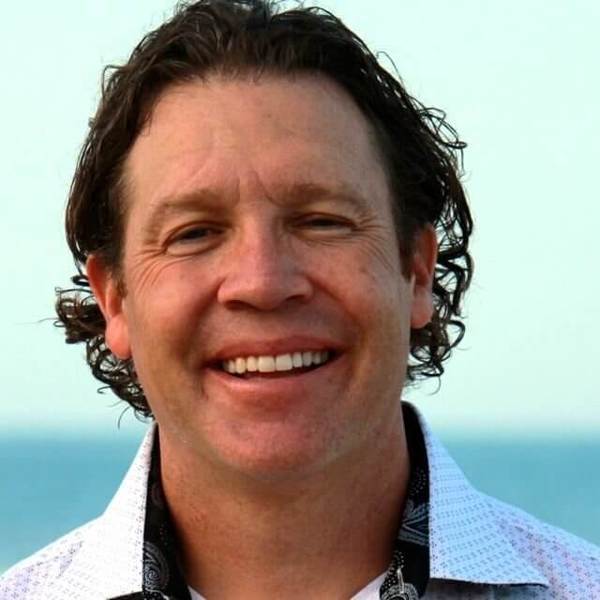
The Family Board Meeting
One parent, one child, four hours, no phones.
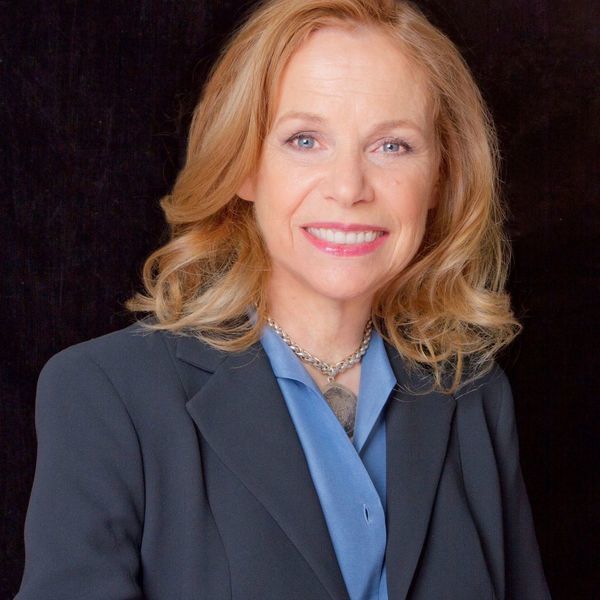
Matriarch of the Sheraton Hotels and Perdue Chicken Families
The small rituals two long-lived families use to stay together.

Raised Healthy, Wealthy & Wise
Why parents should let their children struggle.
The Business Family Diagnostic · Rhythms
The wackier the tradition, the more it sticks.
The Eyres keep a tradition calendar with at least one a month, from birthday cakes floated on a lake to leaves in the mail. Does your family have traditions that bring the generations together regularly?
“We hold a structured family meeting at least once a year.”

Every family wishes someone had recorded the generation before.
I built Enduring Stories to do it for yours: a guided voice conversation, from home, that keeps your family's voices, values and history.
The newsletter
The most useful things in these conversations are the things families rarely say out loud.
I share them in my newsletter once a week. Sign up to receive the ideas directly and start building the foundations for your family today.