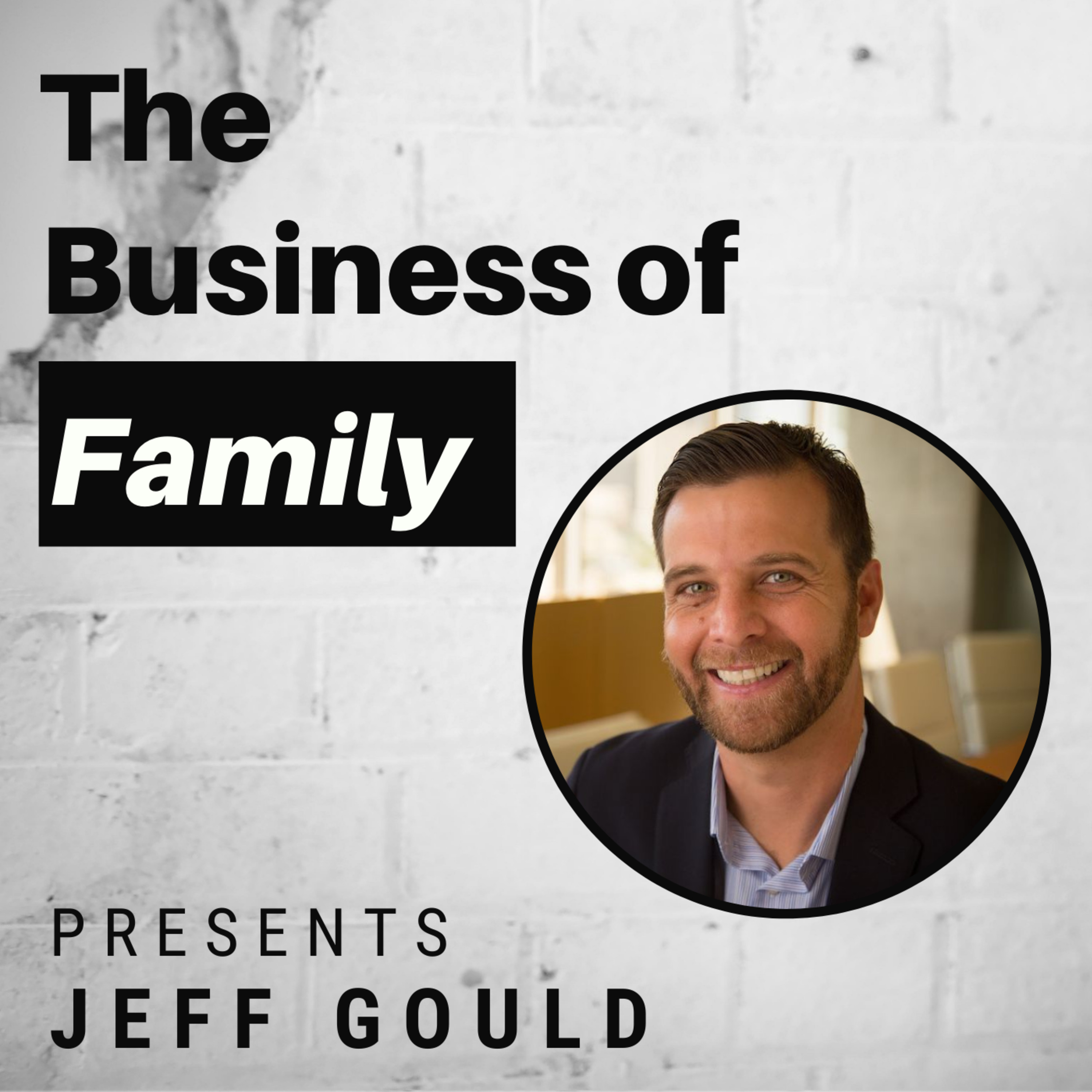
Episode 20 · Season 1
Generational Real Estate Families with Lineage Asset Advisors
Key ideas from this conversation
A family inherited two properties together with no operating agreement, no rules and no shared plan.
For a careful family, doing nothing with an old building can be riskier than doing something.
Transition means letting go: of the assets, and of who you've been as an investor.
Read the full show notesBio, standout quotes and the episode timeline
Jeff Gould is the founder Lineage Asset Advisors (LAA) a full-service commercial real estate advisory and consulting firm providing customized commercial real estate services to help families make seamless transitions with their properties – from one generation to the next.
Lineage collaborates with estate planning advisers to develop and implement portfolio solutions that meet the goals of multiple generations. Their aim is to preserve and enhance family wealth and legacy during difficult life transitions while establishing a culture of respect, peace of mind and financial sustainability.
Standout Quotes:
- "Like most forms of financial planning, the sooner you plan ahead, the much easier it is to implement and follow through" - [Mike Boyd]
- "Even if the family is risk-averse, I think it is really critical for them to understand that the risk of doing nothing may still be higher than the risk of doing something if they plan to keep the assets" – [Jeff Gould]
- "I think many families need to stay nimble in the future and really adjust for change" – [Jeff Gould]
- "Wealth and wealth transfer doesn't always lead to happiness, in fact in many cases it leads to conflict and challenges and strife among family members, so we want to try to shift that conversation, and that takes effort and planning" – [Jeff Gould]
- "Life is generally empty and meaningless, and we have the ability to establish positive and productive meaning in the midst of a world in constant transition" – [Jeff Gould]
Key Takeaways:
- The ideal scenario would be to involve Jeff early in planning for the transition but the reality is that he is engaged much later when things need to move quickly.
- There is a unique skill set that is needed to be a trusted adviser to help the family understand what they have in regards to Real Estate, and develop a plan with that Real Estate called a "Shared Asset Ownership plan" that considers the variables of the next generation.
- The 3 phased process includes Discovery, Planning, and Implementation.
- Addressing the issue of Deferred Maintenance; the 'Do Nothing Scenario' and the 'Do Something Scenario'
- 5 Transition Strategies in Real Estate planning: Communication and Education, Conflict Resolution and Accepting differences, Rediscovering your commercial Real Estate portfolio, Developing a mindful asset transition plan, and Implementing the plan and adjusting for change
- Jeff's advice to Real estate entrepreneurs: Creating your estate plan and developing a shared asset ownership plan that aligns with the next generation.
- Jeff explains that he helps the family understand that it is a fortunate situation to be carrying on and stewarding the transition of the assets rather than focusing on the personal value of the asset to each family member.
- Be respectful to everyone you encounter.
Episode Timeline:
- [00:45] Jeff Gould and his professional background
- [06:02] Do you usually get called in at the time of a transition event in a family or ahead of that time to plan a healthy transition?
- [08:33] Jeff gives a general picture of the different categories of clients he works with.
- [11:08] What are the particular challenges with the real estate space that create the need for Jeff's specialty, to steward assets in family transition rather than a generic accountant or financial planner?
- [16:47] Jeff describes the 3 phased process of his work with families
- [23:56] Addressing Deferred Maintenance
- [30:46] What would you say is the appetite for innovation in Real Estate?
- [35:02] 5 transition strategies in Real Estate planning
- [39:40] What advice would you give to a founding generation or Real Estate entrepreneur to best prepare themselves to have a great plan in place?
- [43:20] Do you work with any families that are multigenerational into the 3rd, 4th, or 5th generations?
- [49:34] From Jeff to his kids
Links:
- Lineage Asset Advisors : Lineage Asset Advisors was founded to help multi-generational families solve the unique issues that arise when transitioning their real estate portfolios from one generation to the next. For over thirteen years, LAA has worked directly with families and their estate planning teams to develop roadmaps for successful commercial real estate generational transitions.
- Jeff Gould : Jeff is Principal and Founder of Lineage Asset Advisors which is a consulting, asset management and transaction advisory firm based in Los Angeles. Jeff consults with multi-generational families, family offices, and developers that own and operate commercial real estate to develop customized succession plans with their properties from generation to generation.
Read the transcript
This transcript was generated automatically and may contain errors, including in names. Listen to the episode for the exact words.
MikeWelcome to The Business of Family. I'm your host, Mike Boyd. Multigenerational wealth creation involves so much more than capital accumulation. The most successful families cultivate values, stories, knowledge and resources to pass on to the next generation, and they do it very intentionally. On this show I sit down with members of some of the world's most interesting business families to hear how they do it. To see where your own family stands, take the Business Family Diagnostic at businessoffamily.net.
Jeff Gould is the founder of Lineage Asset Advisors, a full-service commercial real estate advisory and consulting firm providing customized commercial real estate services to help families make seamless transitions with their properties from one generation to the next. Lineage collaborates with estate planning advisors to develop and implement portfolio solutions that meet the goals of multiple generations. Their aim is to preserve and enhance family wealth and legacy during difficult life transitions while establishing a culture of respect, peace of mind, and financial stability. Jeff, it's great to have you with us today.
Welcome to the show. I can't wait to hear more about the work that you're doing.
JeffA real pleasure, Mike. Thank you for having me.
MikeLet's start with your background and how you found your way into this specific area of expertise.
JeffYeah. So my background, I've spent 17 years in the commercial real estate space, predominantly working as an asset manager, consultant, transaction advisor for large private families that own real estate here in Southern California. I've worked for the large commercial real estate services companies for many years and most importantly, was involved with many of these large families in transitions with their families from one generation to the next with their real estate portfolios.
And so over the course of that time in doing that work with the families, I kept noticing that there was a real need to have a trusted advisor, someone who focused on planning for the family as it related to the real estate portfolio. And that's where I noticed that there was this niche and this need to be a trusted advisor in the room with the other estate planning attorneys, CPAs, wealth advisors that I was working with, and critically focus on the real estate piece. And so not only do I focus on the real estate piece, but I also... And my company, Lineage Asset Advisors, also focuses on the family dynamics that are critically intertwined with the
real estate portfolios. So my company, Lineage Asset Advisors, we consider ourselves essentially planners for real estate families in the same way that a financial planner does great planning work for families on liquid assets like stocks, bonds, and mutual funds. We do that same work for families with their real estate portfolio. Yeah. So background in real estate finance, went to school for real estate finance and spent my entire career focusing on it as well. And mostly family office and private individuals that own real estate. I've done a little bit of work in the institutional space as well.
MikeIt's fascinating. And you mentioned family dynamics as well. Is that something that you've picked up over the years simply by being around these generational real estate families? Or have you gone off to seek specific training and trying to help families through that difficult transition in various life stages when patriarchs or matriarchs pass and children are inheriting assets?
JeffIt's a good question. And first of all, let me preface the answer by saying that I am not a board-certified therapist or psychologist or MD in psychology. But...
MikeYou're a brave man.
JeffOver the course of many, many years, working with families and noticing the dynamics that occur and arise between patriarch, matriarch, beneficiaries, the next generation, their children, all of the other intertwined family members, I've had the good fortune and good pleasure of really identifying myself as kind of a calm voice of reason in the midst of a very, sometimes stormy and swirling pattern of behavior with families. And it's all good.
It's all part of the equation. But I consider myself a practitioner in meditation and mindfulness. And so I like to bring some of that work into what I do with families. But I am not a board-certified therapist by any means. But I feel like I've garnered the skills over the years to really sit quietly in the midst of the dynamics that occur.
MikeYeah, absolutely. And as I was saying to someone only yesterday, each family is unique in its family dynamics and challenges. But there are so many themes that are repeated and show up across the board. So I imagine that you see a lot of the same story playing out in different shapes and forms.
JeffYeah, and it's really interesting. Just like we talk so much about algorithms these days with technology and innovation, families and family dynamics have their own algorithm associated with it. There's a through way and really understanding and getting deep with families on the dynamics, the history of the family lineage, the roots. Lineage is what I call my company.
And that, I think, carries through for many of these families. And that's very important to me is to really identify that lineage and the roots of it, because that's where we actually get stuff done with families. That's where we're able to really develop transition plans that are effective in their generational nature.
MikeSo I'm curious about the timing of your involvement. You've talked about transitions and helping families navigate those. But are you only called in when something has happened, when an event has occurred, you know, perhaps a matriarch or patriarch has passed or there's some other transition event happening. Do you get involved at that time? Or are you trying to work with clients well ahead of that time to plan a healthy transition that's a lot less fuss than trying to clean up a mess afterwards?
JeffYeah, the ideal scenario is that we have a runway of time, significant time to really develop a transition plan that is in alignment across multiple generations. The reality of the situation is that my network and distribution channel is such that I get called in, like you were saying before, when there's an incapacity issue with maybe one of the first generation, whether it be the patriarch or matriarch who owns the properties, or a death in the family, or some sort of a conflict that arises as it relates to the real estate portfolio. So there usually is an inflection point that occurs. But at the same token, I do have a number of clients who have been very proactive with their planning
and thinking through what happens with the real estate portfolio when they're not here, and what that looks like for the next generation, and what their interest level is, even with the children and the other beneficiaries that are involved. So the ideal scenario is that we're involved early and often. The reality is that we are engaged under circumstances where things need to happen relatively quickly.
MikeYeah, absolutely. And like most forms of financial planning, family dynamics, the sooner you plan ahead, the much easier it is to actually implement and then follow through. It's much harder after the fact, isn't it?
JeffIt is. It is. Yeah. And I think that it's certainly a great lesson for many family members. It's also really challenging to start thinking about transition planning when many of my clients are... They're not necessarily that late in their careers, or maybe they are later in their careers, but they're still growing their portfolio and they're still focused on growth. So trying to shift the focus to transition and contemplating what the portfolio looks like when they're not here or what the situation with their family looks like when they're not here. It's always a touchy subject to broach and a hard subject to get people to really, really focus intently on.
But you're absolutely right that it's critically important to get started as early as possible.
MikeCan you give us an idea of who these clients are? You mentioned that they're real estate families in Southern California, but do they set out to be that? Do they build wealth elsewhere and then end up parking it in real estate? Or are these families, have they built businesses around purely being in real estate for a great number of years?
JeffYeah. So if you bifurcate the client profile, I am working with families outside of just Southern California and throughout California and then even outside of California in some cases. But I put these clients in multiple camps. One camp, as you were saying, is a family that is purely focused on real estate as it relates to acquisitions, as it relates to syndications, as it relates to their main career has been in real estate, whether it be development or acquisitions of existing properties.
And then the other camp is the camp of operating companies. These are family operating companies that have been around for many years. In many cases, these are operating companies that are in the industrial sector. They're distribution or manufacturing companies or entertainment and media companies that have just so happened to have acquired, have had the good fortune to acquire real estate that they own and occupy as well. And so those particular families are a unique case because in many cases, the patriarch or matriarch has grown this incredible portfolio of real estate as owner-occupiers. And in some cases, they find themselves in a situation where they're looking at an M&A with the business, the corporation, and they're looking at maybe
shifting their focus as a family to being a real estate-minded family as opposed to an operating company. And so, yeah, those are the two camps. And then I guess the third camp you could say is the camp that inherits these properties from the first or second generation after the fact. That's another camp where maybe there's been a little alignment across multiple generations, and they end up inheriting the portfolios. And maybe they weren't involved in real estate or didn't even think they wanted to be involved in real estate. And all of a sudden, they find themselves in a good, fortunate situation, but also a challenging situation with a tenant and common ownership stake or an ownership stake that is needing to plan with other family members on
what to do with the portfolio. So that's the third camp or the hybrid camp is the one that inherits these properties.
MikeWhat are some of the specific challenges to owning a great amount of real estate or generating wealth from real estate that makes these family transitions more difficult? I guess to rephrase my question, why is a specialist in the real estate space required someone like yourself to help steward these assets and not just a generic accountant or financial planner? Where does the expertise come in and what are the specific challenges to real estate?
JeffYeah, great question. So just like you have... These large families have great trusted advisors in the room, estate planning attorneys, CPAs, wealth advisors that are helping them guide their succession plan and their transition plan with their assets, with their family. Those particular specific roles with a family are critical. The estate planning attorney drafts the wills and trusts. The accountant does the taxes and aligns with the estate planning attorney. The wealth advisor looks at the liquid assets.
And the trustee, obviously, has the fiduciary obligation with the trust to manage the trust. Now, what I've noticed over the years is that in some cases with real estate families, because there's misalignment, because there's so many variables with these real estate portfolios, oftentimes, the patriarch or matriarch has acquired and accumulated vast real estate. And perhaps they've managed the portfolio in their own way for a very long time with many variables involved and have not communicated the message of management or brought forth a beneficiary or even had a beneficiary or a child who's been interested in managing the affairs of the portfolio moving forward. And so because of all the variables and specific variables associated with operational efficiency with real estate,
financial efficiency with real estate, monetization of real estate portfolios, there's a unique skill set that is needed to be a trusted advisor, really focusing on these elements to help the family, number one, know what they have or understand what they have. And then number two, develop a plan with that specific real estate, what I call, and what others have called a shared asset ownership plan that is mindful of the skills and variables of the next generation. So what I've found over the years is that, many of the trusted advisors, they have some cursory background in real estate and perhaps maybe even a strong background in real estate. But having a trusted advisor, a conscientious voice of reason who is helping these families discover, plan, and implement the plan
across multiple generations and be mindful of the family dynamics is critically important to developing that clear shared asset ownership plan. So because real estate has so many specific variables associated with it. That's why there's a need or a niche for a role like the one that we play with these families.
MikeI'd love to get into a couple of examples if you have some to share. I think that oftentimes, these lessons are best shared with some case studies. Are you able to share anonymously some examples of the types of clients or the types of situations that you've been involved with in resolving and transitioning?
JeffYeah, yeah, absolutely. So there are many great examples that, of course, I will frame in a way that does not highlight who the families are. But relatively recently, I was working with a family that owned a couple of very valuable assets in the Ventura County market, Santa Barbara markets. And the family was originally brought in by the CPA to help this family figure out what to do with the real estate portfolio.
And in this case, the CPA brought me in and basically warned me going into this discussion that the family had inherited these properties as tenant in common interest with no operating agreement, no rules of governance, no real shared asset ownership plan. And the original generation had left them with a very challenging situation because many of these assets were older.
They had a lot of deferred maintenance within the portfolio. And there were very differing views from the different partners engaged with the portfolio about what to do with these assets. And so when I was brought in, the first meeting that we had was a... There was a lot of conflict associated with what happens with the real estate.
there was also a lack of respect and a lack of communication across channels because these were family members that seemingly had been involved and known each other for many years, but also really didn't talk to one another, really didn't communicate. And so the first point of reference was being able to establish a scenario and establish a really nice and respectful, I guess, commune where we could actually come together, where everyone felt like their voice was going to be heard. And that's a very key aspect of the work that I do is really establishing a very respectful boundaries of communication and making sure that everyone... They don't have to necessarily like each other is what I say, but they do have to come to a level of respect
for one another. And so with this particular portfolio, we were able to really get back to a point of establishing a level of respect. Many of the owners were not real estate-minded owners. They had inherited their stake in the property. And there was a need to really bring clarity back to the portfolio. And what we do throughout this process, we call it a three-phase process with our work with families. And in this case, the phase one is discovery. Really taking a family through and helping them understand, okay, what do we actually have here? What type of real estate portfolio do we have? What are the dynamics of the real estate portfolio from an operational standpoint, from a financial standpoint? In other words, return on equity,
internal rate of return, looking at the risks associated with the portfolio, in this case, the risks of doing nothing versus the risks of actually investing back into the portfolio from a capital improvement standpoint? And where does that money come from? Looking at things like accounting, how are you accounting for the portfolio right now? What does the portfolio look like in benchmark to other assets in the marketplace? And so really doing a critical deep dive on discovery, and then also understanding the operational structure.
How are we operating these pieces of real estate? How are we making decisions to operate these pieces of real estate. And so in this case, we had multiple assets with different asset classes, which tends to be a theme in the types of real estate portfolios that I get involved with. In this case, we had retail assets and we had industrial assets that were involved in the portfolio. So obviously, those types of assets are very different and they're located in different locations. So we have to understand many of these families, they come at it and they say, well, we have this highly diversified portfolio of real estate. But my question is, is the portfolio diversified in a way that is beneficial and productive for you and the generations moving
forward? And what is the risk profile of this portfolio? And how does that most importantly align with the family dynamics and the different owners involved and engaged? And also in this case, we had owners with different generation, different generational aspects. So we had owners who were in their 70s or 80s, and then we had owners in their 40s and 50s. So obviously, different dynamics from a generational standpoint. So really taking this family through a discovery phase and really helping them benchmark their portfolio and understand what they have from an operational standpoint, how that relates to their decision making as a family and communication and reestablishing a really clear channel of communication with family members and a respectful channel, most importantly, and then developing a
clear plan moving forward. And the plan may be, do we keep these assets in the portfolio? In this case, the plan was to dispose of one of the assets and keep the other one. And if we are keeping the other asset, what is the capital improvement plan or modernization plan that is necessary to implement moving forward to align all the family members? And then ultimately, we establish that plan and then implemented the plan moving forward. So in this case, a really three-phase process, which is what I take all my clients through. And it was a family who had just so happened to inherit this very valuable portfolio of real estate in Southern California.
So that's one example of a case study that I've recently worked on. And another example that might be interesting to your audience is an operating company that had been operating for many years in Orange County. And this particular company was an entertainment media company. And they had been operating for many years with two factions of families that had differing views about what to do with the operating company and what to do with the actual underlying real estate, which they had inherited over multiple generations.
And so in this case, again, taking them through this discovery, planning and implementation process to really help them understand what they have, help them understand what is the best result with the operating company, looking at them as a tenant in the building, purely as a tenant and separating out of the real estate? Are we operating most efficiently out of this piece of real estate? Or is there a better way to operate? And then what is the monetization strategy with the real estate if the plan is to ultimately unwind the operating company, which in this case it was, or to sell the real estate company, or to sell the operating company, which ultimately they ended up doing. And so again, another example of they ended up retaining
the real estate. And then we implemented a monetization plan with the underlying real estate to help them now shift their focus, the family's focus on how do we add value to the real estate and establish goals with the portfolio that meet our generational needs over the course of the next 20 to 30 years. So just a couple of examples of projects that may be useful for your audience.
MikeThey're fantastic examples. And I think you can see how these sorts of things unravel in so many different ways, but probably happens all day, every day. A couple of things I'd like to follow up on there, Jeff. First, one thing that popped into my mind was oftentimes when you have an operating company where you own the real estate yourself and probably have done for the last 30 or 50 years, quite often I imagine there's a sweetheart deal in place on that tenancy agreement. How do families ultimately deal with that if the operating company is still utilizing that real estate, but maybe different family members have a different interest in the assets that are inherited. One faction might own the real estate, one faction might
own the operating company. But if the sweetheart deal is under market or underpriced from a tenancy perspective, I imagine that creates all sorts of conflicts.
JeffWell, it can. And just like I was talking about at the beginning, the algorithm of the dynamics of ownership ultimately help us to frame the plan. So what I mean by that is in some cases, there's a majority state that owns the real estate and a majority state that owns the operating company. And in which case, we have to really understand the goals of each and what both factions are trying to accomplish with regards to the operating company and their EBITDA, and how the rent plays into that and the real estate aspect or the real estate entity and their goals as a family in terms of monetizing the real estate.
So there's not one good answer that I can give to you or the gospel that I can give to you, because every situation is different. But I think it is critical to really understand the goals and take a step back and really make sure that we are on the same page and that we've established a line of communication.
Because once we lose that line of communication, once it becomes us versus them or the other involved, it can quickly dissolve into a very nasty dispute. And so I think we reestablishing the boundaries, reestablishing the healthy communication channels, re-establishing and understanding what everyone's goals are in the midst of these difficult discussions, I think is a critical part of this. And then ultimately, developing a plan to move forward that not everyone is going to be 100% content with, but perhaps we can get to a place where we're 75% or 80% content with the ultimate results of the plan.
MikeThat's great. And I also want to touch on this deferred maintenance issue that you mentioned. So I can imagine a lot of real estate is inherited that's perhaps been neglected from a maintenance perspective or hasn't had the capital investment that is needed over time. How do inheritors react to that when they discover that there's some big capex requirements? Is it often seen as all too hard or beyond their capability?
How many of them actually follow through with finding a way to finance that and keeping the asset? And how many throw their hands in the air and say, too hard, let's get rid of it?
JeffYeah, it's a really good question. And again, it comes back to a nuanced answer. The nuance is, what's the skill sets and the acumen and goals and the risk profile of the next generation? In some cases, and I'm recently working on another project where we have a family member who is later in their years and who is generally risk-averse. And the next generation also is generally risk-averse. And there's a significant amount of deferred maintenance within the portfolio that has come to roost here recently. And so the good news is that there's no debt on the portfolio, so they own the assets free and clear. The challenge is to... With a risk-averse profile of an investor or owner is trying to align a strategy to get them to
essentially reinvest and look at what that reinvestment is going to lead to as far as returns and monetization of the assets. And so really understanding what their goals are and how that aligns to risk is a critical piece of this. In many cases, what I like to do with families like that is I still like to take them through a process where we identify and discover the deferred maintenance and really understand what we have if the goal is to keep the assets long-term and look at the comparison between the do-nothing scenario. In other words, hey, if we did nothing and we own these assets free and clear, what is that going to look like and what are the risks associated with that versus the
do-something scenario where we potentially develop a staged plan for capital improvements to And maybe that stage plan is starting with critical assets or starting with critical projects, and then staging and scaling that up to other facilities or other projects moving forward in a really mindful way so that we're not overextending ourselves. And then looking and comparing those two results and really understanding, okay, what is the best result? And in some cases, the do nothing scenario, what I like to point out is that that's even more risky than the do something scenario, because the risk of tenant attrition and the risk of competitive disadvantage in the marketplace.
I've seen many of my clients who have held assets over many years, very valuable assets, who have seen major run-up in appreciation, but have lacked the focus to invest in capital improvements to bring the buildings up to a modern standard. And the risk has been that they've lost tenancy during that time, or they've lost the ability to drive rent higher with some of those facilities, whether it be retail, multifamily, industrial office. So I think looking at those two scenarios, even if the family is... We know that they're risk-averse.
I think it's really critical for them to understand that the risk of doing nothing may still be higher than the risk of doing something if we plan to keep the assets.
MikeI think that's a great outline there. I'm curious. You've touched on a few times the implementation plan. So after identifying and discovering the requirements, after aligning with the family and what their capability is and what they ultimately want from the portfolio, if you do decide to invest, to modernize the portfolio, to perhaps spend some of that CapEx required, who does that? Is that a role that you're playing? Is that an advisory role?
Do you engage a team? And I'm making the assumption that the family have inherited a real estate portfolio that they didn't build. They don't necessarily have the skill set internally, but you've identified opportunity for upside. Who actually plays the role when it comes to implementation?
JeffYeah. So our firm is where we focus our attention as advisors and asset managers. The implementation phase takes a variety of different angles depending on what the family ultimately ends up doing out of the planning process. And so where we slot in is step in as an asset manager to help. In some cases, these families, they have a need to establish an operational infrastructure that allows them to carry forward the management of the assets into the next generation.
And my background as an asset manager, I have my certified property management designation. So helping them build that appropriate operational infrastructure to carry the assets forward, if they plan on doing so, is something that we help them accomplish. Now, we perform the traditional role of an asset manager in helping them look at strategies to monetize, look at strategies on leasing strategies with existing tenants, strategies on budgeting, those sorts of things.
And then as far as the implementation of deferred maintenance plans or capital improvement plans, we typically like to be a point of communication on those plans. And we typically help the family, for instance, hire a construction management firm, or look at running an RFP to select the right CM or to select the right or the appropriate general contractor to ultimately lead the charge on those capital improvement projects.
So that's where we sort of slot in is kind of helping guide the communication. Obviously, as we have developed the plan, and once we have a plan in place, for instance, if we have a staged capital improvement plan that we're going to implement with the family, then at that point, what we will do is we will ultimately help them implement that plan and ultimately look at budgeting and using debt as a fundamental way to fund the plan as well.
So that's really where our role slots in. Looking at other things like reuse of assets. I just completed a project in Orange County that was an adaptive reuse of an asset that was being converted from an office property to a multifamily property. So looking at fundamental creative strategies like that and whether they make sense or not is another part of our work together.
But the actual construction and the management of construction would be handled by a separate firm.
MikeAnd what would you say is the appetite for innovation in real estate? Families largely sitting and holding, or are there others actively out there consistently improving the assets that they manage? or does it tend to be left until something's broken and it requires a major investment? Is there a theme across the industry? I know it's a very general question, but I wonder if you see more of one or the other.
JeffYeah. I mean, I think if you look at the real estate world as a tiered world of ownership types, in the institutional space, the pension funds, the institutions, they are very uniquely focused on innovation and modernization. And I spent much of my career focusing on sustainability and modernization and the built environment. And the institutional world is very, very keenly focused on that.
And they've invested a considerable amount of time and energy and money into the modernization of their portfolio. The family office world is sort of behind them in some ways. But many of the family offices are getting up to speed on modernization and the critical importance of meeting the times as it relates to their tenants' needs, as it relates to the operational needs, looking again at things like energy efficiency and water efficiency and renewable energy as a way to create a competitive advantage within their portfolio, looking at resiliency and climate change as a fundamental need within the portfolio and a fundamental way to hedge risk, looking at accreditations like LEED and GRESB and other institutional and creditations for innovation and sustainability. I do see family offices focusing on that space.
The types of clients that I tend to work with, I do work with family offices, but many of my clients are in the middle market space. And I think that the smaller families, the private families, even the families that have substantial assets, but perhaps aren't known as family offices, which is a large makeup of California real estate, those families tend to be less focused on capital improvement, modernization strategies. And in many cases, they haven't needed to be focused on those strategies because they have low basis in their properties. And they've got these properties that have risen up in terms of appreciation over many years and just by nature of them holding for many years have benefited significantly.
But I am seeing an inflection point with many of these families where they're realizing that the do-nothing scenario is actually having an impact on their portfolio and they're actually losing tenants. And particularly in a time of COVID, I've seen this exponential advancement and focus on health and wellness in the built environment. And that requires a considerable amount of capital that many of these families have just been unwilling to invest in, but will have to invest in for the future.
MikeYeah, I think that's a great point. And one thing that raised for me just now was, we're spending a lot of time talking about commercial and industrial, operating companies and things like that. What about residential? What about multifamily? I imagine that there'd also be families across Southern California that have accumulated huge swaths of multifamily real estate. Is that something that you also advise on, or is that a separate piece of work?
JeffYeah. Yeah. Multifamily, I lump it in with commercial, but yeah, multifamily is a key aspect of the types of assets. Our focus is all asset classes, multifamily, commercial, industrial, land, retail, with the exception of single-family residential. Now, we do some single-family residential if there's a redevelopment potential of the site and it's got a more dense zoning around it, then we can look at that. I've spent my entire career working on those key asset classes, the diverse array of asset classes in the commercial and multifamily space.
I would say that multifamily is a big part of our work with families. And that tends to be a major asset class that's owned by these middle market families and family offices in California.
MikeLast time we spoke, we talked about your 5 transition strategies in real estate planning, working with these multi-generational families. I know that we've touched on a couple already, but would you mind running us through that list to give the audience an idea of the work that you do, but also the key considerations that families need to think through when planning for a transition?
JeffYeah. So fundamentally, these transition planning strategies that I'm going to talk about are pretty... They're almost very obvious. But being that they're obvious, I think they're still very important. And the first one is communication and education. I can't underscore the need for families to really establish or reestablish communication channels that are healthy and respectful. Over time, with many of these real estate families, unfortunately, there's been misalignment because of a lack of communication or miscommunication. And that's led to a complete breakdown within the family dynamic. And if we have a complete breakdown within the family dynamic, we're going to have a complete breakdown within the real estate portfolio naturally.
And so communication becomes critical in establishing or reestablishing those healthy communication channels on a frequent basis. And what I mean by frequent is every month or every other week. Education becomes critical. That's a communication and education, I think, go together. Many of the clients that I tend to work with who have inherited a stake in these portfolios, they don't come from a real estate background. And so it's incumbent upon the family to educate those folks that have an ownership stake at the table as to the different acumen, excuse me, the different verbiage and real estate lingo and real estate returns and financial returns and get them up to speed and at least give them... I mean, at least, but at a very
critical juncture, give them a voice at the table and a place where they can be respected and their opinion can be respected. So communication and education is number one. Conflict resolution and accepting differences. Obviously, establishing buy-sell agreements and shared asset ownership plans are critical to families, especially carrying forward real estate into the next generation. Those are fundamental and should be plans not only with us as trusted advisors, but also obviously with the attorneys and the other trusted advisors in the room.
But accepting differences, I think, is another critical aspect. And that goes back to respect. I wrote a piece about time having an impact on families and the roots of families over many generations. And I think that obviously within the family dynamic, we have many individuals that have numerous differences amongst one another. And so I think accepting differences as a point of the family dynamics piece is really critical. And then conflict resolution as a point of really focusing on documentation as to how we're going to overcome conflict moving forward.
Rediscovering your commercial real estate portfolio is another one. And that really focusing on what we do is like, many of these families get myopic about what they actually own. So really doing a deep dive about what do we own? How is it performing? And does it meet the needs of our current generation and generations in the future? The next one is developing a mindful asset transition plan. So really focusing on, like I was saying before, it's great to have a dialed in estate plan and really think about advanced tax planning and all these different unique planning strategies that are going to help the family move the portfolio forward with as low a risk as possible and low a liability as possible. But a mindful asset transition plan means what
happens with the operational elements of the real estate when mom or dad are not here, when the patriarch and matriarch is not here. So developing that mindful asset transition plan is critical. And then the last one is implementing the plan and adjusting for change. So we have to be able to implement the plan and understand that things are changing very rapidly and innovating in a very rapid way in the real estate space. Whereas before, it was anchored to the past way of doing things.
I think many families need to stay nimble in the future and really adjust for change that is occurring. So those are the focal points for the five transition planning strategies.
MikeIt's a great list. Thanks for running us through that. I'm curious what advice you would give to the founding generation, maybe a real estate entrepreneur that is building a portfolio now, or perhaps someone that has slowly accumulated a portfolio over the last couple of decades, what advice would you give them? What should they be doing now if they were to be an A-plus student in your eyes to best prepare themselves or for their family and their beneficiaries to have a great plan in place?
JeffYeah. So I think that the first critical piece of this is, and in many cases, I see a lot of clients miss this piece, is really dialing in your estate plan. Trust will... Many of these families, especially real estate families, have accumulated very vast portfolios of real estate with significant implications down the line for the next generations. So really dialing in your estate plan and really working with your estate planning attorney and your CPA. In some cases, what it requires based on future liabilities and just the complexities of the portfolio is a very advanced planning that's going to lead to tax planning strategies, life insurance, all those things. So really working on that as a
critical piece to the equation, then of course, the next one is what we always advise on is developing a shared asset ownership plan that aligns with the next generation. And that shared asset ownership plan, that requires us to really understand the family goals and bring back together everyone as a point of communication to really reestablish those communication channels.
And I think that's a really healthy piece of this. Like I was saying, as far as transition planning strategies, developing those communication channels, I think, needs to be a priority for many of these families because folks who are in the latter stages of their career and maybe still focusing on growth and acquisition mode, but maybe at a point where they need to think about how these assets transition to the next generation, They haven't really talked or had dialogue with the next generation that is going to inherit these properties. They really need to start doing that now. And particularly if they have family members who are not interested in real estate, and perhaps the entire list of beneficiaries down
the line don't have any interest in these portfolios, we need to establish those communication channels now, as opposed to waiting until the critical point or the inflection point when there's incapacity or death. So I think those are key points to focus on as priorities with these families moving into the future.
MikeAnd the baby boomer generation aging rapidly, there's going to be a huge transfer of wealth coming, I'm sure. And you're well positioned to be helping people by the sounds of it in Southern California.
JeffWell, yeah, I appreciate you saying that. I mean, we are definitely anticipating and are already seeing the wave of wealth transfer. And I think that the needs for real estate families are very, very specific. So I think that there is a real need for a trusted advisor helping on the real estate piece. And financial planners do an excellent and amazing job.
And there are a key team member that I work with and distribution channel and network that I work with. But they don't always focus on the real estate piece. And to develop a holistic plan for these families. As far as looking at transition and wealth transfer, we need to focus on the real estate piece of that as a key aspect of their wealth.
MikeYeah. Do you work with any families that are really multi-gen getting into the third, fourth, fifth generation from a real estate perspective? Or is most of these transitions from first to second or second to third generation?
JeffYeah, there's some great examples of families in California that... I mean, Ag families are a good example. But then there's others in California that I've done some work with that are fourth-generation families. And I've seen it. It is a rare breed, but it does occur. And it's always refreshing to see that we talk about transition. And these families have essentially, basically, not only preached about it, but they've actually implemented the plans, have brought communication into a critical piece of the planning. They've done all the things that we've talked about on this podcast. And so I do. I've seen third, I've seen fourth generation.
There's a couple of families. Many of these families have what I call legacy assets or legacy properties. And these are properties that have been carried forward over multiple generations. And just like the family and the roots run deep, the connection with these assets runs very deep. And the assets become... These legacy properties become very symbolic to the transition of these families and the story of transition over multiple generations.
So I've done a couple of events with families that have been able to effectively basically carry forward that transition over multiple generations. And it's very impressive, the foundation that they've developed.
MikeAbsolutely. I think those sorts of legacy assets, or at least that word legacy, triggers for me that sometimes people get very egotistical about trying to buy them, build them, leave them behind. But I think when they're done very, very well, and they're genuinely valuable strategic assets, there's no reason why they can't last for generations.
JeffYeah. Yeah. I mean, it's funny because... Not funny, but it is an aspect of what we work on. We're in the business of transition. And by nature, transition means letting go. It means detaching from assets, detaching from your identity as who you are as a real estate investor, as who you are to your family or who you were to your family throughout your career. So that can be a difficult process. And I think that a lot of these assets, they do have a symbolic connection. And there's many stories, both happy and painful, associated with these assets and what they mean to the family.
And so it's really important to draw out those stories. And for me, it's really important to help the family understand that, hey, we're in a very fortunate situation to be owning these assets and to be in a situation to be carrying forward and stewarding the transition of these assets. And so let's focus on that piece, the respect piece, and try to detach from the egoic aspect of what the asset has meant to you and your identity as a real estate investor. And so I think that these are deep conversations that I like to have with family members. And wealth and wealth transfer doesn't always lead to happiness. In fact, in many cases, it leads to conflict and challenges and strife amongst family members. So we want to try to
shift that conversation. And that takes effort and planning.
MikeAbsolutely. Yeah, you touch on a hot topic there. Jeff, as we look to round this out, I'm curious if you've got one final example for us. Any horror stories or particularly tricky cases that you've come across where complicated inheritors or beneficiaries with different plans to each other and a swath of assets?
JeffYeah, I mean, there are all sorts of case studies. And I think the one particular case study comes to mind of a, again, another scenario where a family was inherited a tenant in common stake in a very valuable asset in Southern California and was, again, with no tenant in common agreement, no operating agreement. They had to actually, as part of the transition with a patriarch, the original generation, the patriarch and matriarch, you know, part of the kind of like the left behind written aspect of that transition, you know, the family members had to take care of another, you know, aunt within the family.
and we had to come together because there was nothing legally binding the family members to take care of the act moving forward with the asset or with a liquidation of the property or anything associated with that. So we had to come back together and really re-establish the boundaries and re-establish an agreement amongst the family members that they were going to take care of this relative moving into the future with this particular asset.
And so I see issues arise like this where there's rough documentation about what happens with family members within a portfolio, but not necessarily legally binding documentation. So how do we bring everybody back into the fold on these very touchy topics and make sure that we get everyone in alignment? And fortunately, within this situation, we were able to get everyone into alignment through a really clear three-phase process. But it took us to really reestablish those deep channels of communication amongst one another and get everyone back into a level of respect. So that's a unique one and I think evokes some emotion.
MikeAbsolutely. And I think there's very few people that could do and want to do the work that you do, Jeff. You're a brave man and it takes a certain type of individual and skill set to be able to bring people together like that from a coaching perspective, but then also to layer in the technical expertise and experience that you have in real estate as well.
So I think it's a fantastic niche that you operate in. And I've really enjoyed hearing this story today. It's now time for our final question, a question we ask everybody who comes on the show. Imagine you're writing a letter to your children. What is one lesson or idea that you don't think many parents would mention, but you consider important to understand?
JeffThat's a great question for me because I have a three and a half year old and a nearly two year old, two boys. And so I definitely see the benefit of leaving behind some points of wisdom. I think what I always like to say is that life is generally empty and meaningless. And we have the ability to establish positive and productive meaning in the midst of a world in constant transition.
So I think allowing and looking at the world as this wonderful and wonderfully beautiful cosmic joke and allowing ourselves to be creative and create a productive future and have faith that that productive future will permeate for all of us. Just being respectful to everybody that you encounter, whether it's someone who you don't necessarily see eye to eye with or someone that you do see eye to eye with, but maybe don't disagree or disagree on the topic.
I think being respectful and being loving and being caring for and compassionate for everyone that we encounter, I think, is a critical lesson for my kids and for everybody moving into the future.
MikeIt's a great lesson, Jeff. Thanks for sharing it. And thank you once again for sharing your experience and wisdom on the show today. It's been a lot of fun and I've learned a lot.
JeffHey, thanks so much, Mike. I really appreciate it. You're doing great work.
MikeThank you. Good on you.
JeffThank you.
MikeThanks for listening to The Business of Family. You'll find the transcript and key ideas from this conversation at businessoffamily.net, along with the Business Family Diagnostic. It's free, and it shows you where your own family stands. And if someone in your family should hear this episode, please send it to them too. I'm Mike Boyd. Until next time, take care.
Keep listening
If this one landed, start here next.
The Business Family Diagnostic · Ownership
Inherited together, with nothing in writing.
Jeff's families often own buildings side by side with no agreement and no shared plan. Does each adult owner in your family know what they own, and what happens if one wants out?
“The rules for passing ownership to the next generation have been agreed and written down.”

Every family wishes someone had recorded the generation before.
I built Enduring Stories to do it for yours: a guided voice conversation, from home, that keeps your family's voices, values and history.
The newsletter
The most useful things in these conversations are the things families rarely say out loud.
I share them in my newsletter once a week. Sign up to receive the ideas directly and start building the foundations for your family today.