
Episode 39 · Season 2
On the Shoulders of Giants
Key ideas from this conversation
His great-grandfather stopped growing when he ran out of family he trusted, and never learned to delegate.
His grandfather and then his mother chose not to spend what they inherited, and it became the down payment on his first building.
Fifty-fifty economically is fine, but someone has to be the decision maker. He learned it in business with his brother.
Read the full show notesBio, standout quotes and the episode timeline
Moses Kagan has been buying, renovating and managing apartment buildings in Los Angeles since 2008. His company, Adaptive Realty, along with its investor-partners, owns approximately $200MM worth of high-quality buildings in interesting neighborhoods. Unusually for a real estate private equity firm, Adaptive and its partners do not fix and flip; instead, they act as permanent holders and stewards of the assets under their control.
Standout Quotes:
- "Rich families that own good assets generally don't look to sell them to maximize Pre-tax IRR" - [Moses]
- "If you do not lose the building, the rents will recover" - [Moses]
- "When you start to think about things indefinitely, and you're not in a rush, it kind of opens up other possibilities in terms of structure and strategy" - [Moses]
- "It's very hard to go from zero to something… and it takes an entirely different set of skills to go from something to something much larger" - [Moses]
- "I do not believe that we as individuals live our lives for ourselves" - [Moses]
Key Takeaways:
- Moses has been buying, renovating, and managing apartment buildings in Los Angeles since 2008, through his company, Adaptive Realty, alongside investor partners. He focuses on sub-institutional deals.
- The most important part of the strategy is that rather than buy, fix and sell buildings to maximize pretax IRR, they buy properties, make them high-quality assets, manage and refinance them to get higher returns. The strategy was born from his family values as they had always been involved in Real Estate but never engaged particularly in sales of property.
- There are two reasons why people sell; firstly investors have a mindset too focused on Pretax IRR, and secondly, the sponsor gets their money after selling. If you just hold on and keep the building, the rents will recover.
- The initial funds for the business came from friends and family of Moses, and later from another family office who partnered with them. This partnership helped them build a track record that encouraged other investors to feel comfortable with them.
- The structure for the business model is not to buy, renovate and sell like the typical model with PEs, but rather they partner with wealthy families with the explicit assumption to hold on to the property not sell, however, liquidation rights goes to the family that put up all the capital. The primary strategy has been to refinance the property to pull the capital out and give it back to the investors who still retain ownership and cash flow from rents. Adaptive Realty only gets fees for their work but not cash flow from rents, sales or refinance until the investors have got their capital.
- Describing his family history, Moses shares how his first building was bought with capital from the family money dating back 4 generations. The wealth he enjoyed from his family was mostly in form of basic needs being met and, particularly education.
- When starting a business with a partner, it is critical to have a decision-maker or tie-breaker irrespective of how profits are split. The relationship between Moses and his partner in terms of how earnings are split is quite stable even for the coming generation but open to discussions if need be.
- There is currently no long-term family structure for his family, however, Moses spends a lot of time with his kids, to instill the values of passing on to the next generation what was done for them.
- Discussing Storytelling, Moses emphasizes that your forebearers are a living part of your life, and tries to make those people present for his children even though they will never meet them.
- Gaining exposure and immense assistance from his friends to succeed, Moses was also motivated to start finding ways to help people who didn't have the kind of opportunities he had.
- Advice from Moses to those aspiring for multigenerational success: Don't put yourself in a position where one investor can wake up one day and force you to restart your career. This involves having different capital providers rather than being completely dependent on one.
- From Moses to his kids: We owe everything to those who came before us, however, we can't repay them. We can only try to do for those coming after us what has been done for us, if not more.
Episode Timeline:
- [00:44] Meet today's guest, Moses Kagan.
- [01:49] About the business, Adaptive Realty.
- [13:46] How do you get investors to join you with your strategy of holding properties permanently?
- [16:41] How have you structured Adaptive Realty to be different from the typical P.E model?
- [21:51] Moses shares his family background.
- [32:32] What's your perspective on multigenerational wealth?
- [38:24] What does the future look like in terms of the next generation?
- [41:03] Do you expect your children to get involved in the business?
- [46:11] Is there any form of family governance structure?
- [48:14] Moses shares his approach to storytelling as a method to pass on values.
- [52:51] How Moses works to help others who haven't had the same privileges he enjoyed.
- [57:02] Advice from Moses to listeners aspiring to build generational legacies.
- [01:00:29] From Moses to his kids.
Links:
- Property management for exceptional Los Angeles apartment buildings : Moses Kagan's company, Adaptive Realty, along with its investor-partners, owns approximately $200MM worth of high-quality buildings in interesting neighborhoods.
- Moses Kagan : Moses Kagan has been buying, renovating and managing apartment buildings in Los Angeles since 2008
Read the transcript
This transcript was generated automatically and may contain errors, including in names. Listen to the episode for the exact words.
MikeWelcome to The Business of Family. I'm your host, Mike Boyd. Multigenerational wealth creation involves so much more than capital accumulation. The most successful families cultivate values, stories, knowledge and resources to pass on to the next generation, and they do it very intentionally. On this show I sit down with members of some of the world's most interesting business families to hear how they do it. To see where your own family stands, take the Business Family Diagnostic at businessoffamily.net.
Moses Kagan has been buying, renovating, and managing apartment buildings in Los Angeles since 2008. His company, Adaptive Realty, along with Investor Partners, owns approximately $200 million worth of high-quality buildings in interesting neighborhoods around LA. Unusually for a real estate private equity firm, Adaptive and its partners do not fix and flip. Instead, they act as permanent holders and stewards of the assets under their control.
Moses has some fascinating perspectives on generational wealth, and I look forward to sharing them with you. Moses Kagan, welcome to the show. I'm so glad we can finally do this.
MosesYeah, Mike, thanks for having me.
MikeSo we've been connected on Twitter for some time, and I've greatly enjoyed all of your sharing, both on real estate, but also on your generational perspectives. And that's why I really wanted to have this conversation with you today. Before we get into perhaps where you've been, where you've come from, and where you're going, can you give us a bit of a sense of what you're currently doing, how your business currently operates, and what maybe makes that a little bit different to the rest of the market in real estate?
MosesSure. So my partner and I have been buying, renovating, and managing apartment buildings in Los Angeles for the last, I guess it's like 13 years now. We do relatively small deals for the most part. I would describe them as sub-institutional in scale, anywhere from a couple million up to, or actually about to knock on wood, close on a $15 million one tomorrow.
In general, these deals are, we're buying beat up old buildings, we spend a lot of money to fix them up, and then we put them into our internal management team to manage. I guess the most important thing to say about our strategy is that it's unusual from a real estate private equity perspective. The sort of standard real estate private equity play is to buy buildings, use a bunch of debt, rip and run in terms of fixing them up very cheaply, and then try to sell them immediately to maximize pre-tax IRR and also crystallize the promoted interest, the profit that goes to the deal sponsor. We don't do that. We did in the beginning a little bit.
But what we realized is that when you have really high-quality assets and you actually do a good job renovating them and they're in an excellent market like Los Angeles that's got some permanent supply, demand, and balance characteristics that make it just an awesome place to own real estate, that it's crazy to sell those things. Rich families that own good assets generally don't look to sell them to maximize pre-tax IRR.
the intelligence strategy from a post-tax perspective is basically to refinance them, take that money out tax-free, own the building, take care of it, don't go crazy with the leverage. And then over time, as rents and values increase, if you want to pull more capital out, you do so via refinancings. But really, we think of ourselves as more or less permanent stewards of these assets. We're a small firm. We own about $200 million worth of real estate, again, in about six or seven neighborhoods in LA, looking at expanding elsewhere. But it's been a steady growth from back when we started doing the business in 2008. We founded Adaptive, which is the name of our company, Adaptive Realty, in 2012. So it's just been a steady growth since then.
MikeI love this concept of permanent stewards. And obviously, I spent a lot of time talking about that with my guests in family businesses and generational wealth. But what led you to this model in LA real estate or real estate PE? Did you stumble across it? Did you end up with a building that you said, hey, this is a gem, we never want to sell this? Or was it always the strategy to start that way?
MosesNo, I'm about to use some words that I didn't know at the time that we started coming up with a strategy. It was really what I've since come to understand is first principles thinking. There were a number of different factors that played into it. The first thing was, I should say, first of all, that my family has always owned real estate. I'm sure we're going to get into that more when we start to talk more about my background and everything. I come from a real estate family. My parents, by nature, are never or sell type people. I mean, they have sold buildings in the past, but it'll be a 1031 exchange or something. We're not into selling things and spending the money. That just feels
it's totally anathema to me. So there's that strand running through the way I think about the world. Then when we first started renovating buildings in Los Angeles, we didn't know what we were doing. So I never worked at any other real estate firm. I was in banking in London for a while and I came back here and I kind of stumbled into real estate. And the first couple of deals we did, we did without permits. And we eventually got busted. And our intention was to sell the buildings. And we eventually got busted by the city. And the city rightfully was like, what the hell are you guys doing? And to teach us a lesson, I mean, they came down really hard
on us and basically forced us to permit a bunch of work that we had already done. And so that was an extremely painful process. I don't think I had a good night's sleep for a good six to eight months. It was just so bad. There was a plumbing inspector in particular who seemed to delight in torturing us. I think we had a plumber have a heart attack because this guy just would not let it. He was trying to teach the plumber a lesson about not doing unpermitted work. So he just kept failing them on the inspections for month after month. It was really bad. Anyway, so obviously we learned that you can't do unpermitted work. And ever since then,
everything we've ever done has been squeaky clean for that reason. But that's expensive, right? And so you're going to do a good job, right? You're going to do everything with permits. You're going to do a good job. If you're going to start doing everything with permits and doing a good job, it opens up some other possibilities in terms of what you can do to a building.
If you're just trying to rip and run, you just want to get in and out as quickly as possible, and that's it. If you're going to be re-piping and rewiring and all that stuff, then okay, you can move walls. You can start to really actually maximize the potential of the building. So we started to do more and more creative stuff like that.
And then we sold some buildings. This is in 2011, 2012. At that point, our business was capitalized by my best friend from high school, who were one of my best friends from high school. And he wanted to liquidate the portfolio that we had at that time. And I remember selling those assets, which at that point were fully renovated with permits, great locations. The rents were good. They were improving. And I distinctly remember selling them and then looking at the closing statements and seeing the brokerage fee being deducted and title and escrow and city transfer tax and title insurance for the buyer and being like, what the hell just happened?
And then when we went to file the tax returns for those entities after those sales, it was like, we just, on top of all of the transfer costs, there was also like this second, actually second and third layer of taxation, first in the form of state tax and then federal as well. And the United States has the concept of depreciation, which is great for long-term real estate owners. But when you sell, there's depreciation recapture. So we even were losing the benefits that we had got from the depreciation while we had owned it.
So I'm looking at that and I'm like, well, we own these great assets that we had done a good job on. they were all permitted and we had leased the buildings up. So we knew that the tenants were good and they were paying. We were intimately familiar with the assets. We strongly believed in the city and having had this object lesson in how terrible it is to sell, what on an after-tax basis would you actually get when you sell? It was like, this is nuts. Why would you ever do that?
And so it turns out that the reason that a lot of firms do that, I think, is twofold. One is investors in real estate private equity have been conditioned by the big institutional firms to think in terms of IRR, internal rate of return, which if you are a pension fund or an endowment that does not pay taxes and you invest with Blackstone, you should absolutely focus on maximizing pre-tax IRR because there is no post-tax. Your pre-tax is your post-tax.
If you are a tax-paying high net worth individual or family office, though, the game does not begin and end with pre-tax IRR. I mean, that's just nuts. Like it, you have to think about the post-tax consequences too. So anyway, so that's kind of like the industry structured like that. Oh, and the other thing to say is when you sell, as I said before, the sponsor gets his money.
Okay. So let me make one more observation about the Los Angeles market. In a good market like Los Angeles, where there's this like continued imbalance, there's more people who want to live here than we are able to build housing. So therefore rents have tended to grow faster than inflation. So I can't tell you in any particular year what's going to happen with rents.
And indeed, in 2020, they went down like 15% to 20% because of COVID, and it was a disaster, and it was terrible for everyone. We were okay, but I mean, it was not good. But I know that if you do not lose the building, the rents will recover. That was kind of the lesson of 2008-9. And we'll go back, and we'll talk about the first building I ever bought.
But the lesson was, if you just hold on, if you're not over-levered and you just hold on, things will come back. They always do. It might take a while, but you just manage through, be a good steward of the building, and that's it. And then I guess the final thing I should say is at a certain point, I read this book called Skyscraper Dreams, which is about the New York City Jewish real estate families. And for your listeners who don't know, there was a flood of Eastern European Jews who came to New York City in the very late 19th century through the early part of the 20th century. And my great-grandfather Morris was among them. Morris got into real estate,
I'm sure we'll talk about this in a second, but he never was like big time or anything. But some of these families became very, very large. And the way they did so was that the The initial founder, let's say, of the family was some likely uneducated guy who was a contractor. Then he started maybe building a few little buildings.
Then that went well, and he started building more. Maybe he started raising some outside capital. Then his sons came into the business. These families ended up, the ones that were smart and didn't go crazy with debt, they ended up building these huge portfolios of office buildings and apartment buildings all over New York City. And they're now fabulously wealthy. And those people, if you went to them and you were like, what's your exit plan for this building you're developing? They would look at you like you were insane. What do you mean exit plan? We've spent 20 years patiently acquiring the land to build this gigantic skyscraper in midtown Manhattan. Exit plan? Absolutely not. We're going to own it? My great-grandchildren are going to own this thing. And so that also shaped my
thinking. It was like, oh, okay. My family, in some ways, Morris, who was the original or maybe the founder or whatever, however you want to put it, of my family on one side in the United States, Morris had that opportunity and got started on that path, but for reasons we can talk about, never like didn't carry out, never made it really big. And so that sucks. But I kind of think of myself in a lot of ways as like his spiritual heir or something. And so those ideas were also kind of wrapped into shaping how I think about trying to build and steward a very large portfolio of real estate.
MikeSo what you're doing with Adaptive in LA, to me is fascinating, and it shares a lot of the same strategy and values that you see families or family officers pursue, right? You're playing the long game, you're playing forever, permanent hold type structure, moderate levels of leverage, don't overdo it, hold onto the building at all costs type of thing. I mean, it really resonates. But the disconnect for me and the piece that I think is most interesting is that ultimately you're a real estate private equity firm, you're using outside capital.
So how did you convince or otherwise go to the market and say, I'd like to tie up your capital for a really long period of time. Do you want to invest with me permanently? How does that work?
MosesYeah, it's a great question. I should say Adaptive Realty Fund 1, we actually sold. It was like we did four fourplexes and sold them kind of to generate a track record. And the money for that fund came from a group of friends and family. I went to Andover and Princeton, so I had kind of a decent network.
I should say I am not a country club kind of person. I did not grow up around people with great wealth or anything. But my friends from boarding school and college did pretty well pretty early. So I had, and their families had some dough and stuff. So I think I raised like $1.8 million in like chunks of, you know, a hundred grand or whatever from a bunch of friends and friends of friends and family or whatever.
Fortunately, this RCPA introduced us to this family that ended up coming in and taking the other half of that fund. So they match what my friends and family were willing to contribute. And that family, and I guess I should say this, they have been a major influence in me as well. They are a third-generation California real estate family whose founder, if you want to call them that, started developing homes and eventually shopping centers in California beginning in immediately after World War II. And they obviously sold a lot of the homes, but they have an enormous portfolio. I have no idea how big it is, but it's big. And so they partnered with us from very early on. And their family is now in the third generation of leadership. And they've just,
you know, they owned a lot of California real estate during the last, whatever it's been, 75 years. And that turns out to have been an incredibly smart thing to do from a financial perspective. And they've always run very low leverage, you know, internally managed all their stuff. Like really, I mean, they're just like a classic real estate family type operation.
So a lot of the capital, they're still by far our largest investor. So we were able to build a track record with this family as our largest investor, which I think then they continue to sort of co-sponsor different vehicles with us. But I think that their involvement and the track record that they allowed us to establish has allowed a lot of other investors to feel comfortable about investing with us for the long term.
MikeAnd I do want to move on from this because you've opened up so many threads about your family and your great-grandfather. I want to follow those. But how does the structure work, just to close the loop on this? So are they tying up capital permanently on a permanent hold basis? Or how do the returns work? Because as you mentioned earlier, in a typical PE model, the sponsor gets paid when the building is sold and you're not doing that. So how have you structured Adaptive to be different?
MosesYeah. So one thing to say is we have a variety of different, one of the things about bootstrapping a firm like this is we've had to be very creative in terms of our structuring. The majority, trying to make sure I'm not saying something wrong now, still the majority of capital that we have ever put out is in the form of joint ventures with individual wealthy families, including that one big family that I was just talking about, but also five other ones, where we will partner with one family on a specific deal or a group of deals. In those deals, the family that puts up all the capital obviously gets a liquidation, right? If they want to sell, it's their money, they can force a sale.
But the underlying assumption, and it's actually not underlying, I mean, the explicit assumption is, unless something is going horribly wrong, we're holding on to this. And we've never had anyone force liquidation or anything like that. But I mean, they retain the right to do that. The funds that we raise, so we also raise discretionary funds. Many of those do not have any kind of an exit ability. The more recent ones, we kind of let a super majority of the investors force liquidation every 10 years or something. So again, everyone's doing it with the understanding that we're going to own this stuff for a long time. But of course, if things are going really badly, then the super majority of the investors can say, okay, that's it, pull the
plug. I guess the other thing I should say is the primary strategy that we have pursued historically, and this has changed a little bit recently, but the primary strategy we have pursued historically is to buy these old buildings, fix them up, and then we refinance them to pull the capital back out. So we buy all cash, renovate all cash. When they're done, they're worth more than we invested in if we did a good job. And then we can, depending on how good a job we did and what's going on with interest rates and all that stuff, we have historically been able to refinance out anywhere between 80% and 100% of the capital employed. And so we do that refinance and then
we give the proceeds of that refinance back to the investors. So while we are asking them to be permanent holders, they have the large majority of their capital back via tax-free debt finance distribution. So it reduces both the risk from their perspective because it's a non-recourse loan. So no one can ever come after them or anything like that. They have most or all their money back. And then that also has the effect of reducing the opportunity cost of a permanent hold, right? Like their money's not tied up in this thing. They have a permanent ownership stake, but the cash is back. And if they want to put it in the stock market or put it in a savings
account, or sometimes as is often the case, kind of roll it back to us for another deal, then they can do that.
MikeYeah. So I was going to ask, it's not a return of capital. It's just a refi out and they're still retaining the same ownership rights and the same, I assume, cash flow from rents and things as well.
MosesWe have, without getting too far into the weeds, we use a pretty standard real estate private equity structure in the sense that we get fees for our work on these projects, but we do not, we, the adaptive, the sponsor, does not participate in cash flow from rents or refinances or sales until the investors have received back all of their money plus a preferred return on it for the time that we had it. So we're part of the magic of the business model.
You could ask, why don't other people do this permanent hold thing? And the answer is, it requires an enormous amount of patience on behalf of the sponsor because I'm saying right off the bat that it's likely I'm not going to participate in the profits from this deal for five years, seven years, 10 years, this deal we're closing tomorrow, again, knocking on wood, because I'm very superstitious about deal closings. That deal, we're not adding any value. We're just buying a brand new building with 50% leverage or whatever. My partner and I probably won't see our ownership stake in that deal for 15 years. That depends on rent growth and interest rates and everything. But we're happy. We got paid a fair fee. We're getting
paid to manage it. I'm just not in a rush. Hopefully, I will eat the fruit of the tree whose seeds we are planting tomorrow. But like, okay, my kids will eat it if I don't eat it or whatever. You know what I mean? When you start to think about things indefinitely and you're not in a rush, it opens up other possibilities in terms of structure and strategy.
MikeSo I want to follow that thread then in terms of playing the long game, having a longer term horizon, being able to invest in assets in a way that maybe won't make a handsome return for sometimes decades. Where did that come from? You talked about being a real estate, you come from a real estate family. And you mentioned Morris before, who I think you said was your great grandfather. So that's four generations back. Would you describe yourself as coming from a multi-generational family? Is there multi-generational family wealth that seeded all of this?
Mosesnot in the way that you mean multi-generational wealth. Let me tell Morris's story real quick, because I think that that will be helpful. First of all, one of the reasons that he has been so influential in my life is that I actually knew him. He lived to be 101. And so I knew this. He was born in 1895 and came to the United States in 1910. And I knew him. He came to my bar mitzvah when I was 13 years old. I can remember him vividly. I didn't really talk to him about business because I was too young. I knew he was a larger-than-life figure. He was driving into his late 90s. He was driving into New York City to pick up rents from his last building. He was a
dynamo. But his story is, so he came over, he was from the Ukraine, and they were really, really persecuting Jews where he grew up. And so his parents, his sister, I think, had already come to the United States. And when he was 15, his parents gave him a ticket and basically just said, that's it, goodbye. And he came to New York with, I don't know, some small amount of money or whatever, but his sister was there. So he had somewhere to sleep on the floor. And he immediately, he didn't speak English or anything, just he spoke Russian and Yiddish, I think. And he got a job during the day. And then at night, he would candle eggs,
which for people who don't know, they used to be able to tell if the egg was fertilized or not. You didn't want to sell fertilized eggs because no one went, right? So you wanted to unfertilize eggs. So there were people who would hold eggs up to candles to look through them to see if they were fertilized. So at night, after he was done with a full day's work, he would come home with a basket of eggs or whatever and sit there for hours candling them. And he did that extra work to save up money to buy a cart. And from that cart, he started selling butter and eggs until he saved up enough money to open a grocery store. And then he eventually opened, I don't know,
I think at the maximum, maybe there were three or four grocery stores. And then he started, and he started speculating in the stock market. This is now the 20s. And I think he had actually bought some real estate as well too, but he got whacked by the 29 crash. He basically had made a fortune and then lost it in the 29 crash and then slowly rebuilt it over the course of the succeeding decades to the point where in the 60s, 70s, he owned, I don't know how many buildings in the Bronx, but a lot. And then he owned a few buildings in Manhattan, I think where his stores were.
But New York real estate was not a good thing to own in the seventies. And that was the period when the landlords were like, this is apocryphal, but landlords were burning their buildings down because it was better to get the insurance money than it was to. Yeah. So not that he did that as far as I know, but it was a very, very bad time to be a landlord in New York City. So I think he sold his buildings in the Bronx for like pennies on the dollar. By the time that I knew him, he had one building left in Manhattan, which was the building where Moe's Caribbean was.
It's on the East side. It's like 80th and 3rd or something like that. Some of your listeners are probably going to remember that bar. Anyway, so that was Morris's story. Now, what did Morris do wrong? I mean, I didn't know him well enough, but just from listening to family stories and sort of putting it together. Why didn't Morris expand to more stores when he had three or four? Well, Morris didn't trust anyone. And so Morris stopped expanding when he stopped having family members who he could hire to run the stores. Okay. And why didn't Morris bring my grandfather, Leonard, who was born in 1920 into the business? Well, Morris didn't trust anyone and didn't probably think that much of Leonard,
who, by the way, was a lovely, wonderful man, who I will talk more about him in a second, but more sort of regarded Leonard, I think, as a disappointment and didn't take him into the business. And so this thing, he didn't, with those Jewish families, if you read Skyscraper Dreams, what they did is the fathers took their kids into the business and the kids' energy drove the business forward and made it bigger.
And they were sort of almost forced to make their businesses bigger because they needed to support both the parents and the children. Morris could never trust anyone. So he was kind of limited. He had a very small business mentality, not an American big business mentality. So by the time, Morris was not particularly generous with any of his children.
When he died, he had some assets, but he had had three children and he lived so long that there were grandchildren and great-grandchildren. So there was money, but it was diffused through a large family tree. So there was one building left. Oh, he also did terrible estate planning. So I think he died with, I want to see he die with like $2 million in a checking account and with no tax structuring anything. So basically to keep the building, the family had to just give all $2 million to the federal. This was back when the estate taxes were a lot higher and there was lower thresholds. So I think all the money, all the cash went to
the federal government. I remember my uncle who was an attorney just being aghast that this had happened. I mean, it was just such a disaster. But Morris had one final building. And in 2006, the owner of the bar on the first floor made a strong offer to buy the building from the family. and Leonard's my grandfather's branch the people had done okay the no one was like particularly hungry for money and it was like why are we selling this building in Manhattan but uh other parts of the family needed money more and so we ended up selling the timing was great on the sale because it was 2000 like before the crash a perfect time to sell but like no one none of us
knew that at the time and the money by that time Morris was dead the money went to my grandparent to Leonard. And then he didn't, crucially, he did not spend it. He gave it to my, he split it in half between my uncle and my mother. And my mother didn't spend it either. And that money became the down payment for the first building that I bought along with my brother in Los Angeles. So in a very real way, like literally Morris's capital was the thing that got me started on this whole journey.
MikeIt's a fantastic story because as you said, only hiring family members into the grocery stores to begin with, families outgrow businesses all the time. It's something we explore on this podcast. And how you kickstart that next entrepreneurial engine to top up the capital, top up the cash flows to support a growing generational family is increasingly important. but then for some of that capital to ultimately seed your enterprise, how do you see yourself now?
Do you consider yourself the founding generation from your point forward? And I'm sorry, I'm just throwing terminology at you, but I'm curious, how do you articulate the position that you're in now and what you're setting out to build?
MosesI mean, that's an interesting question. Look, I think there's always a duality here, right? In one sense, yeah, I guess I'm the founder of this company. And my family, my parents had always owned some small apartment buildings and stuff. So I like little tiny apartment buildings in upstate New York where I grew up. But in the sense of professional real estate, yeah, I guess I'm the founder.
But to consider myself anything besides standing on the shoulders of the people who came before me would be ludicrous. I mean, I had more help. I mean, we were not rich at all, but my parents have done better as they've got older and stock market isn't well, blah, blah, blah. But we did not have money when I was a kid. My father was a college professor and my mother was in state government in New York. And I would bet that they spent a higher percentage of their after-tax income on private school tuition than as high a percentage as you could imagine a family spending.
My brother and I always went to private schools, even though it was a real stretch. We didn't take vacations. We would drive to Florida to see my grandparents. They prioritized education above everything. And when I got the idea that I wanted to go to Andover, no one in my family had gone to boarding school before, but I had this middle school girlfriend who went. She was a boarding school family. And she went and loved it. And we stayed in touch. And that sort of gave me the idea to go. And even though it was a really big expense for them and we needed to get loans and all that stuff. They did that. And then I got into Princeton and I had no student debt. They paid
for everything. They paid for summer camps and endless bus tickets and train fares and going skiing with my friends. Basically, I was a privileged little kid, but my parents weren't rich. They were just willing to spend it all on us instead of themselves. And so to consider myself the founder of anything, again, would just be ludicrous. I mean, I just came into adulthood with these enormous advantages. I mean, again, college, I went to graduate school. I screwed around in London at London School of Economics for a year, fully paid for, no debt. They did everything for me. I was on there during my entrepreneurial journey. I needed health insurance, and my parents were like, look, if you get sick, we're going to pay for it, and it's going to
bankrupt us. So they paid my, I mean, I was on my parents, my first wife and I were on my parents and my kids were on my parents' health insurance until I was like 31 or something like that. I mean, you know, they, they did an enormous amount to get me started. So, so yeah. So I mean, I'm like a founder in the sense of like real estate, but not, not a self-made man to put it mildly.
MikeNo, it's a great story and wonderful to hear you acknowledge the contribution that they've made too. And it sounds like they've gifted plenty to the next generation, but it's not always in the form of financial capital. I'd love to get your take on that too. We talk about multi-generational wealth, but there's plenty of forms of wealth. What's your perspective?
MosesOh, yeah. I was actually thinking about this last night. I think there's so much focus on inequality and people think about it in terms of income or wealth. And it's like, those things are downstream of values like software. My parents spending all their money on private school. Families have a whole range of things that they can spend money on. What do you spend money on?
Well, educating children. Why? Well, these Jews back in the pale, and both sides of my family are Eastern European Jews, books were precious. They didn't have any books. You treated books like They were like gold. The idea that you could send your kid to study at Andover. My father was born in a refugee camp in Germany after the war.
This was an amazing, amazing thing that they cherished, and they imbued in me a love of books and reading. And that was, I mean, we didn't, again, they own some buildings, but they're not business people. They're not even particularly financially sophisticated, although reasonably well off. But they showed up. They were cautious with their money. They were never speculators.
They lived on one salary and saved the other. When they had enough, they would buy a building. When they saved up more, they would buy another building. We often lived in the buildings growing up. They were running a little business. And so all of those things, of course, rubbed off on me. And I think, you know, I don't want to say that, I mean, the financial help was, of course, incredibly important too.
But, I mean, obviously, the values and the way of being in the world, I think, is likely to end up having been of more importance.
MikeYou mentioned earlier, too, that you bought your first building, I think, with your brother. Has he stayed in the business? Are you running it as a family business together?
MosesNo. So, we did. We own that building together still. We did the next 11 deals together. That was in a partnership where, again, my very close friend from high school put up the dough for that. When we liquidated that portfolio in 2012, that's the story I told before about how painful it was to sell everything. My brother and I had been equal.
It was set up as an LLC, and we were both managers of the LLC. What that meant was there was no decision maker, which was a huge mistake. huge mistake. We're very close in age. I love my brother dearly. We're both kind of pretty type A. And we butted heads constantly. And he wasn't always, in retrospect, he was right about a lot of stuff that I was fighting with him. So I don't want to, I in no way want to make it like, sound like he was doing something like that he was wrong and I was right. We just butted heads constantly.
And because we were 50-50 and there was no tie-breaking vote, we spent an enormous amount of time fighting with each other. And these disputes that we would have would just go on and on and on and on. So when we sold those buildings, my deal was that we would not be in business together anymore. I love my brother. He lives in LA. I see him all the time. But yeah, we're not in business anymore. And with my present partner, who was our employee and eventually a junior partner in the previous business, when I approached him about, or when we started talking about founding Adaptive together, the one or one of the stipulations, I was like, look, we can be 50-50 economically, but I am going to be the decision maker.
And that was like one of the best decisions. Of all the decisions we made in starting the company, that was, I think, one of the most important.
MikeYou've got a tiebreaker.
MosesYeah. And it's not like I've had to pull rank that often. Like, it's not like, I mean, he's obviously like my best sound. We've been working together since, you know, since 2008 and we've been partners since 2012. Like he's my best sounding board and I'm his best sounding board. Like we, we, we work, you know, we've had our ups and downs, like plenty of them. It's like a marriage. It's weird to think that that's like maybe going to end up being the most important relationship in my adult life, which is like bizarre. I've been married twice. I'm, I'm, I'm remarried.
Like, but it's crazy to think that this aggro little dude from Keene, New Hampshire is like that, you know, uh, who is like the, like maybe my most important adult relationship, but there you go. But, and we've had our ups and downs and getting fights about stuff. And, but the fact that there's all, that there is a decider means that disputes tend not to linger.
Like we don't get into, there's not these endless strategic loops where you're just fighting, fighting, fighting, fighting. There's like, eventually a decision gets made. And so I think that that's critically important. The other thing to say is I am the one who raises all of the money and that's always been how it is. And it's like, there is no scenario where I would go and raise money for a bunch of people without the deciding vote.
Like they're trusting me personally. I need to be in a position where I can determine the outcome. I mean, we're all subject to fortune. Things go wrong. Like there's plenty of things we can't control. There's plenty of things we can control and screw up. But fundamentally, if these people are going to trust me, then I need to be able to be at the buck stops with me.
MikeAbsolutely. I like that. And so I'm curious now to explore the future. If you have a close partner that's 50-50 or near enough, you're effectively building this long-term hold, permanent hold business together. And ultimately, there's two families stemming from that, yours and his, by the sounds of it. So have you contemplated what the future looks like in terms of next generation or oversight, management, and control?
Because at some point, the two of you are going to age out, I imagine.
MosesYep.
MikeWhat happens?
MosesSo a couple of things to say. First of all, I have a buyout right on the management business. So Adaptive Realty is not one company. It's a tangled mishmash of affiliates, basically. The thing that holds the tangle together, if you will, is the management business, which is a recurring revenue business that gets paid between 5% and 6% of gross rents to manage all of the buildings we own and a bunch of buildings on behalf of third-party owners.
And the cash flow from that business pays for almost all of the employees and the office and all that stuff. So basically, I have a buyout right over his... So at some point, my kids, if they want it, will end up owning that business. But of course, the buyout right is tied to income. So as we grow the value of the management business, the amount that I have to pay him goes up, as you would expect.
And then with respect to the deals themselves, I would not need to buy him out. Effectively, he is just a passive owner by way of his ownership of part of the promote, if that makes sense. In other words, if these deals do reasonably well, an adaptive entity will end up owning 30% of each building. And I will own my share of that 30%, and he will own his share.
We have some employees who have shares too. No one needs to ever get bought out of that. I mean, they could. We could arrange something in the future, but it would be perfectly fine for his kids to inherit his shares, and they would just keep getting paid out in the same way that everyone else would on the deal.
So it's really more about going forward. We have different GP management entities that get formed for different funds and everything. So the relationship between us, between potentially children coming into the business or other professional managers or whatever, can be adjusted on a go-forward basis for each new fund or each new thing that we do. And that can be determined by our relative value to the enterprise, etc.
MikeI like that. I like that. Great answer. And thank you for the detail. So you mentioned your kids. I think you've got, is it three boys?
MosesYeah. Two. Yeah. Yeah. I've got 10, 8 and 21 months.
MikeFantastic. And so, so how do you see the future for them? And do you anticipate or desire for them to get involved in the business? Do you, do you think that there's a generational thread here or is it each to their own?
MosesDangerous question, Mike.
MikeWell, I'm asking you and your opinion. I'm not asking them.
MosesI mean, look, my older son famously said to me the other day that he can't wait to get control of the business so that he can sell all of the buildings and use the money to do something better. Something better. It's like the most effective troll that you could possibly do to someone like me. I mean, it would be hard to think of a meaner thing to say to me than that.
MikeThat's heartbreaking.
MosesSo in terms of how I think about it, so again, I read a ton. And early in my career, I went on a – I've always been interested in the media business for unrelated reasons. I went on a tear of reading media biographies, so like Ted Turner and Murdoch and everything. And I remember distinctly reading first, I think, the Turner biography and then the Murdoch one.
And they both, they share the same story, which was that their father had founded a reasonable size enterprise and then died when they were pretty young. Like, I think when both of them, like around age 27, their fathers died and left them in control of these family enterprises, which they could have sold and like probably never worked again if they wanted to, but instead ended up like growing and parlaying into these enormous empires.
And I remember thinking, and probably naively when I was reading those things, like, God, I wish that I had inherited a business like that. And that got me thinking about Morris. You can see how it all kind of ties together. And it started me thinking, gosh, what would have happened if Morris' business had actually been grown into – if he had trusted the next generation and we had actually behaved the way these New York families and skyscraper dreams behaved?
I would now be inheriting that business instead of not. And so, do I want one or more of my kids to be in the business? Yeah, I would love that. Because it's very hard to go from zero to something. As you know, it's just as hard. And it takes an entirely different set of skills to go from something to something much larger. And I'm on that journey and it's challenging because a lot of the ways that I've behaved, things I've had to do to go from nothing to something aren't necessarily the right way to go from something to something much bigger. And I'm learning, like I'm having to learn those lessons about delegating that Morris never learned. I mean,
it's really like, it's crazy how much it repeats. But I am hopeful that one or more of the kids will see that as an opportunity. They will say, boy, dad built this thing and who knows how big it will be by then. I've got probably 15 to 20 years before they're potentially interested. So who knows how big it will make it by then. But there will be a... Because I'm not doing anything else. This is the rest of my life. So there will be a business of some scale, how big, don't know. And therefore, a platform, if one or more of them are interested, to go and do much bigger stuff with. And whether they do that will, of course, depend, one, on their interest,
but two, also on their ability. We are fiduciaries on behalf of an awful lot of people. We treat... I know how hard it is to accumulate capital. We can talk about that, but people bleed for that capital. And they trust us with it. And I'm not letting some little entitled shit take over and start running around and incinerating the capital of people who bled for it and trusted me with it. So there's an element of, do they want to be in it? And then, of course, there's the element of, are they the type of person who ought to be trusted with that kind of responsibility?
and we don't know. I mean, they can't know now and I can't know now. But it frankly is challenging because I'm always like, and this is probably a fault of mine in my parenting, I'm always watching that part of me, there's part of my brain that almost can't turn off. I'm watching them and thinking, is that the kind of person who's going to be the kind of person who could take over an enterprise like this or not? And that's totally a screwed up and unhelpful way of thinking about your children. So anyway, I just exposed my mental problems to the world.
MikeNo, there's probably plenty of people listening along and nodding, I think. Family enterprise is hard work. But I've heard you use words like fiduciary, words like stewardship. So you're thinking a long-term game, you're thinking about your kids, there's an opportunity for them to potentially build on the platform. I'm curious whether or not this idea of stewardship sort of blends into a family governance structure. Have you thought about any sort of formal process or family meetings or constitutions or documenting the values and culture, or are your kids not at an age yet where you want to start, you know, imbuing those stories?
MosesWe, certainly nothing formal. I have some thoughts and I'll share them in a minute about how I might go about bringing one or more of the kids into the business, but have not done anything formal about it. If I died tomorrow, my wife would be more or less the decision maker on behalf of them. And then that family office that I talked about, we have enough of an organization behind us plus the family office. They would sort of step in and help my wife effectively. So that's what would happen in the short term if something happened to me. Longer term, I don't have any, we have not had, there's nothing formal. I spend an awful lot of time with my children.
I drive the older guys to school every morning and bore them to tears with stories about Morris and Leonard, his son, and what my parents did for me in terms of sacrificing their own enjoyment for my education. And frankly, like, and I'm sure that they dislike this line of conversation. I'm like, I'm, I tell them about what I'm sacrificing for them. I mean, it's, you know, I'm sending them and I eventually will send their younger brother to private school in Los Angeles. And I'm not, you know, I don't mean to cry poverty, but like it is, I also spend an enormous portion, unbelievable portion of my after tax income on my children and their education and
tutors and summer camps and all that stuff. And, you know, I don't mean to make them feel guilty about it, but I also do want them to understand that I regard that as, to a very large extent, kind of paying forward what was done for me with the intention of attempting to instill in them the understanding that they have that obligation to their children.
MikeI love that. And you're really touching on generational storytelling here, which I'm pretty passionate about. Do you record any of these conversations or write letters or anything that's tangible that you're going to leave to your boys to say, hey, this is part of the threads of where you come from. This is the fabric that makes up our family.
MosesYou know, it's funny. I've had the pleasure of being interviewed on podcasts like this, and I write on Twitter every day. And it occurred to me at a certain point that I kind of am leaving a written record for them. So we don't, I don't record my conversation. If I recorded my conversations with them, you would hear a bunch of like them doing fake snoring and like, you know, making jokes at my expense and telling me how bored they are of hearing the same stories over and over and over again. But yeah, no, I think in terms of, I mean, I wrote a blog for a very long time that has a lot of my thinking about real
estate and also about some of these generational issues. And then, yeah, this podcast and a million other interviews and things I've written and whatever are leaving, I think, stuff for them to read about or learn about. But in talking to them, I can't overestimate or I can't say strongly enough how I seek to make people who they will never meet living, breathing beings in their lives.
There was a Roman tradition for the senator, the senatorial class in Rome, when a member of the family would die, a death mask would be created, like a plaster cast of the person's face. And forever after, when other members of the family died, the family would pay actors to march in the funeral procession wearing the death masks of the previous ancestors. And, you know, we're Jews, we're not into like ancestor worship or whatever, but the concept that your forebears are like a living, breathing part of your life and who you are and why you are is incredibly important to me. And so I have attempted and continue to attempt every day to try to make those people present for my children, even though my children will
never meet them.
MikeI love that story. That's a really powerful one. I'm curious too to ask if there's any sort of keepsakes or objects or diaries or things that you've happened to collect. Do you have anything of Morris' that helps keep that spirit alive?
MosesWe have pictures of him. I actually think I posted one. My mom is actually really into genealogy and family history and stuff, which I'm sure I inherited all of this interest from her. And I've actually posted it on Twitter. And I hadn't seen this picture before. She sent it to me maybe a year ago, and I immediately posted it on Twitter. It's this picture of Morris.
Maybe he's about my age, maybe a little. I'm 41. He must have been in his mid-30s or something. And he's standing there next to another guy in his grocery store. And he looks tough and proud. and you can just sort of see this guy who like clawed himself into that position i mean you know in the grand scheme of things he owned a couple grocery stores he was no captain of industry but like you could see that this was like the entrepreneurial fire and pride in that man and so so that actually i think for that side of my family you know that that probably is the the image that i that resonates with me most closely my father's family was like it has a
whole other, probably like more tragic story there, you know, Holocaust survivors and everything. So, and this is funny, I guess one other thing to say, my father's father for whom I'm named, so his name was Moshe Kagan. And this was in, he was in Belarus. And I, growing up, I had always heard that he was like a socialist poet, which is true, except that his family's business was that they were effectively property managers on behalf of a Russian landowner who lived in Moscow, but hired them to run his estates and collect the rent from the peasants and send it to him in Moscow.
So it's like, I always thought that it was like, oh, I had inherited the commercial part from my mom's family and the poet reading history book stuff from my father's family. But it turns out they were property managers as well.
MikeI love hearing the stories of where you've come from and obviously trials and tribulations of the prior generation. and then, of course, your parents working so hard to provide an education for you and your brother. One thing that I admire about you, Moses, is how you're working very hard to try and uplift others who maybe didn't have the same start or the same privilege in life that you enjoyed to get started.
I'd love to hear a little bit more about that in terms of you recognizing the position you're in and others not necessarily sharing it and what you're trying to do about it.
MosesYeah, well, I think this starts out from a couple of observations. One is, even going to Andover and Princeton, nothing at those places actively prepared me for the career that I am in. In fact, I did not know when I graduated from Princeton that there was such a thing as real estate private equity. Okay. Like this whole, this, this business that has been so incredibly good to me and my family, I just like, didn't know about it. So that's one thing to say.
What I did have though, is a group, I made the decision at Andover, it was like maybe the smartest thing I ever did. Sorry to my current wife was when I was 15 years old, I sort of like, remember distinctly making the decision that I wanted to have really smart friends and that I was willing to be this dumbest person in the room. And I want to be clear that I've got plenty of ego and I'm obviously a smart guy or whatever, but my friends from high school are in general at least a notch and a couple of cases, several notches smarter than me. And it was weird because coming from the school that I had been at previously where I didn't have friends like that, it was
kind of a weirdly mature decision to make when I was 15 to be willing to do that, but I did it. And the result was that those friends knew about the world. They had brothers who had started hedge funds. They knew about startups and private equity, and they broadened my horizons. And then when I was ready to get a job, one of them helped me get my first job in banking.
And then another of them, like I said, funded my second through 12th deals. And then others of them have been investors in various adaptive realty things ever since. And so in a very real way, I owe all of this to this accident of who my friends were. And I wasn't choosing them because they were wealthy or anything.
I was choosing them because they were interesting and ambitious. Anyway, so I'm acutely aware that other people have not had that kind of exposure. I mean, they obviously provided crucial help to me in very concrete ways, but perhaps more important was just the idea of what is possible, that you can do this. If you see a building that's undervalued, you can just go to a lawyer, create an LLC, get an operating agreement drafted, go out, raise some money, buy the building.
Like, what? Like, that's an amazing thing that, you know, and that people will give you. And we actually started a company. I took a year off from college and those guys and I started a company. And these people who were not particularly good investors gave a bunch of 20-year-old kids money to try to build this stupid software that never went anywhere.
But it was like, oh my God, like you can go, a bunch of 20-year-olds can like just have an idea and there are people who will listen to you and like give you money to try to make it real. It's mind-blowing to me that that was possible. So a big part of what I have tried to do both, I talk to the Princeton real estate guys every year. We have interns from there for every summer. I spend a lot of time on Twitter in various ways helping. My goal is to do for all these other people, maybe like even at scale, what my friends did for me in terms of broadening my horizons about what's possible.
MikeI love that. Another great story. And, you know, it's certainly something that I have lived as well. So, I appreciate that. It really resonates. I'm curious now, while we're talking about, you know, younger people or not necessarily younger people, but being exposed to opportunities and what's possible, is there any specific advice that you would give to perhaps a driven entrepreneur or investor or private equity professional that aspires to build something, aspires to accumulate that first chunk of capital for their family with the view of it ultimately being something that's generational in nature? Because I think you're in a unique position building wealth in a way that you're in a permanent hold, long-term play, which is fairly unique, at least in private equity.
So is there any values or ideas that you'd pass to others who aspire to do something similar?
MosesI mean, that's such a big question. And I mean, I think in some ways you can see my Twitter feed is like much of it anyway, as a dialogue with exactly that person. Like, I want to caveat that by saying that like some of my friends have, a lot of my friends have done entrepreneurial things, but like some of my richest friends just like went to work at other private equity firms and just like make a ton of our partners and just make a ton of money.
And that's a great thing to do. I mean, I didn't do it for a variety of reasons, but I want to avoid giving the impression that I regard the entrepreneurial path as the only one. I think it's in many circumstances, if you can be an engineer at Facebook and get paid $3 million a year, go do that.
Fine. You can invest in the stock market or whatever, or give me money and I'll invest in buildings for your kids. You don't need to start a real estate business. So I want to say that as one caveat. But I think that to a large extent, what I'm trying to do on Twitter is talk specifically to the younger version of me.
What are the mistakes that I made? What did I do wrong? Because I never had a mentor in the business. I just kind of figured it out as we've been discussing. And there are a lot of things that I did wrong. Don't do unpermitted construction. Actually, I think I tweeted about that today. But my friend who put up the initial capital for our second through 12th deals, he had a liquidation right, as he should have.
I mean, he put up all the capital. But don't put yourself in a position where one investor can wake up on the wrong side of the bed one day and end your career or force you to restart your career. We're still very close friends to this day, but that was a traumatic incident in my life. So, you know, I mentioned before this family office that is our largest investor and like, I love them. You know, we're very close and I talk to them on the phone all the time. Like we have all kinds of connections to them, but we have never allowed ourselves to be, to be totally dependent on them as capital providers in part, because we learned that lesson of like, I screwed that up one time and I'm not going to screw it up again.
So I guess this is a long way of saying I don't have one particular piece of advice. I have about a million of them and I've tried to be pretty public about all of them over the last, you know, whatever it is of writing. Yeah.
MikeNo, you've certainly been very generous and continue to be with your sharing and I encourage everyone to follow along with your journey as it evolves because I think it makes for great reading and sharing it at the coalface. So, look, I wish there was so much more time to continue exploring these threads, but the clock has run out.
It's time for our final question. And as you know, this is something that I ask every guest who comes on the show. Imagine you're writing a letter to your children. What is one lesson or idea that you don't think many parents would mention, but you consider important to understand?
MosesWell, I don't know if many parents would mention it or not, but I do not believe that we as individuals live our lives for ourselves. And that can be, depending on which culture you come from, that can be more or less controversial. I think in American culture, it maybe is a bit more controversial. So I just fundamentally reject the idea that we are atomized individuals living our own journeys.
We all owe enormous debts of gratitude. Both to, I mean, of course, to the parents and grandparents, and maybe if you were lucky, your great-grandparents who you remember. But like, and this is going to sound a little trippy, but like everyone alive right now is the descendant of the first life. Like we, like we, we are all the descendant of countless generations of the winners, the lucky, the hardy survivors, the ones like the, the, the, the ones who, who won and, and escaped and survived and reproduced.
like none of us would be there if not for the grit and the energy and the vitality of countless generations who came before us. So to think of ourselves, for any of us, to think of ourselves as disconnected from that chain is, in my opinion, just totally ludicrous. So we owe everything to those who came before us. And of course, we can't repay them because for the most part, they're not there. The only thing that we can do is to try to do for those who come after us what has been done for us or more than what has been done for us.
That is the lesson that I try to impart to my children and that I would try, you know, I'm basically trying to spend my life imparting to them.
MikeMoving the next generation forward. I love the lesson and I think it's an incredibly powerful one. Moses, thank you again so much for taking the time and generously sharing your story. I know this one will be popular and many people will benefit from hearing it. So thank you so much.
MosesMike, I really appreciate you having me on. And I want to tell you how much I appreciate the kind of thoughtful approach you've taken to talking about issues that can be pretty sensitive, I think, for a lot of families. And I think shining some light on these decisions and these thoughts and all these issues that we all have to go through is just really important work. So thank you for that.
MikeThat's very kind of you. Thank you. Thanks for listening to The Business of Family. You'll find the transcript and key ideas from this conversation at businessoffamily.net, along with the Business Family Diagnostic. It's free, and it shows you where your own family stands. And if someone in your family should hear this episode, please send it to them too. I'm Mike Boyd. Until next time, take care.
Keep listening
If this one landed, start here next.
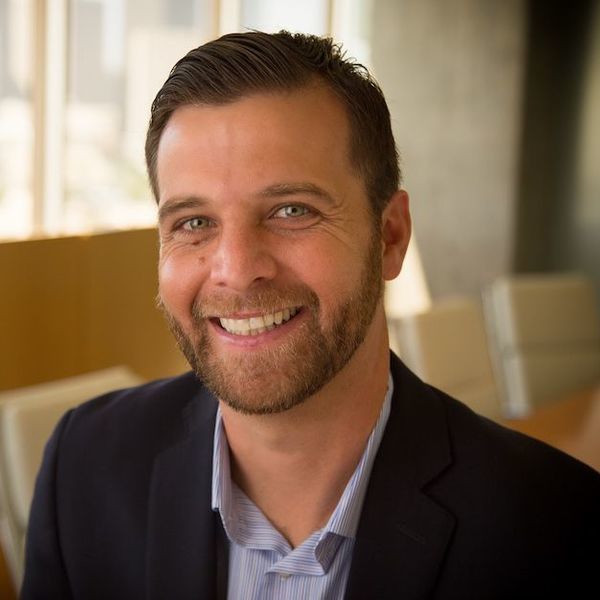
Generational Real Estate Families with Lineage Asset Advisors
Real estate families, and what happens when property is inherited together.
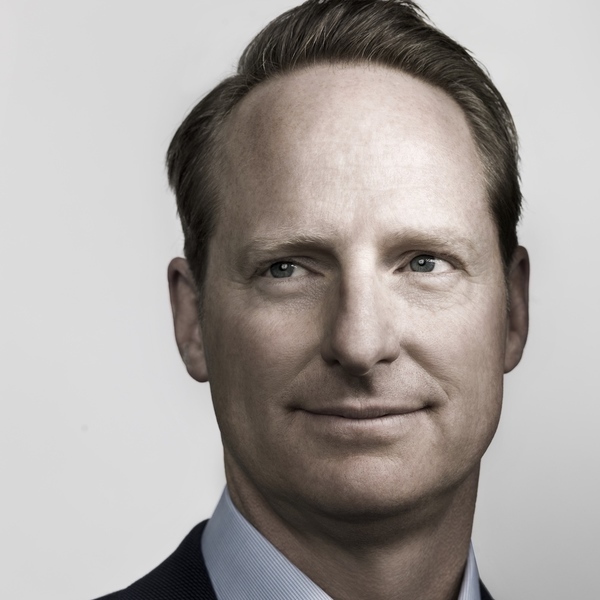
From Built to Sell to Built to Last - The Tugboat Institute Story
Founders who build to hold, not to sell.

Co-President Siblings Stewarding a 111 Year Old Family Business
Two brothers who made sharing the top job work.
The Business Family Diagnostic · Engine
Morris's capital got him started.
Moses's grandfather and mother each chose not to spend what they inherited, and it became his first building. When someone in your family brings a new business idea, is there a way to consider it seriously?
“Family members are encouraged to start new things, inside the family enterprise or outside it.”

Every family wishes someone had recorded the generation before.
I built Enduring Stories to do it for yours: a guided voice conversation, from home, that keeps your family's voices, values and history.
The newsletter
The most useful things in these conversations are the things families rarely say out loud.
I share them in my newsletter once a week. Sign up to receive the ideas directly and start building the foundations for your family today.