
Episode 19 · Season 1
Successfully Navigating Multi-Generational Family Dynamics
Key ideas from this conversation
Governance is the sheet music, modelling is playing by ear, and children know when the documents are a sham.
The elders wait for the rising generation to ask, and the rising generation waits to be told.
Before you bring out the elephant, decide whether it's worth it. Choose to let it lie and you forfeit the right to complain.
Read the full show notesBio, standout quotes and the episode timeline
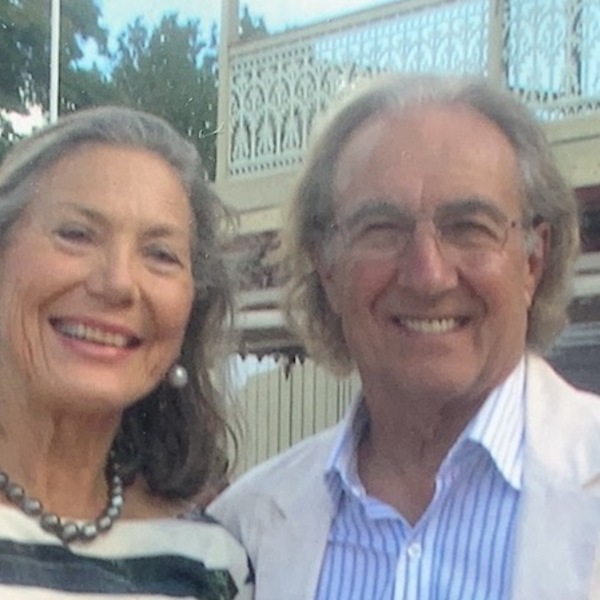
Jim and Paul Warner work together in multi-generational family dynamics helping all parties establish and sustain authentic, synergistic, relationships.
Paul leads young adult retreats, focusing on authentic relationships, navigating change, and leadership development. He also coaches young adults seeking clarity on their life purpose, mission, and vision, and guides them to take full responsibility for their lives.
Jim’s work has led him to write three books and an audio series based on high achievers’ yearnings for identity, meaning, and connection. He has been married 44 years and enjoys enriching relationships with his wife, their three adult children, and a granddaughter.
Jim and Paul work extensively with Young Presidents’ Organization and Family Business Network Families Worldwide. The last dozen years they have also guided several S.E. Asian families in their quest to establish enduring principles across multiple generations.
Standout Quotes:
- "One of the major issues of families of wealth is they make the mistake of insulating the kids from the realities of living outside of the wealth bubble" - [Jim Warner]
- "Without being able to experience pain, you cheat people out of the ability to experience joy; I'd like to think of pain and joy as opposite sides of the same coin and if you mute one, you're gonna mute the other" - [Jim Warner]
- "If we want our young adult children to step into their sense of destiny, are we modeling that ourselves?" - [Jim Warner]
- "If you've worked with one family, you've worked with one family" - [Jim and Paul Warner]
- "Introduce a common language within the family so that we can play in these intentional spaces, to stretch towards each other." [Paul Warner]
- "Harmony is impossible without the willingness to go into painful discussions" - [Jim Warner]
- "If you choose not to discuss the Elephant in the room, you forfeit the right to complain" - [Jim Warner]
- "When all parties are willing to play ball, when all parties are willing to take responsibility, we'll often say "right now this family has 600% responsibility" each of you takes 100% responsibility for what is within your control." [Paul Warner]
- "Love is unconditional, relationships are not" - [Jim Warner]
Key Takeaways:
- Jim explains the need to distinguish supporting and protecting, from enabling, because oftentimes families blur those lines.
- Mike and Jim agree that being insulated from the rest of the world does not necessarily protect wealthy children but may do more harm than good.
- Governance structures are secondary to parental modeling of core values.
- Rather than jumping right into getting the kid fit for succession, the key thing a parent should ask is "How do I help my young adult find their own passion in life?"
- Jim highlights 3 key steps to balancing being a nurturing parent while not enabling children: Active listening, Allowing children to face disappointment, and Guiding them to take responsibility for their lives.
- Many professionals who go into a family environment have a relatively small toolbox; if all you've got is a hammer, the whole world looks like a nail.
- Harmony is about truth-telling, it's not about being nice to one another
- Jim stresses that the goal of discussing the painful topics (the elephant in the room) is the potential of having an authentic family relationship as opposed to a transactional family relationship
- If a sense of self-awareness is instilled into children, then when they're adults you can have mature transformational discussions as a family, but without it, the children may never grow up.
- The components of the "Trust" that sets elders apart: Credibility, Reliability, Honesty, Vulnerability and Adaptability.
- There are two ways life happens; life can happen to me where I'm the victim, or life can happen by me where I'm a creator and I create my own options
- Life is a journey and the important things take time; part of that journey will be your individual discovery and deeper understanding and connection with yourself.
- Don't change, I love you just the way you are
Episode Timeline:
- [00:46] Mike briefly introduces both Jim and Paul Warner, and they share some of their background stories
- [04:41] Paul describes the impact of his father in his eventual choice of profession
- [07:18] What are some of the challenges that you've seen for parents raising motivated and happy children amidst wealth?
- [13:43] What role do you think formal governance structures play in shaping strong family values and bonds?
- [17:01] Paul's definition of the rising generation, describing the common dynamic between them and the older generation.
- [20:21] How do you help people identify their own path and whether or not they're fit for succession?
- [22:42] How Paul got into the family business
- [27:58] Jim describes how a parent can be welcoming and nurturing without enabling the children
- [29:51] The approach to working with different families
- [33:41] 13 guidelines for authentic interactions in any environment
- [39:06] Discussing the "Elephant in the room"
- [51:33] What sets an elder apart with respect to the ability to influence the success of a family?
- [01:00:02] From Paul to his kids
- [01:01:03]From Jim to his kids
Links:
- Jim Warner : Jim Warner is an entrepreneur, author, and transitions expert. During the 1980s and early 1990s, he founded, grew, ran, and eventually sold an international software company.
- Paul Warner : Paul is a seasoned facilitator and coach in professional, personal, and social sectors. He specializes in creating environments for small groups to openly share, build trust, establish deeper authentic connections, and navigate difficult topics through experiential retreats and tailored workshop trainings.
- Click here for specific tools for Enhancing Family Dynamics : (as referenced in the podcast)
- Book: Facing Pain - Embracing Love - by Warner, Jim : Our highly competitive society drives us to be the best and accumulate the most. Yet, as we earn more recognition and wealth, the less we seem to enjoy our lives. In our quiet moments, many of us sense a vague unease and admit that something important is missing. Facing Pain - Embracing Love uses a unique geographic metaphor to guide you out of that discontent and into the joy and richness of authentic living.
- Book: The Drama-Free Office (a.k.a. The Drama-Free Family) by Klemp, Kaley & Warner, Jim : In The Drama-Free Office, authors Jim Warner and Kaley Klemp interweave humorous and relatable case studies with the key skills you'll need for managing office and family saboteurs--be they subordinates, coworkers, boss, parent, child, in-law or other relatives. You will see your coworkers, family members (and yourself) in this entertaining and practical blueprint for addressing the dramatic behaviors that cripple so many teams and families.
- Book: 13 Guidelines for Effective Teams by Klemp, Kaley : Good communication is at the heart of every successful team and family. 13 Guidelines for Effective Teams gives each individual within an organization or family the power to create the most reliable environment for effective communication. Used by an entire team or family, the stage is set for breakthrough creativity and authentic relationships. Team and family facilitator, Kaley Warner Klemp, has compiled these powerful principles into a concise pocket manual, making effective team or family communication accessible in virtually any work environment.
- Book: Aspirations of Greatness by Warner, Jim : AoG introduces several models for navigating the treacherous rapids of midlife, with principles that apply to anyone who feels lost, lonely, or unloved. The book is a blueprint for positive change and offers uplifting, practical guidelines for living out your innate genius with gratitude, wisdom and serenity.
- Audio Series: When Having It All Isn’t Enough by Warner, Jim : This 12-part audio series identifies the issues, dilemmas, and emotions faced by an emerging generation of successful, but unfulfilled, professionals. These “winners with heart” appear to have it all, yet yearn for purpose, connection, and inner peace, along with a renewed energy and aliveness. They have attained affluence and power, but confess to feeling little sense of mission, meaning, or connection in their lives.
Read the transcript
This transcript was generated automatically and may contain errors, including in names. Listen to the episode for the exact words.
MikeWelcome to The Business of Family. I'm your host, Mike Boyd. Multigenerational wealth creation involves so much more than capital accumulation. The most successful families cultivate values, stories, knowledge and resources to pass on to the next generation, and they do it very intentionally. On this show I sit down with members of some of the world's most interesting business families to hear how they do it. To see where your own family stands, take the Business Family Diagnostic at businessoffamily.net.
Jim and Paul Warner work together in multi-generational family dynamics, helping all families establish and sustain authentic synergistic relationships. Paul leads young adult retreats focusing on authentic relationships, navigating change and leadership development. He also coaches young adults seeking clarity on their life purpose, their mission and vision, and guides them to take full responsibility for their lives. Jim's work has led him to write three books and an audio series based on high achievers' yearnings for identity, meaning, and connection.
He has been married 44 years and enjoys enriching relationships with his wife, their three adult children, and a granddaughter. Jim and Paul both work extensively with Young Presidents Organization, YPO, and Family Business Network families worldwide. The last dozen years or so, they have also guided several Southeast Asian families in their quest to establish enduring principles across generations.
Jim, Paul, it's fantastic to have you with us today. Thank you again for both agreeing to join the show.
JimMike, thanks for having us.
PaulIt's terrific to be here, Mike. I always appreciate an opportunity to get together with my old man. I appreciate you guiding us today.
MikeWe've called a family meeting for you. Let's see how often you agree. Before we get into anything too deep, I'd love to start with your respective backgrounds, please, and how you both came to dedicate yourselves to working with families and individuals to transform their lives.
JimOkay, I'll make a pass on that. I was brought up in the Midwest in the United States in humble, simple, a safe family of origin environment. The family is really kind of polite, I'd say really nice. and I recall never really having the tools to acknowledge or express emotion or address any kind of conflict in our family as we were growing up. So got educated, went off to college, was a techie in my education background, academics. In my late 20s, I started a technology business and I think I was always born to be an entrepreneur. My brother was an entrepreneur, just felt the right thing to do and I experienced the pressures of growing a new business
with managing people and trying to balance this with a family life. I mean, when we started the business, my wife had quit her job. We had an infant child, bootstrap financed it, and borrowed five grand from my father to get it started. So it's a classic entrepreneurial gig. And it was always a constant challenge in running the business in those early years with one, two, then three kids on what's really important. And sadly, I can look back and say that the family often came second. After about 13 years running the business, we got it sold.
And this was after years of travel for me. And I actually went through depression a couple times. But I was pretty fortunate after I sold because I had some mature elders around me who coached me through those, a lot to think of as like the dark shadowy kind of times. And they led me and I kind of maybe led myself into finding an authentic way with my family and learning how to have, I'll call it real conversations. The last 25 years, I went from the dark side of running a business into becoming a consultant. I like to think I've been paying it forward. My learning about family interactions, starting from those early mentors, has really evolved and matured.
Paul and I have been working together. We've had the opportunity to work with members of YPO, Young Presidents Organization, families, and other leaders who are challenged with running substantial enterprises. And at the same time, they're longing to have a vibrant family life. I guess lastly, and I'll let Paul kick in in a second, our own family now with three adult grown adult children is an ongoing laboratory for walking our talk. So that's a snapshot of my story. Paul, I'll let you jump in here.
PaulHow I got into this work was really being lucky that I had a father who was a life coach and a facilitator. I think more so as one who also desire to have a deep connection with me, especially my adolescent years, and to share some of the wisdom that he gained from his own personal life, as he just outlined, you just heard. So when I was 16, he created a year long program, a rite of passage program called becoming a man. So the transition from adolescence into early adulthood. And so I look at this phrasing of transforming your life, when I reflect on my life, I really see ritual space in the introduction to self-reflection through that program. And if I'm being really honest, Mike, certain times it
was weird and different, but different in a good way because it got me to think differently. It showed me different perspectives. So this idea of having courage to go through blocks, challenges, areas where we're scared or we're stuck in fear. So I had that opportunity as a young man to get introduced to that space. And through my 20s and 30s, my father's guidance continued where he created a small group for me and my best college buddies.
So a YPO-like forum where we met monthly, followed the program, the protocol, but really was intentional, talking about our lives, talking about our relationships, a lot of the things that had happened in our early 20s. And I found that to be incredibly powerful, not only for my connection with my friends, but how all of us were able to navigate the situations that we were faced with.
My father then also introduced me into the ritual space of his work, where I'll call the phrase being a bag carrier or riding shotgun, where I got to observe the space. I got to see the dynamics, feel the power of individuals navigating their lives, doing that transformational work. So while I had my own job, my own career, I was moonlighting on the side.
And then I started getting connected with young adults, sharing some of my story. and then made the jump to switch full-time a handful of years ago, really kind of rooted in this passion to pay it forward, knowing that I was quite lucky to have rite of passage programs in my teenage years to get a small group created without being affiliated with programs, quite unique.
And so practicing what I preach really had the passion to pay it forward to younger adults and families.
MikeThat's fantastic. You've both had a very impactful experience by the sounds of it. And speaking of young adults, I want to discuss this intersection of families and wealth. What are some of the challenges that you see for parents raising motivated and happy children amid wealth?
JimGreat question, Mike. I think one of the first things is to distinguish between supporting and protecting on one side and enabling. Oftentimes, families blur those lines. And the kids oftentimes aren't going to speak up. It's the family's responsibility to distinguish between those. And I see one of the major issues in families of wealth is they make the mistake of insulating the kids from the realities of living outside of the wealth bubble.
What does 99% of the world live like that you don't? And what happens is they end up then cheating the kids out of the opportunity to earn, to actually work and receive money for their labors. And also, besides just earning, it's the opportunity to navigate pain. Oh, but my God, I want to insulate my kids from that.
I don't want them to feel hurt. I want them to be happy. And without being able to experience pain, you cheat people out of the ability to experience joy. I like to think of pain and joy as opposite sides of the same coin. And if you mute one, you're going to mute the other. And lastly, I think in this whole wealth area, I think they end up deferring the lesson that the world is fragile and unfair. And it goes back to the idea of the bubble that I mentioned before.
The reality is that stuff happens out there and you're going to experience unfairness, fragility, pain, and it's not fair, you want to say, but welcome to the world. And the sooner a young person can experience that, the more they'll grow into mature wise adults.
MikeIs it fair to say, Jim, that wealth is an amplifier of good or bad, and that being insulated from the rest of the world doesn't necessarily protect wealthy children, but actually harms them in their development.
JimI'd even go so far as to say it amplifies the bad more than the good. There's more of a risk of amplifying the bad than the good. There's literature out there that says if you reach a certain income level, it might be 70 to 80,000 US, that happiness is uncorrelated with anything beyond that. I'm thinking of one family that really did it right. It's a sixth generation family both Paul and I have worked with. And the kids were all taught that they work early, early in their lives, early in their age. So you want to be involved in work in some capacity? Hey, you go out and sweep the factory floor. You carry heavy bags of our merchandise,
pack, load trucks up, get up at 530 in the morning, okay? Find your way to the office or to the factory. And also they learn how to work for somebody else, not the parents or even relatives. They learn early the consequences of their decisions. Things go well, they might get a bonus, they screw up in some fashion, you might get your pay cut or your allowance cut.
And they learn how to use money to accelerate education and maybe experiences and not just for to buy cool stuff. On the other hand, there was one family we worked with, it was outside of the U.S. where all the kids were grown. They lived independently, but almost all of their expenses were paid for. They had nannies, house cleaners, drivers, and oh yeah, we wanted to be independent.
They pay for all the expenses. Like what? Well, they pay for their food and maybe their phone bill. And so the young adults ended up having similar perks because, oh, of course we don't want them to feel once they go off on their own that they're being cheated out of what they had growing up. So the same perks they enjoyed being at home with mom and dad.
And there's another story in this vein is a young adult comes to the parents with a great idea for a business he or she wants to start. And the business plan is written on the back of a cocktail napkin. And, well, I'm not sure, you know, I want to work maybe six, eight hours a day and I want to have lifestyle as well as starting my business.
And I have one story we have where the father, we like to say, paid $6 million for his son's MBA for the investment in a business that went nowhere. So those are an example of a good one and a not so good one.
MikeAnd Paul, I understand that you predominantly work with young adults. Do you see the full spectrum of this, of children inheriting wealth and struggling with it or flourishing with it with the right values in place?
PaulI see it across the board. I think your question is phrased well about establishing motivation early. To me, that helps drive the happiness. So to get a taste of what hard work is, to learn how to have that drive, to push through tough times, to accomplish things, to learn, to grow, to excel. So I know even for myself, when I, my parents, when I was going off to college, I was aware of the price tag of the university I was going to. That was something they couldn't hide from me. I knew that I was going to an expensive college that I personally didn't have to pay for or take out loans.
And with that, the two summers prior to going to college, my parents insisted that I work in a factory doing mundane factory line work to get a taste of what real hard work looks like. And if I chose to screw up during my college years or not take it seriously, that that opportunity and that privilege would be taken away. So I got a taste of that motivation that really drove me to take advantage of opportunities that ultimately I was able to find some happiness for myself.
So I've seen it across the spectrum as well in different clients that I've worked with. But I will say for an example of one individual working for a food delivery service with an outstanding degree from a university, but finding motivation and happiness in doing the food delivery service because he was in a transition. And in a, yeah, the best way to phrase that, in a transition in his life, but found his own desired drive to do it on his own and maintain his own level of staying happy.
MikeThat's excellent. I want to touch now on some of the more formal structures that particularly multi-generational families implement. Things like family meetings, constitutions, mission statements. What role do you think and in your experience do formal governance structures play in shaping strong family values and bonds? Do the values and bonds have to be there first and the governance is an umbrella over the top? Or is there some other approach to this that you think is the best way forward for families of wealth?
JimMike, my view on that is that the values and bonds must come ahead of any governance or codification type of structures. The governance structures are secondary to parental modeling of the core values. And not just the core values, but the ability to have mature, authentic interactions among the family members, which means having some difficult conversations. We might touch on that a little bit later. As I think about this, it's kind of like a musical metaphor. It's like governance is the sheet music. Yeah, you need to have that. You need to see all the notes. But the modeling and the values, that's playing by ear. This is something that's innate in the family. And once you have
that innate skill, then you can wrap around it some of the governance structures so that it can endure across multiple generations. So in a lot of our work, we help families codify their principles, again, let's like the sheet music, and put it into a constitution, mission statement, core values. And one family we work with, I love their phrases, they call it, it's the way we roll, kind of a euphemism. But parental modeling of these principles playing by your, it has to precede any governance. Otherwise, I mean, he's just, I use a strong word here. If you try to go the other way around, it's a sham. If you're not walking your talk and you have all these
highfalutin documents, the kids know it.
MikeI think that's an excellent point. I love the comment about that's the way we roll because I've spoken to some other families that also talk about how they celebrate their differentness, right? And how they celebrate their togetherness and what makes them special. And obviously, every family has its quirks and its rituals and traditions. And I think sometimes when you have a phrase or a value system that when spoken triggers that for the group, that can really help bring the family group together.
JimWe agree.
PaulYeah, I think you're hitting the nail on the head there, Mike, especially in my perspective and working with the rising generation. Often constitution, mission statements, governance can be very transactional type of statements. So creating a space where we can connect to share our stories, to live out what these values might be and to create those bonds, especially for young adults.
off of them have a memory of their cousins or extended family from their youth, but have been on their own individual path for the last decade or more. So haven't really connected as young adults. And so typically, when we have a family meeting, we fall into the transactional, how's your work? It's good. How's your home? It's good. How's life? Everything's good. But we don't actually have an opportunity to connect. So creating a space to really share our stories, our wants, our challenges, our issues as young adults really breeds an opportunity to start to lean into more of the transactional labeled governance meetings, the structure around how we share and connect with each other.
MikeSo Paul, I'd love to ask you how you define the rising generation. How does it differ from the next generation or is it the same thing?
PaulEssentially, it's the same thing. It's the emerging generation and the one who's reaching out their hand for the baton pass. But it's interesting, I call it the rising generation versus the next generation is that often there might be a 15 year gap between who's going to be in line or they're, you know, really taking the reins in the first several years. So looking at that entire generation is a group that are all going to be a part of the next wave.
MikeAnd you talked about creating a space for them to get a bit deeper beyond the transactional conversations. When you're doing that, are you largely doing it as a group of the rising generation to build bonds and talk amongst themselves? Or are you also bridging to the current generation of leadership or their parents or uncles and aunties? And what space are you creating for the family?
PaulIt's a good question. And often the dynamic when I'm approached by clients is the elder generation, if you will, will say, we're waiting for the next generation, the rising generation to ask for what they want. And then the rising generation or the next generation are saying, well, we don't know what we want. We're waiting for the other generation to tell us what to do. And so typically, that's the dynamic where I come in. And often what I'll propose is that we connect with the rising generation first. To echo in what I mentioned earlier, let's connect as people. Let's share some stories. Let's create a space where we can lean in, feel a little bit more safe to open up. And then once we're able to do that,
then we start to weave in more of the larger family dynamics. So yes, what does the family business mean? It's the family charter. What is the constitution? What is governance? And then we also get an opportunity to talk about some of the things that they can create. So really highlighting areas of focus under opportunities. What might be philanthropic opportunities that we can be involved in? How can we learn to get involved in that space?
Togetherness, unity, maintaining this energy, the family lore, ensuring that we can carry all of this as we roll. So those are some of the key topics that we'll start to dissect, explore, and then weaving in the next generation and kind of taking a similar approach. Elder generation and rising generation, connecting it as adult to adult, sharing our stories, creating that space, and then talking about, quote unquote, some of the family business.
MikeThat's interesting. And I like that approach of trying to connect with the rising generation first, you know, and approaching the family dynamics that way with a view to the future rather than the way it's always been done. I think that naturally brings positivity and energy because you're talking about what's possible. I think that's really healthy. Now, Jim, let's flip that around. I'm curious from the other perspective, how do you suggest parents best encourage and empower young adult children to realize their own path, to follow their own destiny, for lack of a better word? Because I imagine that not all children are putting their hand up to work in the family business. Not all of them are destined to work in the family business. How do you help
people identify their own path and whether or not they're a fit for succession?
JimWell, rather than getting in, just jumping right into fit for succession, I think the key thing you're looking for is how do I help my young adult find something they are passionate about, find their own passion in life. And it might be in the family business, but be very careful not to presuppose it will be in that space. And we might speak a little bit later about how Paul got into this business. I don't know if you want to go there, but that, you know, how he got involved working on where I am. It's an interesting story. All right. But back generically, I think the first thing for parents is, I'm going to be blunt here, to be selfish. As the parent, did you know your
own destiny, your own sense of purpose? Can you state in one sentence what your sense of purpose or destiny is in your life? And then, frankly, are you living it out? Or are you doing this out of duty that was imposed upon you by your family, or you heard about it in a fraternity party when you were 22 and you became captive to the income. So, if we want our young adult children to step into their own sense of destiny, are we modeling that ourselves? Is our own life really false? It doesn't live up to that. Yeah, I think that's a great point. People say, what's the life purpose? This must be, it's got to be some of this very complex process to go through. It's really pretty easy.
The generic definition of my life purpose is to be fully present in the moment. So frankly, my sense of life purpose is to be on this call with you right now, Mike. Thanks for being with you. In the moment. Okay, well, I'll continue bringing my unique gifts to the world in some way that uplifts others. So if I'm doing that, I'm present right now.
I'm using what I'm naturally wired to do. And everybody's different in that regard. and somehow whatever I'm doing uplifts others. And you can run a for-profit business and do this. But if I'm doing that, I'm going to feel fulfilled, joyful, and in what we like to call my genius. And so first thing is parents modeling that. And in so doing, kids will be able to observe that and aspire to the same thing for themselves.
MikePerfect answer. I love that. I love that. And you mentioned that we could get into it later. I'd love to get into it now. how Paul ultimately got into this business, working together with you, Jim. Paul, over to you. Was it a natural progression following in footsteps? Was it that exposure, the rite of passage program from when you were 16?
Or was it some other path?
PaulI'd be curious to ask my dad what his intentions and what path he may have had laid out for me. But certainly from my vantage point, it wasn't the clear plan. So I think a journey is definitely the best way to phrase it. It'd be hard for me to say I'm not following in my father's footsteps. I'm currently playing out of his toolkit, operating in very similar spaces, often collaborating, partner on the same brand and on his website.
But as I said earlier, ultimately, it was my own path. So I absolutely had it in my head that I wanted to make my own mark. I went to the University of Miami, was living on South Beach, had adventures that took me to New York City. I was enamored by the creative spaces. But something that I think my dad did very well was he laid out breadcrumb trails for me.
So he was able to continuously give me little tastes of his work to make it fun. There were opportunities for a little bit of money that was inviting and intriguing. So that invitation really got me interested in the space. Because if I'm fully honest, I had major imposter syndrome. I'm seeing him... work with executives, high-level companies in a space that felt way beyond my capabilities above my head. But his faith in my skills and seeing that I could be good in this work and giving me taste was what really attracted me to give it a go, to start to believe in myself.
So again, I was the bag carrier riding shotgun. He introduced me to his colleagues. I got to learn from other great facilitators in the same space. So that was really the initial draw that got me to believe that this is something that I could do on my own. And once I got that taste, then I got to see what I could make out of that. And so something that he mentioned a minute ago about being empowered, once I got the taste to say, oh, I can make this on my own, I can have a support network. I like this, I can be really good at it. And I'm watching my dad and all these other
colleagues create their own schedules, manage their own time. This is really appealing to work for yourself. So he did a nice job of modeling, living by example, as he outlined a minute ago, to kind of empower, show me what it looks like, and then give breadcrumb trails little tastes with encouragement, without pressure, to say you can do this on your own. So certainly wasn't the path as I saw it. Maybe I blindly followed perfectly into the path that he had outlined for me.
But I feel genuine about making it my own journey, carving my own path to get to where I am.
MikeThat's terrific. Thanks for sharing, Paul. Jim, I'm curious, how does that align with your view from the other side?
Jimbecause I've worked with a number of family businesses that have really struggled with empowering the rising generation to quote unquote take over and become partners in the family business. I had real trepidation about that with Paul. Interestingly, I have to confess, and Paul may have never known this before, I'd set aside a bunch of money that if Paul wanted to start his own business and came in with a cogent business plan, I would have loved to have funding. It could have been in media, transportation. I don't care what it was.
If he found something entrepreneurial he wanted to do, and I might be a board member and see him spread his wings, I was prepared to be an investor. On the other hand, I didn't know actually that he would actually come and find joy in working in this space. I think one thing that's important to share, I think we've done well, is that yes, Paul's is on the website, and I helped perhaps get some initial engagements for him.
I'd say 70%, Paul can plug in the actual number. If his engagement's now, he gets on his own, does his own marketing, he follows up. So if I can present an opportunity and he can close it and get it, go for it. The other thing we've chosen to do is kind of a call, it's like a consulting organization, is if we have an engagement, we split fees, whoever gets it, we work out the fee structure.
But at the end of that, you're on your own. There's no equity sharing. There's no salaries. We're all kind of individuals and silos. I like to think of us like studio musicians. We'll team up for a gig and then we go off and do our own gigs. Paul works with a few other people. I work with a few other people.
And in the family business space, we often work together, but a lot of our other engagements are separate. And the beauty of this, I think, Mike, is that when we have Thanksgiving holiday coming up in a couple of days here or end of year holidays, 80% of the time is playing with our granddaughter or talking about family things and not about, quote unquote, the business.
And so, I got to say, I'm elated the way that we work together and we have a father-son relationship that is more important than a quote-unquote business relationship.
MikeAnd I think the relationship that you've just described is probably one that a lot of people listening to envious of or may be envious of. I'm curious, how do you as a parent become welcoming and nurturing, whether it's within the family or working together in some capacity, without enabling or rescuing your children?
JimThere's a few steps that come to mind on this. The first is when you're having a difficult conversation with a child or they're bringing a tough issue to you. For me, we practice active listening. So it's so tempting to impose, strong word, my 60 plus years in this space on my child. And instead, just shut up and hear, acknowledge their dreams, their emotions, their plans that they're fermenting.
And I think this active listening is the cornerstone of compassion. I mentioned this a little bit earlier, but I think the second thing is allowing the kids to experience disappointment, failure, the unfairness and fragility of life. And then rather than telling them what to do, work with them to come up with their own options. It'd be very easy for me as the elder, experienced parent, here's what you need to do.
It's a disservice by so doing. And the third thing I think is, and I can't emphasize this enough, is guide them to take responsibility for their lives. It's their choices, whatever they choose. They reap the rewards. They endure the consequences. So, yes, help them sort through options, but then they make their choice, and then I get out of the way.
Encourage, bless, but it's their life.
MikeThat's terrific. I like that. You have a great quote on your website, which says, if you've worked with one family, you've worked with one family. Highlighting that families are as diverse as the individuals that comprise them with all of their unique histories, complexities, challenges, opportunities. How do you coach and support families when no two situations are the same or no two family are the same?
JimI think the first statement I have here is that many professionals who go into family environments have a relatively small toolbox. And so if all you've got is a hammer, the whole world looks like a nail. And so they're the ones who come in saying, well, you worked with one family, that's what they all look like. So the issue is looking at what I like to think of as a multivariate opportunity in a family environment. Multivariate means things, what do I mean by that?
It's like the histories, the generations, all the personalities involved, the variation among aspirations. Who are the mature ones? Who are the immature ones? Are there old wounds or baggage that have never been dealt with? Where's the power structures in the family? Where are the elephants likely buried? So it's like a three-dimensional chess game in a sense. And we may come in with a seasoned opinion on the core issues.
I mean, we've worked with hundreds of families, but the key in this is to hold those lightly. Stay curious because there could be some new data that arises in being able to shift as opposed to becoming wedded to a singular approach. Actually, this is what a lot, I hope we're intelligent, but it's actually what most expert systems or artificial intelligence systems are like.
They're continually learning based on new environments that you see. Another medical analogy is I like to think of our work as being an internist who understands the whole body as opposed to a cardiologist or a neurologist or pick a medical discipline. Our role is to be able to see the whole body and factor in all components. There's a risk if you don't do this, you come and say, well, all right, these guys are just like the Jane family.
And here's what we did with them. And it's going to work here also. And that inevitably causes problems or false starts. So maybe it's a long-winded answer, but that's kind of the approach to no two situations are the same.
MikeAnd Paul, do you share a similar view working with the rising generation? I imagine some of the struggles of whether they're adolescent or young adults working with these families would have some similar challenges, but their own uniqueness as well.
PaulUniqueness is the right phrase, Mike. What I like about this work, especially working with families, is that we must be able to pivot to adapt and take each individual family at face value. So one of the things that I love for what I do, but also to highlight in the work with families and the rising generation is to celebrate the uniqueness that we have as each individual, the uniqueness of our family, and the unique opportunities that may be in front of us.
So for me to see that there is no single playbook, we certainly can pull from experience, tools that work well, but to create the process, co-collaborate is something that lights me up and I think is also encouraging for the family dynamic as they are buying in.
MikeLet's talk about some of these tools and frameworks now. As a coach or as coaches, how do you suggest families embrace these tools in order to maintain harmony and prosperity, particularly when we look at building on with future generations?
JimThis is similar to the question a little bit earlier about mission, constitution, if you recall that. The parents have to model mature behaviors first, and the tools and frameworks, they're doomed to fail if they're built on a flimsy foundation. So we have a set of what we call authentic interaction guidelines. There's essentially 13 of those. And my daughter, Kaylee Klimp, actually wrote a book on 13 guidelines for authentic interactions in any environment in a family. So some examples are, I will speak my truth. I will ask for what I want.
I will stay present and engaged when times get tough. I will own my judgments. I will listen with curiosity and openness, things like that, that if you have these wrapped around or as the foundation for your interactions, they'll be authentic. And so, it goes back, are the parents, the elder generation modeling these? If they are, then you'll be successful. And by the way, if you want, Mike, we're happy to include these in the podcast notes. If you have those, we can just send you what those 13 guidelines are.
MikeThat'd be terrific. Yeah, we'll definitely link to the book as well. I'm curious, Jim, how are these implemented? Because they're very easy to say, and I think those guidelines are brilliant. But if you engage with a client that perhaps isn't modeling them already and wants to begin, how do you actually, as a coach, help them to understand how they can speak their truth, ask for what they want, not shy away from a difficult conversation? Because I imagine that that takes a little bit of undoing if families have been wedded to one way of working for a period of time.
JimTo actually get into some of these more meaty topics, potentially risky topics inside of a family, we first establish as much a foundation as we can that they will begin to trust one another or at least have a taste of trust. To begin to explore and test out some of these guidelines requires a sense of vulnerability among the family members.
I like to think of the vulnerability as being like a pool. Some people will do a cannonball off the diving board into vulnerability from day one. Others, it may take them weeks or months to put their toe in the water because it's pretty scary for them to present something where they might be shamed or feel guilt. And so we help people in a family environment to listen.
Remember the act of listening? When somebody begins to bring something forth that could be fragile or potentially shaming or vulnerable or emotional, teaching them how to hold it versus trying to fix it or, oh, you shouldn't be scared about that. That's not a big deal, which class people close back down. So gradually getting them to test drive being vulnerable with one another.
And then when they are, when someone begins to, I'll say, violate one of the guidelines we mentioned, others in the family can gently say, hey, it looks like you're being a little bit judgmental here. Is there a way you might rephrase that? Oh, yeah, thank you. They can begin to receive coaching from other family members when they're beginning to get out of bounds without falling into victimhood or blaming. So it's a gentle process to gradually build enough safety in the family that they can share difficult topics with one another.
Paul, you may have some more insights on that.
PaulThe level of that safety, there's a spectrum for that as well. So on one end, it could be real deep personal vulnerabilities and emotion. And then on the other end, it could be a little bit more surface transactional. So it doesn't always have to be the deep, meaningful discussions that take shape. I think that would be the desire or the idea was to move the needle towards more authentic, deeper connection.
So the thought that's coming up for me, I'm trying to put it into a framework or a tool, is that I guess it's creating that space for whatever the family dynamic is. So something in between the lines for me is when rubber meets the road, getting it done, creating the space to have intentional discussions and dialogue, to stay connected.
So the day-to-day exercising the muscle, staying consistent with our intentionality so that we can use some of the tools that we've learned, implement some of the frameworks, embrace some of the new language. That's my biggest takeaway around some of these frameworks and tools is to introduce a common language within the family so that we can play in these intentional spaces to stretch towards each other, share our lives together, maintain that pull of family harmony and connections so that we can continue to walk the talk for future generations.
JimI want to jump back in on the harmony side. Harmony is impossible without the willingness to go into painful discussions, potentially difficult, straining discussions. And so learning the tools to have those discussions and the vulnerability to admit mistakes and honor consequences for those, especially by the elders. If the elders come in as holier than thou, we're the sovereigns who know best and we want all you guys to be vulnerable, it doesn't work.
So especially letting the younger people be your teachers, give advice to the elders. It builds a sense of safety in the rising generation with the elder generation and creates that framework for direct conversations, which are also the imperative to have before you can have harmony. Harmony is about truth-telling. It's not about being nice to one another. That's what builds harmony.
MikeThat's a great quote. So I'm curious now to talk about the elephant in the room for all families. We all have them. There's often deep-seated issues buried beneath the surface there, whether it's some historical issue or a difficult relationship. How do families get past that? Is it about creating this space, creating a trusting environment? And then do you intentionally try and bring those elephants out into the room or do you leave them where they are?
I don't know if that's a simplistic question, but I know that family dynamics are complicated by default. So how do we get past some of these really meaty issues?
JimFirst, let's be candid and lay out some of the elephants in the room. And we may not address all of these, but let's just have these sitting out there and then talk about how they might or might not be addressed. A very common one is the frustration by often rising generation family members, but not always rising generation, could be any generation, about not having a seat at the table. We're not part of the decision process. The elders make all the decisions, or my brother makes all the decisions, or my sister. When do I get to have my voice? Another classic one is the entitled family member who doesn't want to do any of the work, but wants all of the perks. And it's especially
poignant when you've got the elder brother who's working his tail off in the business, then the younger brother who's living off the fruits of the business. I like another common one we have is, I call it the immature, outspoken, or worse, the mentally unhealthy family member. They're bombastic at the family meetings. Everybody closes down. They try to smooth things over so they don't burst out. And then out of the blue, they'll make some outlandish remark.
And another one is, well, my wife is really smart or my partner is really smart. Okay. I think he or she should really be involved in governance in the family. So what are the rules around in-laws or non-blood relatives? And these are examples that they're common elephants that we find. So maybe just have those in the backdrop and then we can talk a little bit about how to, you know, what do you do in this situation?
To get started, I think in this is it takes the courage of one individual to raise their hand and say, hey, we're the emperor with no clothes on here. I mean, there's something we're not addressing. It's hidden and it's ugly. And if we don't deal with this, eventually it's going to erupt and it's going to explode and it's going to get even worse.
So it takes one champion or a pioneer to raise his or her hand and say, we need to address this, or I want to address this. At that point, it's usually useful to bring in some professionals to aid in this process. And for us, oftentimes we like to have a reconnaissance trip where we go into the elephant graveyard and we interview all the players that are involved. We can kind of assess the magnitude of the dynamic and say, what's really going on here? Oftentimes, you're just dealing with the symptoms, the leaves or branches on the tree. You don't get to the root and trunks. And so, we want to go beyond those outer symptoms.
And so, we talked a little bit more about 3D chess. This is looking at the whole dynamic, including, and this is important, the risks of provoking or exhuming the elephants from the graveyard. So next step is you got the champion, you know the lay of the land. Next thing is, is it worth it?
MikeYeah, exactly to my question. I wonder whether or not sometimes these things are better left buried or whether or not your perspective was bring them out into the light and deal with them.
JimThere's a phrase we often use in this work that you can cut a person, but never let them go home bleeding. So if you're going to go in and do surgery on this thing, you're going to open the wound up, you got to stay and finish the job. And once you get the diagnosis, are you willing to follow through on the cure? Another part of this, harmony is not guaranteed. Are you willing to take the risk that some family relationships may be either long-term or perhaps permanently damaged or ended. And frankly, it's not working now, but at least you have this kind of low simmer versus high boil type of environment in the family. And you know,
to open up the manhole cover or exhume the elephants or open the wound, whatever metaphor you want, it's not worth the risk. And if you're not willing to take the risk, accept what is and let the elephants lie. Now, here's the kicker that most families don't like. If you choose to do this, you forfeit your right to complain. Oh, I don't like that one.
MikeThat's excellent. And it sounds to me also like the role of the champion or the pioneer that you speak to is also someone that's modeling that vulnerability. Because I think to speak up in the first place and say, I want to address this. I want to bring this out. It takes a fair amount of courage in the first place, knowing that it's going to be a potentially ruptuous topic for the family to explore.
JimAbsolutely. And that person needs to own his or her part in it. If they're just a whistleblower that feel that they're innocent, it doesn't work. They've been complicit typically by not bringing it up earlier. And so for them to show their throat, to be vulnerable and the expression of the dynamic or the sharing of the dynamic gives others a chance to be vulnerable themselves. And this is also, as I think about that, there's one other part of this that's important. While you need to have that singular champion, that person needs a posse.
They need one or two other members of the family who will be on their side. If they're the singular person, they're likely to get caught in the crossfire of the family wars. And so, have one or two others who have been persuaded, who are, again, I'll say your posse.
MikeAnd it's also a demonstration of leadership, isn't it? Someone to speak up, but it's also the first person to follow and show, yes, we do want change. Yes, it's okay to agree and encourage others to come to the table and have an open and frank conversation.
JimYes. And ideally that other person is from another generation.
MikeOh, interesting. Okay.
JimSo one of the parental figures who might break ranks, okay, to say, hey, it's time for some healing here. And I kind of agree with the champion. And again, there'll be, we often like to say, I use graphic examples, there'll be blood on the walls. I mean, you're opening this up, it's going to be painful for a time.
Yeah. And that's why either a mature champion or outside facilitators can hold the space while you go into that painful place. Again, with why do this? You do it for the potential of having an authentic family relationship as opposed to a transactional or polite or delusional family relationship. And you're taking a risk. Is the risk worth it?
Actually, if you want, I've got an example of one where it wasn't worth it. Thinking about this, we worked in one environment, this multi-generational, including multiple marriages, his, hers, and theirs kids. There were some in-laws involved in this. And the G2 kids, they were entitled, but they were generally open. The matriarch, on the other hand, was completely unaware of her narcissism.
She thought she was the benevolent, loving mother. She was really a cunning dictator. And as long as you played by her rules, everybody got along fine, but you don't cross the mama bear. So before a family retreat, we invited all the family members, all the players to do 360s on each other regarding their capacity to have authentic relationships, their leadership skills, and so forth.
It was really the criteria that we put together was what were the criteria to be on the family council. And we've got a set of those that we used in this 360. So everybody completed it. By the way, Mama Bear didn't. She chose not to participate. Didn't apply to her. They evaluated her. and we saw the candid results and they threw her under the bus. They're very blunt comments about her deficiencies. We made a last minute decision to scrap the whole thing. Oh, really? And so at the retreat, we said, it's better to play nice because the collateral damage of surfacing this was too great. It was going to take multiple years perhaps to get her in the place. And over
time, we decided it wasn't going to be. And so, what do you do in this place? What are our options? This is working with a patriarch then to very gently guide her into siloed, I'll call it visible, but less significant roles in the family. So, she could be the spokesperson for the family, go to all the philanthropic galas. So, certainly, it fed her need for recognition, but it kept her out of the decision-making process. She had a sandbox that she could control and then gently yet decisively removing her from major decisions in the family. This is delicate surgical work, but it was more but a direct encounter. Our judgment would have imploded the family.
And so, this is an example where choosing transactional over authentic was the right, sadly, was the right move.
MikeIt's a great story. Thank you for sharing it. And I think it's nice to hear one from the other perspective as well. It's not to say it wasn't successful. It was a different choice that you made based on the circumstances. And it's very, very interesting.
PaulAnd I have a thought in regards to addressing the elephant in the room and unresolved or deep-seated family issues. One of the things that I like about our work is that when all parties are willing to play ball, when everyone's willing to take responsibility, so often a phrase will say, for example, a family of six will say, right now, this family has 600% responsibility.
Each of you takes 100% responsibility for what is in your control. So often when we're approached with the elephant in the room and a deep-seated family issue, one of the things that I love about what we do is we hold up the mirror to each individual to say, what's your part in this? What are some of your unresolved feelings?
What are some of the deep-seated issues that you're creating or stories that you're making up or bringing to the table? how can work on them at an individual level to then create a space where we might be able to address them at a family level. But when all parties are willing to play ball and each is willing to take 100% responsibility, we often start unpacking elephants in the room by looking in the mirror.
MikeThat's powerful. I love that simple takeaway of 600%. That's something that's going to stick with me as something to remind me of always taking personal responsibility.
JimTo have a chance for mature interactions at adult levels, for parents to help build a sense of self-awareness among their children at very early ages. The things we've just talked about at Seat at the Table or dealing with elephants in a room or difficult conversations, taking responsibility requires a sense of self-awareness. Parents modeling that, instilling it in their children, a sense of, I'll be blunt, self-love, self-acceptance, the ability to put yourself in other people's shoes.
The area, it's a very strong word, forgiveness. Forgiveness of others, forgiveness of self. These are all components of a mature human being. And so as part of your upbringing in an affluent family, are you beginning to instill that into your children, that sense of self-awareness? If you do, then when they're adults, you can have mature, engaging, spontaneous, transformational discussions as a family.
But without that self-awareness, people grow up. Frankly, they never grow up.
MikeGreat comment. One thing I think we've got here in this conversation is the unique combination of you both, father and son, but also working with family businesses where you might be working with the elders and the rising generation and everyone in between. I think it'd be really interesting to contrast and understand the role that elders and the rising generation play in a family. What is it besides age that sets them apart in behavior or motivation or ability to influence the success of a family?
JimThe word trust comes up so often. I think you trust an elder. And again, if you think of elder as being independent of age, gender, or even experience, what are the components of this trust? And sometimes we like to think of trust as like an equation, like a math equation. So trust equals the following components. And the more you've got of these, the more trusty you are and the more deserving you are to be in an elder decision-making role in the family.
The first one is credibility. You know your stuff. You're educated. You've done your homework. The second one is reliability. I can count on you. You honor your agreements. You do what you say you'll do. You walk your talk. Third, transparency. What you see is what you get. You're truthful. Now, truth does not mean that you share everything. There may be certain things that are private at an elder level that it's inappropriate to share with the rising generation until they reach a certain maturity level, but there's no secrets. You're distinct between what's private and what's disclosed. The next one is often very hard for the patriarch matriarch in larger families, and that's adaptability. Can I pivot based on new information? Can I actually adopt the view
of someone younger than me? Can I change, can I accept someone else's perspective? So the ability to adapt and to pivot, seeking the best solution versus your solution. Those are great elders. And lastly is vulnerability. You can admit when you've made mistakes, you can kind of laugh at your foibles, ask for help, share at a deeper level.
All of these are attributes of, frankly, a mature, trustworthy person, and I believe they're the undergirding of elders.
MikeGreat characteristics. And I think there's plenty of people listening that will aspire to be able to model each of those behaviors. Paul, what do you think with the rising generation?
PaulWe kicked around a variety of titles and we were putting together a program that we were going to do and we landed on empowering the rising generation. We took that phrase intentionally. So I kind of come back to the, you know, starting with the person in the mirror. It's the thoughts I'd share taking 100% responsibility for what is in your control.
What is in your control? How you choose to show up and engage. So my old man taught me a phrase when I was in my early adolescence, said there's kind of two ways that life happens. Life can happen to me, where often I'm the victim of life and to life circumstances, or life happens by me, where I see myself as powerful, that I'm a creator, that I create my own options.
So I think the nugget that I'd leave with the rising generation is to not wait, to take ownership. You don't know what you don't know. So asking smart questions, but taking responsibility for what is in your control, which is how you choose to show up and engage.
MikeSounds like your old man had some great wisdom to share.
PaulI've stolen a line or two from his repertoire. Don't tell him, though.
JimRemember, I had some really good mentors back in my own formidable days. And so much of my work right now is paying it forward in honor of what those men and women, how they served me.
MikeYeah, it's wonderful to see. And I say that because you're both living it and demonstrating it today. I'm curious now, let's turn to your personal family, if you don't mind, just to start to round this out. How do you both, with your wider family, celebrate and share interesting family traditions? Do you have any unusual or quirky traditions that perhaps other families may not know about or may not also participate in?
JimPaul, why don't you make a pass first and I'll draft off you.
PaulI think unusual and quirky might be synonymous with Warner traditions. I think one of the real staples, you know, we have a few around some of the holidays, but what I really want to highlight is how we stretch towards each other under creativity in the arts and sports. My dad and I are athletes. We love skiing. It's our favorite thing to do.
and my 71 year old five foot tall mother is doing the double black diamonds with us because we enjoy that sport so much so her stretching to us has made skiing a family tradition and we stretch back i don't love to go on walks that's not my favorite uh exercise or sport to do but my mom loves to do that so walking together to stretch towards her has become a family tradition now that we have a nine-year-old in the mix of my sister and brother-in-law, my niece who's nine, the quirkiness and unusual stuff that we're doing, the spirit of a nine-year-old has now been intoxicating.
And so we've done outrageous puppet shows to sketches and skits to changing lyrics to songs this past weekend when she was over. I'll spare you the lyrics because they're juvenile, but that was the whole point of it. So really stretching towards one another to create adventures, art, memorable events.
MikeCommon interests and experiences, it sounds, and having a lot of fun together. So important.
JimYeah. So it stays fresh. It stays new, even though there's a familiarity to all of it. Other than perhaps the skiing, I'm looking at the things we do. Paul mentioned this, the puppet shows, the impromptu dance parties, painting a mural on the garage wall, being silly, goofy. I do dress up with my nine-year-old granddaughter where she dresses me and I chase her around the house. We just play silly, not silly, I think they're fun games. There's no money involved or it's very inexpensive. So creative acts and especially where there's a completely level playing field. So the granddaughter can bring it up. Paul can bring it up. Just, it doesn't matter.
People say, let's go for it. And there's enough vulnerability, simplicity, not being captive to our image that we play as seven or eight, I'm not sure, eight of us now just joyfully together. And there's no measurement at the end. There's no winners or losers. It's just joy of being together. Dressing up for Halloween, for example, is just a riot. Paul probably won't mention this, but I'll bring it up. It's Lady Gaga. Okay. So, my wife and daughter and two daughters and her, my wife's sister, go to Lady Gaga concerts. They had an extra ticket. Okay. So, who tangs a log in drag is Paul. And the pictures from that event, just the memories of doing that kind of thing
together, just being, you see me, you can't see me right now if you're listening to this, but just there's joy. And it's, there's no measurement to it. It's just, there's a spontaneous joy.
PaulI think spontaneity is a good phrase too, and adaptability. So our Thanksgiving holidays, two days from now, and with current dynamics and COVID, we're choosing not to spend time together. We're adapting. We're going to go play Frisbee golf on Saturday in all of our winter snow gear. And I'm pretty sure that both my sisters would much rather do something else, but they're stretching towards the rest of the family because a handful of us really like to do it.
I adapted when one of my cousins couldn't go to the all-female Lady Gaga concert and was willing to stretch towards them and dive in wholeheartedly and be their doll for the weekend and had the best time doing that, but created the memorable event with that spontaneity, willingness to be adaptable and to dive in to what someone else truly likes or has a passion around.
MikeSome great stories and examples there. Thank you both for sharing. We've got time now for our final question. And I've never asked this to two generations on the one call at the same time. It should be interesting. But the question is, imagine you're writing a letter to your children. What is one lesson or idea that you don't think many parents would mention, but you consider important to understand?
PaulMaybe I can go first here so that I don't get derailed by having my own dad read a letter to his own son with nuggets of advice so I can really be receptive and take it in as the rest of the listeners. So without having my own child, but really kind of thinking of your question, I guess some lessons are the idea to me that comes up is really how life is a journey and the important things take time.
And that part of that journey will be your individual discovering and deeper understanding and connection with yourself. So part of my journey that will be part of your journey is to get to the place to say, I know and embrace who I am. And often, life is fragile, unfair, but suffering and struggling, pain, they're part of that journey.
MikeGreat lesson. Thank you, Paul. Jim, would you like to read a letter to your son, Paul?
JimIn pondering this the last couple minutes here, there's two things that come to mind. And I have to share with you, neither one of these are unique to me, but they just have really struck me over the years. The first is the phrase from my friend Cliff Barry. And the phrase is, love is unconditional. Relationships are not.
And the second one is from an author, Anthony de Mello, which is, don't change, don't change, don't change. I love you just the way you are.
MikeBeautiful. And for those that don't have the ability to see this, I'm looking at both of these gentlemen with beautiful big smiles on their faces at the moment. This has been incredible. Thank you both again for sharing as openly and transparently as you have, sharing with us some great examples and frameworks, and encouraging us all to live a fuller life. I've taken a lot from this and can't wait to listen back and go over my own notes. Thank you again.
JimThank you. I mean, what an opportunity for us to kind of riff together. I had a ball. So thank you, Mike.
PaulHad a lot of fun, Mike, and really appreciate what you're doing, bringing stories out and helping families connect. So cheers to you, my friend.
JimYeah, really honor your mission, Mike. Well done.
MikeThank you both. And happy Thanksgiving. You too. Thank you. Thanks for listening to The Business of Family. You'll find the transcript and key ideas from this conversation at businessoffamily.net, along with the Business Family Diagnostic. It's free, and it shows you where your own family stands. And if someone in your family should hear this episode, please send it to them too. I'm Mike Boyd. Until next time, take care.
Keep listening
If this one landed, start here next.

A 5th Generation Member of the Schrage Family, Owners of the 126 Year Old Centier Bank
Conflict as fuel, and a family psychologist in the room.
Building & Operating the Business of Family
A constitution and a quarterly family meeting that work in practice.

From Billionaire's Son to Losing it All and Starting Over
A Malaysian family that built forums for the hard conversations.
The Business Family Diagnostic · Relationships
If you won't discuss the elephant, you forfeit the right to complain.
Jim and Paul help families weigh whether to bring out what nobody says, and how to stay to finish the job. Would your family say difficult topics get raised and discussed rather than avoided?
“When there is a falling out, the people involved are able to repair it.”

Every family wishes someone had recorded the generation before.
I built Enduring Stories to do it for yours: a guided voice conversation, from home, that keeps your family's voices, values and history.
The newsletter
The most useful things in these conversations are the things families rarely say out loud.
I share them in my newsletter once a week. Sign up to receive the ideas directly and start building the foundations for your family today.