Episode 29 · Season 1
My Ceiling is Your Floor - 2nd Gen Leader of Canadian Health Business
Key ideas from this conversation
Six months in, their father told the brothers that where he had topped out was where they would start, then asked for a five-year plan.
Nobody in the family talked about money, roles or titles until a private equity partner made them name a CEO.
Aaron's rule with his brother: nothing in the business will ever be allowed to compromise the relationship.
Read the full show notesBio, standout quotes and the episode timeline
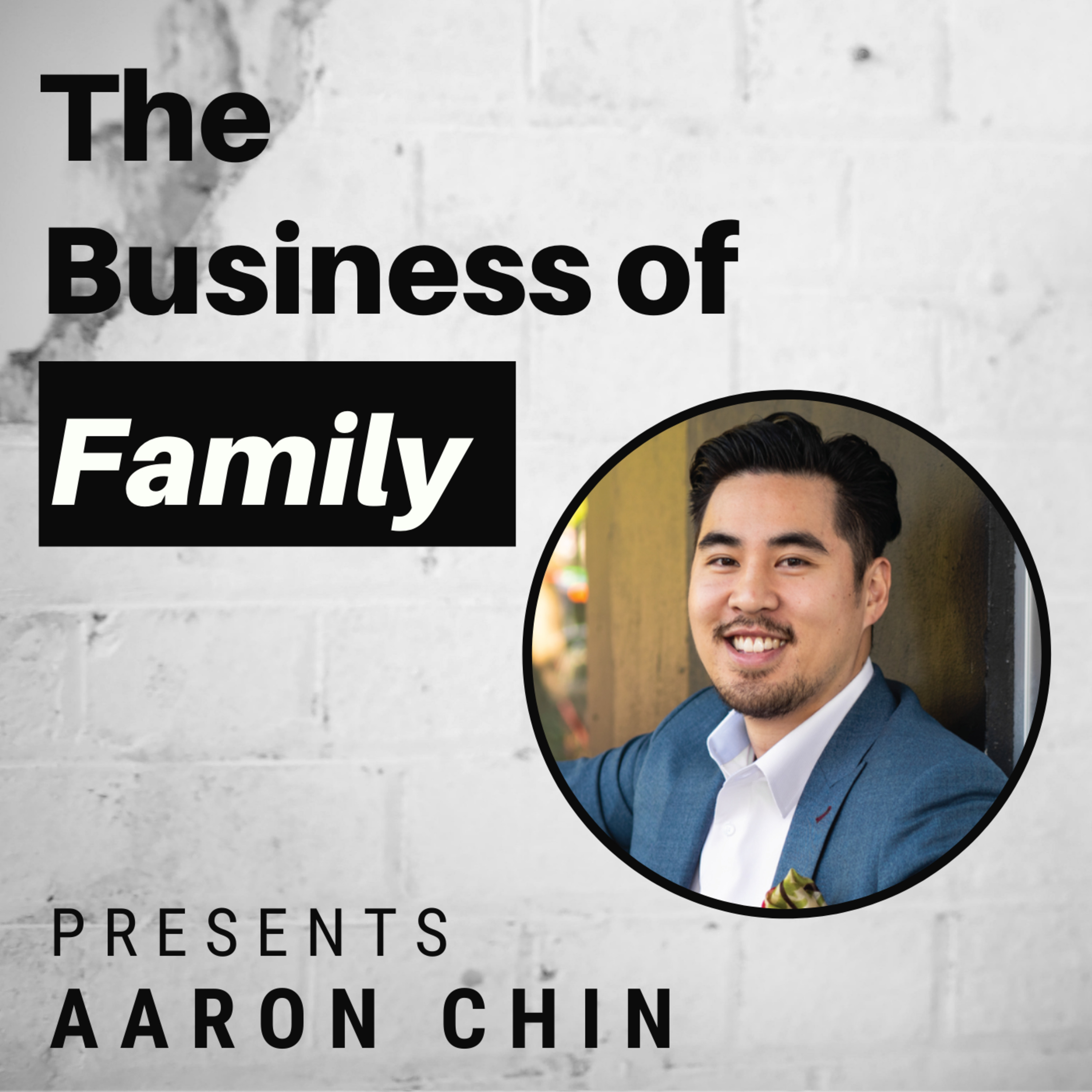
Aaron Chin is a second-generation business leader and CEO of Organika, a family-led Canadian company dedicated to providing innovative, premium health products to help inspire people to live healthier lives.
Growing up in the business motivated Aaron to build on what his father started 30 years ago. Since assuming leadership of Organika, in partnership with his brother Jordan, they have increased business seven-fold and have grown the company into an award-winning, globally recognized brand, focusing on innovation and a vibrant company culture.
Standout Quotes:
- "You start with the mission of the company and that'll help drive your decisions after". - [Aaron]
- "If you can tweak one little thing in your process that could save you 30minutes...do it". - [Aaron]
- "You are going to determine yourself, how well you do". - [Aaron]
- "I really do believe there's nothing like good old hard work". - [Aaron]
- "My relationship with my brother is bigger than the business... I think I can pass that down to my kids" - [Aaron]
Key Takeaways:
- Aaron's dad had the dream when he moved from Malaysia to Canada to give his kids a chance to get ice cream whenever they wanted.
- Following the treatment of his kidney stones using natural products, he started the business with a vision to make healthcare accessible for all.
- Despite the rejection, his father persistently put himself and his products out there, till the business took off.
- Aaron shares he always had an interest in the family business although his father never tried to impose any expectations to join.
- Aaron narrates a simple experience where he noticed the boss employed by his father to manage the business got to the office one morning, and deleted all his office voicemails without listening to any one, inciting Aaron's suspicion of the poor management inherent in the business.
- Realizing the diet differences between the newer and older generation, the company pivoted from mostly vitamin pills to be more involved in superfoods, powders, drink mixes.
- The surprising eventuality of Aaron becoming CEO in an Asian family where he is the younger brother and always at odds with his older brother, was partly made possible by the family dynamic which started to work out following certain events that strengthened the bond between them.
- Aaron shares his vision for the company: I want to see us in every single home in Canada.
- Explaining that his dad wasn't overprotective but rather allowed them to make mistakes, and these mistakes helped them learn how to make fast and efficient decisions.
- The question: What are you doing about it?
- If you teach children what wealth means, it's rather thoughtful to leave wealth for them, but if not then it's just an expectation, and things could go wrong.
- To Aaron's kids: Know the importance of Family because it is more important than even the business
Episode Timeline:
- [00:45] Meet today's guest "Aaron Chin".
- [01:21] Where did the family business begin, and how do you become involved in this story?
- [07:36] About Aaron's entry into the business: Was it always an expectation or some other circumstance?
- [16:05] Describing the business today.
- [19:51] How did the leadership transition come about?
- [24:36] Being the younger brother in an Asian family, how did you arrive at the CEO role?
- [27:11] What sort of investment process did you go through, and how did you formalize the business?
- [33:29] Would you say the company culture remains unchanged or has it morphed as a result of the impact of Private Equity coming in?
- [37:41] Aaron shares major lessons learned by trying things and making mistakes at the beginning
- [38:46] Is there a multi-generational plan to continue the legacy that your father started?
- [40:59] How do you feel about children inheriting wealth?
- [42:35] Aaron's letter to his kids.
Links:
- Organika : Aaron Chin is a second-generation business leader and CEO of Organika which is a family-led Canadian company dedicated to providing innovative, premium health products to help inspire people to live healthier lives.
- Aaron Chin (@organikaaron) Instagram
Read the transcript
This transcript was generated automatically and may contain errors, including in names. Listen to the episode for the exact words.
MikeWelcome to The Business of Family. I'm your host, Mike Boyd. Multigenerational wealth creation involves so much more than capital accumulation. The most successful families cultivate values, stories, knowledge and resources to pass on to the next generation, and they do it very intentionally. On this show I sit down with members of some of the world's most interesting business families to hear how they do it. To see where your own family stands, take the Business Family Diagnostic at businessoffamily.net.
Aaron Chin is a second-generation business leader and the CEO of Organica, a family-led Canadian company which is dedicated to providing innovative premium health products to inspire people to live healthier lives. Growing up in the business motivated Aaron to build on what his father started 30 years ago. Since assuming leadership of Organica in partnership with his brother Jordan, they have increased the business sevenfold and have grown the company into an award-winning, globally recognized brand focused on innovation and a vibrant company culture.
Aaron, it's great to have you with us on the show today. Thank you again for joining.
AaronMike, thanks so much for having me. It's an absolute honor.
MikeI'm really looking forward to this one. So let's get into it. I'd love to hear where your family business journey starts. You're second gen and you've taken over from your father, from what I understand, but where did this all begin? And how do you become involved in this story?
AaronYeah, it's a pretty cool story because my dad, we're based in Canada, our business is based in Canada, but my dad actually came from Malaysia. So he came to Canada at the age of about 17. And really at the time, before we got into the whole natural thing, his basic dream when he moved here from Malaysia with like 300 bucks in his pocket was to really allow his future son, which is myself and my two brothers, a chance to eat ice cream whenever we wanted.
Back in Malaysia, our family was not too well off. And every time the ice cream truck would come around, my grandma would run to the doors and the blinds and close them and whatnot. But as you know, with ice cream trucks, they're very loud. And even if you shove the kid in the back of the house, you're still going to hear, right?
So my dad, essentially, when he grew up, he really never had a chance to eat ice cream. And when he moved here, it was at the time where my mom was pregnant with my older brother at the time. And back in the day, when you have kidney stone, you actually have to go for surgery. And you have to be in the hospital for a few days.
Whereas now you can just take a sonar laser and the kidney stone can be gone tomorrow. So obviously, he didn't want to go into the hospital. So he went and called his buddy named Kim in the natural health industry. He said, hey, Kim, how can I get rid of this kidney stone naturally? and Kim was like hey Tom take a cut of turmeric which is an anti-inflammatory take a pound of parsley which is diuretic mix that with juice and water and your stone will pass lo and behold after three days of doing that his stone passed and he was fascinated with natural healing and you know we started with four products and today we offer over 250 and and we're we just celebrated our 30th
30th anniversary as well so it's been an incredible journey and and my dad's mission when he originally started the company was just basically, Mike, just to help people live healthier.
MikeWhat did he mean by that?
AaronLike his vision was really to make health accessible for all, right? And at that time, back in the late 80s, early 90s, the only competitors in Canada say were only selling products for like 200, 300% margins that only the uber wealthy and the Singaporean high rises could afford Organica or vitamins at the time, right? So he's like, well, why can't everyone in the Kampong enjoy too?
And I can still make good, healthy margin. So that's really where he was able to find a good niche in the market when he started was not taking 200% margins like these other companies were, but making health accessible and still making a good living. So that's the beginnings of Organica.
MikeThat's an incredible story. I love the piece about the ice cream as well.
AaronNeedless to say, obviously, my dad's worked so hard that we can eat ice cream whenever we want. So he's a happy guy.
MikeThat's fantastic. And do you? Do you indulge ice cream?
AaronYou know what? Ice cream does mean a lot to our family. I definitely do eat a lot and I definitely do get grateful every time I eat it because when you see your parent work so hard to really make something happen and better our lives, you really get a sense of gratefulness and we're blessed for sure.
MikeHmm. It's incredibly symbolic. I love stories like that, particularly that turn into family traditions or symbols. So he immigrated to Canada when he was 17. Did he start the business soon after or was it after getting into many other jobs and opportunities that he found this one?
AaronYeah. So he pretty much started right after. So he finished his undergrad in three years. He went into his MBA at University of Washington right after. And he was working maybe for a few years in a warehouse and he wasn't happy with what he was doing. So that's what really sparked him to really dream and believe he could do something bigger and better for people.
MikeAnd how did the business then develop? So did it start with one storefront and slowly grow a physical footprint? I know that you've got a digital arm to the business today, but how did it begin?
AaronYeah, it's actually a pretty incredible story because if you guys don't know Canada, you know, obviously the natural health industry, it's a very Caucasian industry, right? And my dad's office would be an immigrant from, you know, Asia. And he essentially started with four SKUs, four products, our Korean red ginseng, our vitamin C, our ginkgo biloba, and our garlic, which we still have today, which is crazy.
But he would literally, he would put the products, put the packages, put his pamphlet. He hand drew his first few flyers. He would drive across Canada. And if anybody knows Canada, it isn't Singapore, Mike. You can't drive to one side in 20 minutes. To drive to the other side of Canada, you're spending two or three weeks, maybe more to drive across.
So he was literally, he put over half a million miles on his car. And he really built the business himself, just going into all these nooks and crannies, these small towns. And that's why I'm super grateful as well, you know, when I'm obviously in the business now, because can I ever complain about a red-eye flight? Heck no.
This guy was driving, you know, across Canada and, you know, sleeping in the back of his van and stuff like that. And just the adversity he faced, you know, obviously not being Caucasian and going into all these small towns in Canada. Like there was many times where people would, you know, literally rip a catalog in his face and tell him to his face, you know, get the F out, you dirty, you know, you can fill in the blank.
But, you know, he kept going and he, what really was driving him was obviously the mission of helping people live healthier, but also giving, you know, us as kids a better life. So that's really my inspiration, definitely to this day, even to this day.
MikeA true entrepreneur and he certainly has made an impact and left a legacy by the sounds of it.
Aaron100%.
MikeAnd speaking of legacy, you and your brother got involved in the business. What age were you and how did that transition take place? Was it destined to be? Did you grow up with this expectation that you would come into the family business or was it some other circumstance that brought you in?
AaronYeah. So, the cool thing, Mike, with my dad is he's not your typical Asian dad in the sense of, yes, he had his expectations, but growing up for me, I never had a curfew. He also never ever forced us once to work in the business. He said, hey guys, it's here if you want it. But he never ever said, you need to work here every summer and you need to do your business degree now and you need to do this, this, this, and that. He was like, hey guys, if you want it, it's here. I'm just saying, I built it for you. But for me personally yeah i always knew i wanted to work in the business from a very young age i would i would
work the summers at organic i would work other odd jobs too i used to work at like burger king flipping burgers and the movie theaters cleaning up popcorn all over the floor but you know i always knew i wanted to work in the business because the most uh memorable moment for me when i was growing up actually was was actually when my dad would go to different trade shows he would come back with all the samples the healthy food samples and i would just love it it would be like halloween every time he went away.
And for me, I just took a really good interest when I was younger and moved from there in terms of my dedication and my passion towards industry because I was the kid at the age of 12 going into my hockey dressing room with a bag of, a Ziploc bag of freshly pressed cordyceps mushrooms in a capsule. And my coach is being like, what the hell is this, Aaron?
Is this legal? Is this drugs? Like, who's giving this to you? I said, no, no, no. It helps the performance. because if you don't know cordyceps mushrooms actually help with you know nitric oxide production helps with your focus as well so yeah i've been through and through since a young age really really into natural health and just really believing in in what it can do for people and how it can help
Mikecan imagine that would have raised some interesting conversations you know as a as a young man as a teenager walking around with a little baggie full of mushrooms
Aaronyeah definitely definitely especially when they're little capsules you know there's there's no bottle and label so So, but it was pretty cool because, you know, my brother is also in the business. He's our president and COO. And we actually started at the same time. So we graduated our university degrees at the same time. And we popped right into it right away.
Because I think for us, as we got older, and especially for me, we just saw how much potential organic it had and how much it wasn't doing at that certain point in time. And we just knew we could obviously 10x my dad's vision to help more people, which is basically to this day what drives us, right?
MikeAmazing. So let's hear about that. When you first came into the business, was your father still in it and active and running things day to day? And you came in to sort of learn from him or did you have to step in and actually take the reins at an early age?
AaronYeah, it was super interesting because my dad up until that point, I'd say until my brother and I joined about eight years ago now, he really wasn't involved in the business in terms of the entrepreneurial pushing side of the business. Because in a business like Organica, specifically the natural health, if you don't have an entrepreneur driving the business in terms of your innovation, your relationships, it's not a good recipe for success.
And he really took a step back and he had a management team that he put in charge. And really what we saw was a team that really didn't care, number one, and was really complacent. So for us, when we came on board, we just knew we needed to make some big changes in order to get to where we want to get the company to and the business to.
So that's really what we walked into.
MikeI imagine coming into a management team that maybe hadn't been as proactive as they could have been. And then, you know, these two young guys come in fresh out of college or university with these big ideas. How did that go? I mean, was there a bit of a clash or is there still a clash today? How did you navigate that?
AaronYeah, Mike, people can't see, but I have a big smile on my face when you're repeating that just because it brings back so much memory. I'll give you an example. you know my first day my dad put me in purchasing okay i was a purchase i started as a purchasing assistant my first day i walk in my boss doesn't even say hi to me i walk in get my desk set up whatever and he walks in he checks his voicemail first thing in the morning and you know when you have voicemails and you got a lot of them you'll hear at least the first like two words that says hey i'm mike from you know room i just saw him there's like 16 new messages and he just went
like delete delete delete delete delete delete didn't even hear anything so i was like holy shit. This is like, I don't know, maybe it was my dad calling or I don't know whoever else is calling. But like, I was like, this is crazy. Like this guy is not even checking the first name of who's calling. So that's kind of where we started. And for me in the family business, specifically the dynamic, you know, I was pretty much working investment banking hours, like not getting paid like an investment banker, but, you know, working investment banking hours. And really, I wanted to set, you know, the standard and the stage that, Hey, I'm not here for a handout. You know, I'm
not a silver spoon. It's funny because I was literally, I still remember to this day, that whole year specifically, I was the first one in, last one to leave every single day. And I just had to do it to really send a message to everybody that, hey, this is me. I'm not here to just mess around and not contribute. So yeah, that's the journey to starting.
MikeWould you say that when you were first in, last out, were you sending the message to the wider employee group or were you sending the message to your father?
AaronI would say probably a bit of both, to be honest, now that you ask. Like I said, my dad's never, ever put pressure on us. So it's more just, it's an internal pressure to do well for him because obviously he's entrusted us in certain things, right? But yeah, I would say, but to be honest, mostly it was to the greater team, just really trying to stick the ground and really say, hey, this is the expectation. When I rise up, this is going to be the expectation. So you better buckle up kind of thing.
MikeYeah. Yeah. That's excellent. How long did it take you to really get control and build momentum? You started in purchasing and no doubt worked your way up. How long did it take you to learn the business and really start to make an impact?
AaronYeah. You know what? It was pretty much right away because when I had my boss like that, Like I, it would, it just wasn't in me not to do a good job. So within the first six months, you know, I saved the company like $600,000 just by, you know, getting RFPs and RFQs out, you know, like just something basic and simple like that.
And within the first six months as well, my, my dad said to my brother and I, he sat us down. He said, guys, the ceiling that I have set your floor, AKA his max that he topped out on that he worked his tail off to get to was literally where Jordan and I were starting. And that really hit me at that time, like really, really deep. Cause I was like, Holy shit. Like this guy literally just said where he tapped out is literally where we're starting. So there's only the only way is up.
So he actually tasked us with putting a six month plan and literally a five-year business plan together within the first six months. And we came back after the first six months in the job. and what we really found was like we literally dissected the whole competitors in the industry in the whole industry we literally went from who owns them you know if it was private equity if it was public if it was family run who was actually running the company where they were in their life and where they were in their career and what were they actually doing and what we saw was literally an industry right for the taking in terms of people were complacent people weren't innovating anymore
People were happy with where they were. So we really felt if we could change... I'm not going to say a few things because there wasn't a few things. There's a lot of things. If we change a lot of things, we could really gain market leadership in different areas of the industry. And through being blessed and hard work, we've been able to get that in six different categories today.
Now we're market leaders in Canada.
MikeThat's amazing. So paint a picture for us of what Organica is today. Let's just fast forward to today. all of the journeying, all of the lessons learned. What does the business look like today? What's the footprint?
AaronYeah, the footprint, you know, across Canada, like we're where we started when we started in the business, we were only available in let's say your mom and pops retail food stores. And as we've grown the business, we've, we're pretty much available everywhere health products are sold. So, you know, your grocery stores, your drug stores, and you know, your big mass market chains like Costco, your online, Amazon. And that really goes from the mission. That's what I always tell people. It's like, you start with the mission of the company and that'll help drive your decisions after that. Because if our goal is to help people live healthier at a basic level, we're not doing our job if we're not making our products available on a wider scale.
So that's really where our distribution of that is. We're the market using six different products and we're literally available everywhere health products are sold in Canada.
MikeAnd has the product variety grown as well in terms of the market segments you're serving? Is it the same traditional business but scaled up? Or have you also innovated in terms of the products that you're offering and the markets that you're pursuing?
AaronYeah, it was super interesting because it was probably, I'd say, like six months to a year into the business. We had dinner at home one night and my little brother, he's quite a bit younger than my older brother and I. His name's Gabe. and we just, I just said, Hey Gabe, what'd you have at lunch today? At the time he was in high school and he's like, Oh, I had a smoothie.
I was like, what? Like when I was in high school, it was burgers, fries, hamburgers, you know, chicken strips and like cookies and donuts. Like those were the only things available. And like, it was kind of like a spark in my brother and I's head because we said, Holy smokes, there is a whole new generation coming up that is not going to be inconvenienced by going out of their way to get health products or have healthy food, they expect it in their daily life.
So that was a big pivot for us because at that time when we joined, we were 95% your traditional vitamins, your vitamin pills and tablets. Now we're probably like 30% vitamins and supplements and the rest, superfoods, powders, drink mixes, snack items, et cetera. So we really pivoted the business to being more of a food-based line, let's say.
MikeThat's amazing. And so have you picked up a younger cohort and you're targeting at them with this new product line or is there an older generation also interested in these superfoods and powders and things now as well?
AaronYeah, the really cool thing is the millennial generation specifically, they're so influential because now they're having kids, but also everyone, like their parents are looking to them for advice on how to get healthier, et cetera. So yeah, since we've pivoted our line, we've definitely gotten younger. I'd say millennials and Gen Zs probably make up the majority of our people that we target. But in terms of the people that buy, it's definitely the older generation as well, because the old generation has a disposable income and they want to get healthier. And they're listening to these younger people on what they're taking because it's their sons or their daughters or their nieces or nephews, right? So it's really
influential demographic or cohort, let's say.
MikeAbsolutely. I want to go back to the family dynamics again. You and your brother came in, took roles around the same time in the company, and today you're leading it. So how did that actually take place? Did you work for a number of years to try and prove yourself to the business and to your father and then ultimately sort of take the reins? Did you have to jostle for control or agree that with your brother and your father. I mean, how did that discussion take place and how did the leadership transition actually come about?
AaronYeah, you know what? I asked other family business leaders and other family business and it's so funny because every one story is so unique. For us specifically, growing up in an Asian home, we never ever talked about money or roles or titles, stuff like that growing up. So as we moved up in our specific roles within the company, there wasn't really like a big thing where it's like my dad had this grand plan that, hey, I was going to be CEO and my brother president or vice versa, etc. It was really when we went through an investment process, that's really where things got a lot clear in terms of roles, future outlook, splitting of shares, etc. Because previous to that, we didn't talk about
any of that like literally it's like taboo to kind of talk about that and kind of ask for that too right so it's not it's not your you know your typical families that i don't know maybe are growing up in north america where that's kind of part of the fabric kind of thing so yeah we we to be honest we never we never ever discussed like from a young age of like oh you're taking this you're taking that it was really up until the point where you know we were going getting an investment and saying, okay, here, I'm stepping down from the CEO role, but he was never really doing the CEO role up until that point. But obviously,
you need somebody to replace that CEO role. It happened to be-
MikeInteresting. So he was in a pseudo CEO role since forever, I imagine. But you guys came in and you were running the company, scaling the company, and he wasn't really there day-to-day by the sounds of but there was never any title changes or anything. Everyone was just getting in and doing the work. Is that what you're saying?
AaronYeah, pretty much. It was like, I think as well, to be honest, that also caused a lot of my frustration, you know, with growing up, you know, kind of having that pusher mentality of, at the end of the day, people always look to the CEO to see maybe how hard they should push and try. And there was a bit of a tension because, you know, let's say my dad wasn't really involved in the business yet.
He still had the title and stuff like that. So for me, it was definitely a lot of maturing and a lot of understanding to get to the point where I'm at today.
MikeWas that challenging for you too, even in just measuring your own progress? Did you seek that achievement of working your way up through titles or feeling like you were accomplishing milestones and measuring yourself and your self-identity from that? or was it just that you wanted to be able to lead and set the tone for the organization as the CEO?
AaronYeah, I would say it's a combination. Definitely, I wanted that CEO position to really set the standard in terms of expectations throughout the organization. But it's funny, I would say at the beginning of my career, maybe it was because of my age. I started when I was 22, fresh out of university. And, you know, you also got to look at the land of like the natural health industry.
When I say it was complacent, like the natural health industry was like same cultures, Caucasians in their 50s or 60s running their businesses or in the management positions. And here comes a 23 year old Asian guy into, you know, these big meetings and big buyer meetings. It's definitely, you know, a shock. And, you know, for me specifically, like I never at the beginning, I was like very like, I didn't care what my title was kind of thing.
But then as I got older, I think I realized how important a title was in terms of some people are stuck to the title. Some people aren't stuck to the title, but some people are very stuck to the title. So if they're very stuck to the title, you can't really turn them or motivate them or position them just because they're just so hierarchical.
right so that i was at closer to when i became the ceo i was i then at that point i knew how important a title was in terms of you know having a a culture that you know you want to be proud of and you want to spread throughout the whole organization kind of thing because you still have people saying oh no this guy's a ceo you know you only have to do this or you know this is the expectation kind of thing so it just helped create clarity throughout the organization in Okay, he's got the final decision.
We're following him, right?
MikeYeah, I can imagine. No, that's excellent. Thank you for sharing. Where does Jordan and Gabe fit into all of this? Did you guys have to figure out amongst yourselves who was going to play which role? And was that difficult? Or as brothers, have you always had a clear understanding of who was going to lead? And before you answer that, there's one specific follow-up that I'll sort of preempt now.
you are talking about being an Asian family. And I think it's interesting that you highlighted earlier that you're not the eldest son. I think you said Jordan's your older brother. So how did you ultimately arrive at the CEO role? And was that something that Jordan was on board with or that you two ultimately sort of had to fight it out?
AaronYeah. Yeah. You know what? It's another cool story too, because growing up, my brother and I, we never got along i'm talking about jordan the one that's in the actually in the business like we hated each other we're we're a year and a half apart he's he's older than me and like we were buttheads about everything growing up it wasn't until we reached our 20s where we really matured and and really became best friends and i think through having an extremely good relationship with my family you know there's my parents went through divorce and there are a few big things that happened in our family that really brought us close together and having that tightness within our family and and that love and that trust and that understanding
between us i think has really helped us in the business because my brother and i were complete opposites like literally if if you like we we just we actually just did a disc test literally the opposite of the personalities and and whatnot and and he's he's extremely thoughtful he's more strategic. He's more laid back. He likes to think things through where I'm go, go, go, go, go. And I think that's what makes us successful as a family business, because we're not two alphas trying to bite each other's heads off. And none of us have an ego where it's like, you know, no, I have to be right and this and that, right? It's no, like, we might disagree on stuff. But
if we come to a conclusion on something, we're sure as hell going to support the other brother and make it a success, right? So yeah, it was like, I would say my brother is like, Like you talked about being an Asian family and him being the older brother, like you, he was essentially the golden child growing up. Right.
So I think, you know, having his support has, has really meant the world to me. And, and I think it's super rare, like just to have somebody still in your corner and, and so egoless in terms of titles and, you know, having that, you know, top dog position and yeah, I can't say enough about him and the support, you know, he, he gives to me and obviously to the business.
MikeYeah. Just amazing. Amazing. It is super rare. So congratulations for what the two of you have and have no doubt nurtured together. That's fantastic to hear. You also mentioned that growing up, you never talked about money. You never talked about percentages or shareholdings or anything like that. But you also alluded to that all came about and those discussions happened when you went through an investment process.
So I'd love to get into that. What sort of investment process did you go through and how did you ultimately formalize the business and have those discussions for the first time?
AaronYeah, really for us, it was really just about taking our business to the next level in terms of professionalizing our business. Because we always knew in order to scale in the 40s, 50s, 60s, 70s, you need that support in terms of your know-how, how to set up proper structure, corporate governance, how to get a bank debt, etc.
and we just didn't have that because we kind of ran the business for you know what we did run the business for 30 years or 29 years up until that point going there's money in the bank we're good you know like it wasn't you know we're projecting on 12 months of cash flow and you know your your your monthly statements and stuff like that like it was just so we knew uh we wanted to really professionalize that side of our business in terms of the finance side so that's why we went through the investment process and really picked a partner that was going to be hands-off in terms of the things that we thought we were good at, right? Which is the sales marketing innovation side,
right? We would love somebody's help in terms of the finance side, which is what our partner has been able to give. But in terms of the sales marketing side, we got it. We think we know what we're doing.
MikeSo it was about getting an injection of capital and expertise. And so you ultimately partnered with private equity, did you?
AaronYeah, yeah, exactly. So it's been a really good relationship because it's like how i like to put it to people when when you bring in private equity it's kind of like an mba without going to mba like without going to school i just they're just bringing so much knowledge on the way they see things in terms of businesses and how to what they're looking for and how to translate that into your business and how to be more efficient in certain regards and how to look at different things in a different way and it's really been an incredible experience thus far and i can't say enough enough good things you know about partnering with somebody with like the strong financial background where, you know, for us, we don't,
right? Yeah, I went to business school, but it's not like I was a CA, chartered accountant that I studied for and stuff like that. I probably had two or three courses on corporate finance and accounting and that was it, right?
MikeThen you were out in the real world.
AaronYeah, exactly.
MikeSo that process, what was the intention starting out? Was it to ultimately sort of sell down a little bit, take some chips off the table and diversify the family? Was that part of it? Or was it all about injecting capital into the business to help with the scaling process?
AaronYeah, I would say it was definitely a bit of both because, you know, obviously, you know, your dad worked so hard in the business for, you know, 28, 29 years up until that point. Obviously, you know, nothing's ever promised tomorrow. And like, it's really not like, we can look back at this year and say, holy moly, like who could ever have thought Corona was coming, right? So, you know, I think it was smart of him to, you know, obviously take some chips off the table, but also at the same time, bringing a partner that was going to help us grow, help us scale, and then help us clean up the things that we need to do in order to make that
next step and really, you know, hit that next stage of our growth and our evolution of our business and our company. So that was really the point in that whole process, for sure.
MikeAnd did you end up interviewing a number of different PE firms or did you have one that reached out to you that just seemed like a great fit? Where did they come from? How did that occur?
AaronYeah, yeah. So we actually hired an investment broker and they helped facilitate different introductions to different people. And we were talking probably about 15-some minute in EOI, an expression of interest. And then when we got down to the LOI stage, it was probably about five different groups. And yeah, so we interviewed a ton. At the end of the day, you want to know who you're getting in bed with and you want to do your due diligence and you want to make sure you're picking the right person, right? So it wasn't just that we went willy-nilly into it and kind of closed our eyes and put something on the board. It was like, no, we went wide,
eyes, you know, both wide open into a new relationship.
MikeIf you don't mind me asking this question, did they end up taking a majority or a minority piece of the business and what's the vision now? You know, is this a stepping stone towards achieving a bigger exit for everyone, returning the PE capital and return, but also for the family? Or is it still considered a family business and this is just a leg up in terms of getting to the next level of scale?
AaronYeah, I would say it's still a family business and definitely the next, it's definitely going to help us take that next leg up. Because my vision specifically for Organic is I really want to like, yeah, we're distributed everywhere in Canada, but I really want to see in every single home in Canada. Like, I don't think we'll be finish our job or reach our vision and tour in every single home in Canada.
So let's say I'm going to my buddy's house who has some cousin who's not even interested in health. Like, I want to see an Organica product on his shelf or his kitchen counter somewhere. And I really feel there's a lot of work to do, but it's definitely attainable in the sense of we have the right, let's say the right tools right now.
We just need to use them.
MikeIs there a timeline from PE that you have to try and hit something and exit within five to seven years with the lifetime of the fund? And does that align with the family's goals, I imagine?
AaronYeah. That's the cool thing about when we were whittling down who we wanted to partner with. There's really, they haven't pressured us at all in terms of timeline or here's what we need to hit or here's what we need to do. And that's what attracted us to our current partner was, you know hey like the family needs to make the decision when to go to the market right if we do decide to right in the future so that's been yeah it's been really good thus far just in terms of you know partnership and being aligned with with what we're working towards which is essentially just to make sure organic is not just in more homes in Canada but in more countries like we're
working on some things in the U.S. and in Asia and in a bigger way so we just last month we just shipped out our first products to Japan, a new country for us. So there's a lot more to really go after, definitely.
MikeYeah, very nice. How about company culture? Would you say that it's unchanged or has it also morphed as a result of PE coming in and having an impact on the business?
AaronYeah, I would say the culture is pretty much the same. Culture hasn't changed. It's organic. Whenever people ask me that, I would say it's a very unique culture because it's a culture where you can really see who's two feet in or one foot in one foot out like because we're not like a massive business or you know we don't have a massive workforce like we only have like 130 people like you literally have to see that same person every day and you have to work with that person in multiple projects multiple times in a day right so you can't have any of the big cpg or big corporation companies where you know you might not like somebody and you never
have to see them again well shit you're gonna have to see this guy every day you're gonna have to work with him on multiple projects so you're gonna have to get along and and for us you know it's a very unique culture like i said where you can really see who's dedicated and who's in and who's not like it's as clear as day just because the way we have to move in terms of how fast we need to move in in in our industry and how quick we need to change things it's really unique because you need to be able to like every single person needs to be entrepreneurial here when you know in our offices, when you walk in, we have a big slogan that really says,
make it better. Like that's the kind of mindset everyone needs to have at Organica. It's never be complacent. Like if you literally can tweak one little thing in your process that could save you 30 minutes, like make it better, go for it, do it. Right. So that's, that's kind of what we want to preach, you know, obviously to, to the, to the whole team in terms of that responsibility.
And it really could be anything. It could be a process, it could be a product could literally be, Hey, I walked in the building today and the door didn't close properly. Am I going to walk by and not let anybody know or am I going to tell the facility manager right away that it's not working? So that's really how we try to approach it.
MikeYeah, that's fantastic. I really resonate with that. Is that something that yourself and Jordan inculcated in the business through your leadership? Or was it something that was already there from the very beginning with your father's leadership?
AaronYeah, I would say it probably was like, no, not probably. It definitely was when my dad was actively running the business. but we definitely got away from it when he wasn't actively running the business. So when Jordan and I came on board, it was, it was a lot of change. Like we had to turn over like 80% of our management team, right.
Within like two years of like, uh, did we make a lot of mistakes along the way? Heck yeah. Because, but that's the beauty of my dad is he actually let us make the mistakes. He wasn't an over coddling, you know, protective dad. He said, Hey, you guys show me what your proposal is, what will happen and go for it.
So I think having that freedom to make mistakes in the business has helped us today in terms of just knowing how to do things a lot more efficient and quicker and whatnot. My dad always said from the very beginning, you are literally going to determine yourself how well you do. Never pass the blame or play victim because it just doesn't get you anywhere.
And there's a few times where he literally had to tell me that to my face multiple times because I would say, oh, this manager, this, this, this, this, this. And he'd just say, no, like, what are you doing about it? He would always ask me the question, what are you doing about it? So, you know, he definitely told us, you know, from a very young age, the responsibility we would have as well, right?
Running a business because, you know, he put it very simply to me one day. He said, Aaron, I'm literally responsible every two weeks for making 130 families get fed. And I was like, okay, wow. Like, yeah, that's literally my responsibility today is to make sure literally 130 or 140 families, not just people, get fed every two weeks. So obviously for me, I definitely don't take that lightly in terms of my responsibility as a CEO to make sure we're doing our best to obviously hit all of our growth targets and make sure cash is there so we can actually pay our team. So that's something that definitely wasn't instilled for me from my dad.
MikeIncredible lessons. And what an opportunity to be able to learn by trying and failing. whether it was intentional or not the fact that he gave you that room to move and experiment i think is really really powerful i'm curious if there's any major failures that stand out anything that really and failure is perhaps the wrong word but major lessons you learned by trying things in the beginning
Aaroni would say the like with my personality of like go go go sometimes i would make like definitely in the beginning like or even now today like sometimes i make decisions too quick and then you're like hey i literally could have waited a few days or could have brought this person in and and it could have been way better right so i think for me just a lot of it in the beginning was patience because like i said like i'm the type of person that wants to see results right away and and now you know as as you mature in your role and as you grow and in your career you you know like things things do take time to ferment but doesn't mean you have to sit
back and let it take as long as maybe I'm sorry, I meant you can make things go quicker as the leader in different ways. So you don't really, you know, yeah, you can sit back, but you can also help things to go through a lot of passion.
MikeI'm curious now in terms of a question about legacy. You've had all these incredible lessons passed down from your father. You've also learned on the job and learned a great deal working with your brother as well. What does all of this mean for your kids or the entire family's next generation. Do you think about that? Is there a multi-gen plan to continue the legacy that your father started after immigrating to Canada?
AaronYeah, a hundred percent. I actually talk about this with my wife, you know, almost on a daily basis of, you know, just really passing down that grateful heart and not to take anything for granted. Like it doesn't matter where we go in life or, you know, what we have, you know, just really having that grateful heart because if they really understood how hard their grandpa were to give them this life and to give us an opportunity to do what we do you know i i think that really that nullifies a lot of you know the generation today of you know the silver spoon generation of just expecting things right because i i really do believe there's nothing like good
old hard work like there's there's really nothing like good old hard work and i think a lot of it today in today's generation gets missed like a lot of people want this right away or that or they want to be making six figures right out of university in an entry-level job. You know, the expectations and the reality is totally off and totally different, right?
So I think just instilling that in my kids, you know, obviously from a young age, you know, it's important to me. And even just learning from like how my brother and I didn't get along, you know, growing up, like I'm very cognizant of, you know, my boys, one, almost three now and one, you know, a year, a few months, just really letting them know, hey, you guys are brothers.
You guys need to be back to back, you know, love each other. And if you see them today, it's like the biggest joy of my life because they literally all they do every day is just kiss and hug each other and roll around together. Like they're not violent to each other. They're not, you know, they just like literally genuinely love.
Like my oldest one, Noah, also my baby brother, Solomon, you know, like he's so proud of his little brother. You can just tell like obviously Solomon loves Noah so much because, you know, he just admires him too, right? So that's really what's important to me.
MikeYeah. Yeah. Which actually leads me to the next question. You said hard work is so important and passing down those values to children. How do you feel about children inheriting wealth?
AaronYeah. I feel like if you teach them what it means, I think it's incredibly powerful. But if you don't explain things and it's just a given and it's just an expectation, I think that's where you can go a bit wrong. So like for my dad, for example, like I said, he made us work for things, but he also set a pretty good expectation of what was required, right?
So for us, getting life lessons and just being taught to be extremely grateful and not to waste, he still to this day eats the cartilage off the bones of a chicken or whatever. You know what I mean? He still has that mentality of not wasting any single part of the chicken or the bone, right? the same thing when we were growing up, like don't waste your food and, you know, just little things like that, that, you know, you get later, you're like, yeah, wow. Like they're not just saying that to, you know, scare you. Like they're literally saying, Hey, like, you know, there's literally somebody who doesn't have what you have or, you know, your situation is never as bad as
somebody else's as bad as it is. Right. So.
MikeIncredible. And it reminds me of the, the ice cream story. The fact that he can enjoy ice cream whenever he wants now, I think is pretty special. So congratulations to you all.
AaronI always make the joke, you could buy a chain of ice cream shops right now if you want.
MikeAbsolutely. Particularly in a new country too. I mean, it's an incredible feat and he should be very proud. Aaron, it's time for our final question now. And it's a question that I ask all of the guests that come on the show. Imagine you're writing a letter to your children? What is one lesson or idea that you don't think many parents would mention, but you consider important to understand?
AaronYeah, I would say if I'm writing a letter to my kids today, I would definitely, probably to be honest, I would really explain to them the importance of family. Because growing up with our family and just how tight we are and how incredible it is when you see the family dynamics of today's world where it's like you know nobody talks to each other nobody respects each other you know people are calling their parents by their first name and stuff like that you know i think just having just teaching them from a young age the importance and the importance of family and the importance that they're going to play in your life to support you there's probably nothing like it because we also kind of take it for granted
right like some some people take it for granted it's interesting to see you know other people and their family dynamics because i have a lot of other friends and family businesses like you know big businesses and they have no desire to even be in the business or they don't talk to each other because of you know a conflict because of a family business right so i think just having that understanding from a young age that that we that you know my dad really passed down to me it's It's like, whatever happens at the end of the day, like I'm never going to do anything to compromise the relationship with my brother.
Like I'm just not, it doesn't matter. Like my relationship with my brother is bigger than the business. So I think if, you know, I can pass that down to my kids and how they live their lives, really make sure to have each other, but also make sure to really know how important the family is going to play a part.
MikeIt sure is really, really powerful. Aaron, thank you for sharing that beautiful lesson and your story. Congratulations on your success. And I look forward to following the journey from here.
AaronThank you very much, Mike. Appreciate it. And yeah, looking forward to listening in.
MikeThank you. Thanks for listening to The Business of Family. You'll find the transcript and key ideas from this conversation at businessoffamily.net, along with the Business Family Diagnostic. It's free, and it shows you where your own family stands. And if someone in your family should hear this episode, please send it to them too. I'm Mike Boyd. Until next time, take care.
Keep listening
If this one landed, start here next.

Second Generation Vietnamese-American Business Woman
Another second-generation handover in an immigrant family business.
Co-President Siblings Stewarding a 111 Year Old Family Business
Two more brothers sharing the top job, and how they stay close.
4th Generation Steward of Dhampur Sugar Mills
The Business Family Diagnostic · Relationships
Two very different brothers, one rule.
Aaron and Jordan agreed that nothing in the business would come between them, and he's already teaching it to his sons. When there's a falling out in your family, can the people involved repair it?
“Difficult topics get raised and discussed rather than avoided.”

Every family wishes someone had recorded the generation before.
I built Enduring Stories to do it for yours: a guided voice conversation, from home, that keeps your family's voices, values and history.
The newsletter
The most useful things in these conversations are the things families rarely say out loud.
I share them in my newsletter once a week. Sign up to receive the ideas directly and start building the foundations for your family today.